
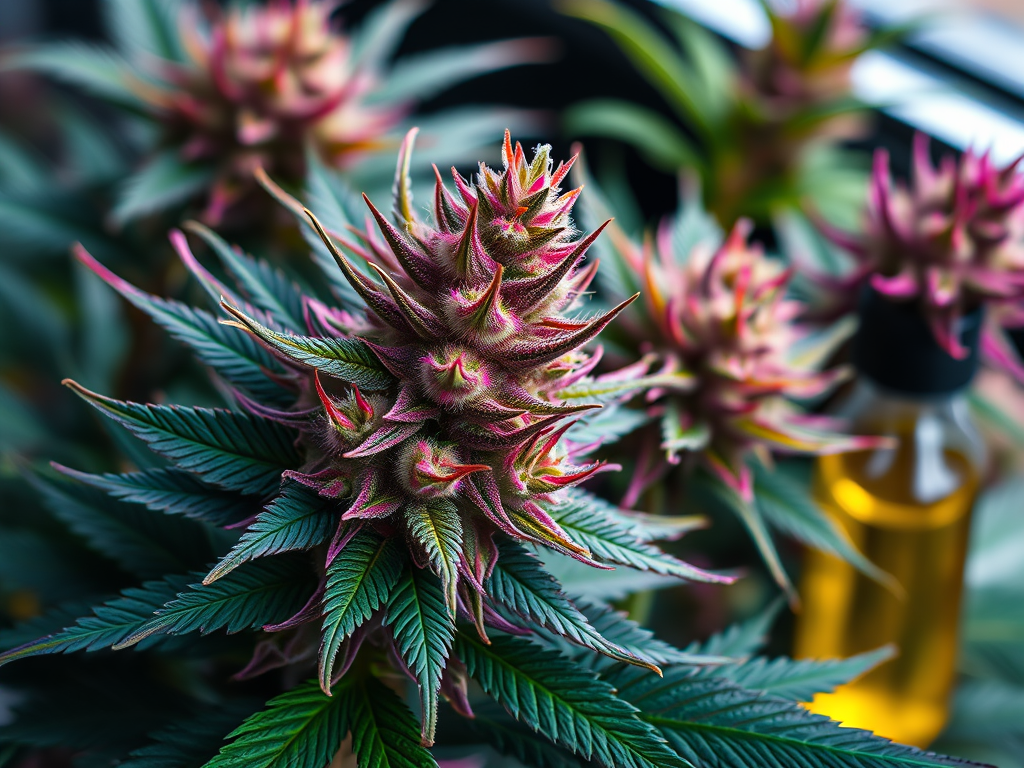
For much of the past decade, THC percentage has defined cannabis product value in the regulated U.S. market. But as wholesale prices compress, regulatory scrutiny intensifies, and consumer preferences shift, the industry’s reliance on ever-higher potency is raising questions about long-term profitability and market stability. Average U.S. wholesale flower prices hovered around $1,078 per pound in 2025, reflecting ongoing price pressure even as THC levels continue climbing into the mid‑20s% for flower and 90%+ for concentrates. (cannahub.io)
The financial stakes are clear: operators and investors are asking whether chasing higher THC is a sustainable strategy—or a short-term tactic with long-term costs.
Potency as a Metric: Origins and Effects
THC percentage initially provided a practical benchmark for consumers, retailers, and regulators. For buyers, it simplified product comparison; for dispensaries, it aligned strength with price. For regulators, THC offered a measurable standard for compliance.
“THC became the easiest way for consumers to judge strength, but that doesn’t necessarily tell you about experience or value,” said [cannabis market analyst, firm].
Over time, competition reinforced this dynamic. Cultivators focused on genetics and growing methods that maximized THC, while retailers rewarded higher test results with faster inventory turnover and premium pricing.
Price Compression and Wholesale Market Dynamics
High potency once justified premium pricing, but broader market forces are squeezing margins. Leaflink reports average aggregated flower prices around $1,020 per pound, down roughly $100 year-over-year. (flowhub.com)
Regional disparities illustrate the effect. Mature markets with oversupply, such as California, see more compression than emerging markets like New Jersey or New York, where flower and concentrate prices can still reach $30+ per unit. (cannahub.io)
“When you have excess supply and a narrow definition of quality, it’s very hard to maintain pricing power,” said [multi-state operator executive].
“From a capital standpoint, potency alone isn’t a long-term moat,” added [cannabis investor / MSO executive].
Market Saturation and Product Uniformity
Potency-driven competition contributes to product uniformity. Retail menus in states such as California and Michigan are dominated by high-THC flower and concentrates, leaving little shelf space for lower-potency or balanced products.
“Many cultivators tell me that investing in flavor or consistency simply doesn’t pay unless it also tests extremely high,” said [cultivation director, cannabis brand].
Science, Label Accuracy and Consumer Trust
Emerging research complicates the assumption that higher THC equates to better products. Studies suggest that extremely high THC levels may increase the likelihood of adverse effects, including anxiety and tolerance development, particularly among inexperienced users. (axios.com)
Researchers highlight that terpenes and minor cannabinoids also shape effects, challenging potency-centric marketing.
“Potency alone doesn’t predict how a product will perform for a consumer,” said [cannabis scientist, research institution].
Regulatory Responses and Risk
High-potency products are increasingly on regulators’ radars. Some states have implemented or are considering enhanced warning labels, potency caps, or category-specific taxes, particularly for concentrates and infused products.
“Policymakers are reacting to potency trends with a combination of consumer safety and public health priorities,” said [cannabis policy expert].
Products optimized solely for THC may be more vulnerable to regulatory changes, potentially impacting profitability and category economics.
Shifts in Consumer Preference
Despite THC’s dominance, consumer behavior is diversifying. Retailers report growing interest in products marketed around effects, consistency, and formulation rather than raw potency. Wellness-oriented consumers and younger adults increasingly prioritize predictability and functionality.
“We’re seeing more repeat customers ask about terpene profiles and measured effects—not just the highest THC number,” said [dispensary operations manager].
While still a smaller market segment, these consumers point toward growth opportunities beyond peak-potency categories.
Implications for Strategy and Innovation
The industry’s long reliance on THC as a key competitive metric affects product strategy. Some operators are exploring diversification through low-dose edibles, beverages, and effect-focused branding. These approaches can broaden the consumer base while reducing dependence on potency labels.
“Expanding beyond a potency-first mindset could help cultivate deeper consumer trust and repeat business,” said [industry strategist].
A Strategic Inflection Point
High-THC products will likely remain a staple of the U.S. cannabis market. But as margins tighten, regulation intensifies, and consumer preferences evolve, overreliance on potency risks constraining growth and innovation.
For cultivators, processors, and retailers, reassessing THC’s role—without abandoning high-potency offerings—may provide a more sustainable foundation for long-term success.





 Sure Media Magazine
Leave a comment