
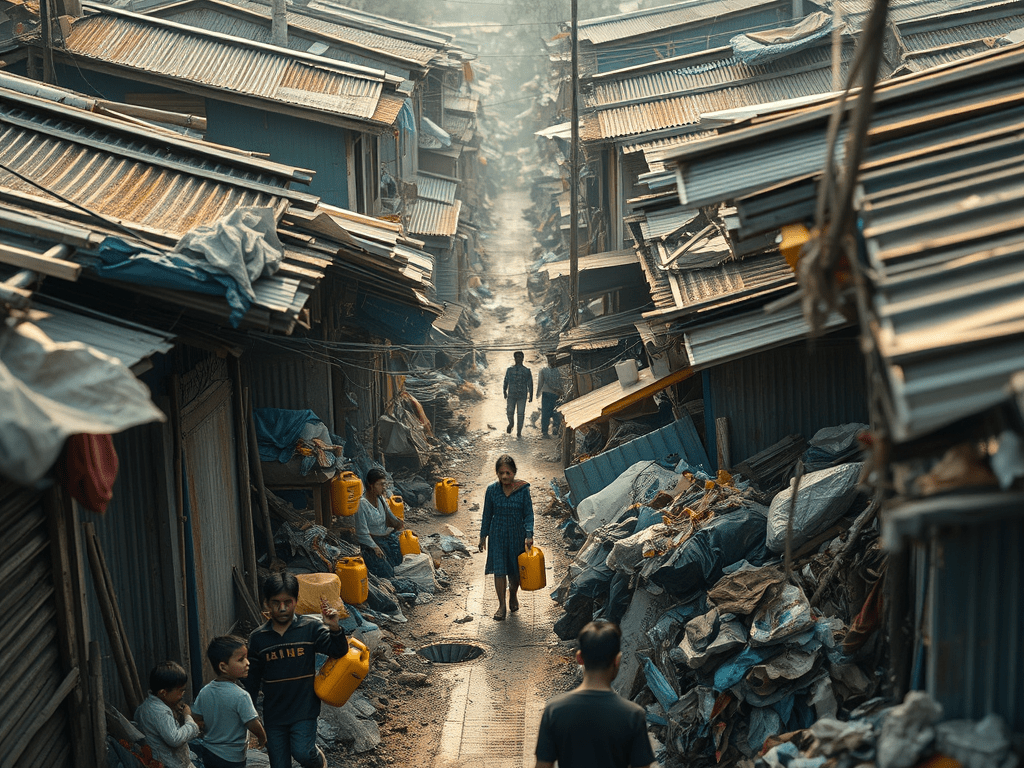
Life Beneath the Tin Roofs
A Story of Survival, Sanitation Struggles, and Silent Epidemics in the Slums
At the edge of the city, beyond the shiny buildings and busy roads, there is a world that most people overlook. It is a place of narrow paths, crowded homes, and roofs made of rusted tin and torn plastic. This is the slum—home to thousands of families who wake up each day unsure if survival will be easier or harder than the day before.
Life in the slum is not only about poverty. It is about enduring conditions that constantly test the human spirit.
The Daily Battle for Basic Living
In the slum, mornings begin before sunrise. Mothers wait with yellow jerrycans at a single communal tap that may or may not provide water that day. Children wake up coughing, their bare feet on muddy ground mixed with garbage and stagnant water. Fathers leave early, looking for casual labor that pays just enough for a meal—if they are lucky.
Homes are tightly packed, separated by thin walls that offer no privacy. When one family cooks, the smell of smoke wafts through several houses. When one child cries, the entire alley hears it. Yet, despite this closeness, life often feels isolating. Everyone is fighting their own quiet battle.
Electricity is unreliable, clean water is hard to find, and proper toilets are a luxury few can afford. Many families share a single latrine with dozens of others. At night, fear forces people to use buckets or nearby open areas instead. These conditions turn dignity into a daily struggle.
Poor Sanitation: A Breeding Ground for Disease
Sanitation in slum areas is a major challenge for residents. Open drains overflow with wastewater, especially during the rainy season. Trash piles up in corners, attracting flies, rats, and mosquitoes. Children play just steps away from sewage, unaware of the dangers around them.
With no proper waste disposal systems, diseases spread rapidly. Cholera, typhoid, diarrhea, and dysentery are common. A single contaminated water source can infect hundreds in just days. When sickness strikes, it doesn’t knock—it barges in.
Clinics are often far away or too costly. Many residents rely on painkillers, herbal remedies, or prayers, hoping the illness will pass. Sometimes it does. Other times, it doesn’t. Too often, preventable diseases take lives simply because clean water and sanitation are out of reach.
Living Through Sickness Outbreaks
When an outbreak happens, fear spreads faster than the disease itself. Parents watch their children grow weaker, vomiting and dehydrated, while feeling powerless. The sound of ambulance sirens becomes all too familiar, but not everyone gets help in time.
Isolation is nearly impossible in crowded areas. When one person gets sick, entire families are at risk. Schools close, work halts, and hunger deepens as families spend what little they have on medicine. Recovery takes time, and for some, it never happens.
The emotional burden is heavy. Grief becomes a shared experience, quietly exchanged among neighbors who understand loss too well.
Hope in the Midst of Hardship
Yet, even in these tough conditions, hope remains strong. Neighbors support one another, sharing food, water, and information during crises. Community volunteers teach hygiene practices with limited resources. Children still dream of becoming doctors, teachers, and leaders who will one day change their future.
The slum is not just a place of filth or disease; it is a symbol of resilience. The people who live there are not just numbers; they are individuals with strength, courage, and unbreakable will.
A Call to See and Act
Living in slum areas is a constant struggle against invisible threats—poor sanitation, disease outbreaks, and neglect. These issues are not due to lack of effort, but to lack of opportunity and support.
To truly tackle these challenges, the world must move beyond sympathy and take action: provide clean water, proper sanitation, accessible healthcare, and decent housing. No one should have to risk their life just to drink water or use a toilet.
Until that day comes, life beneath the tin roofs goes on—quietly, bravely, with hope still glowing in the darkest corners.





 Sure Media Magazine
Leave a comment