
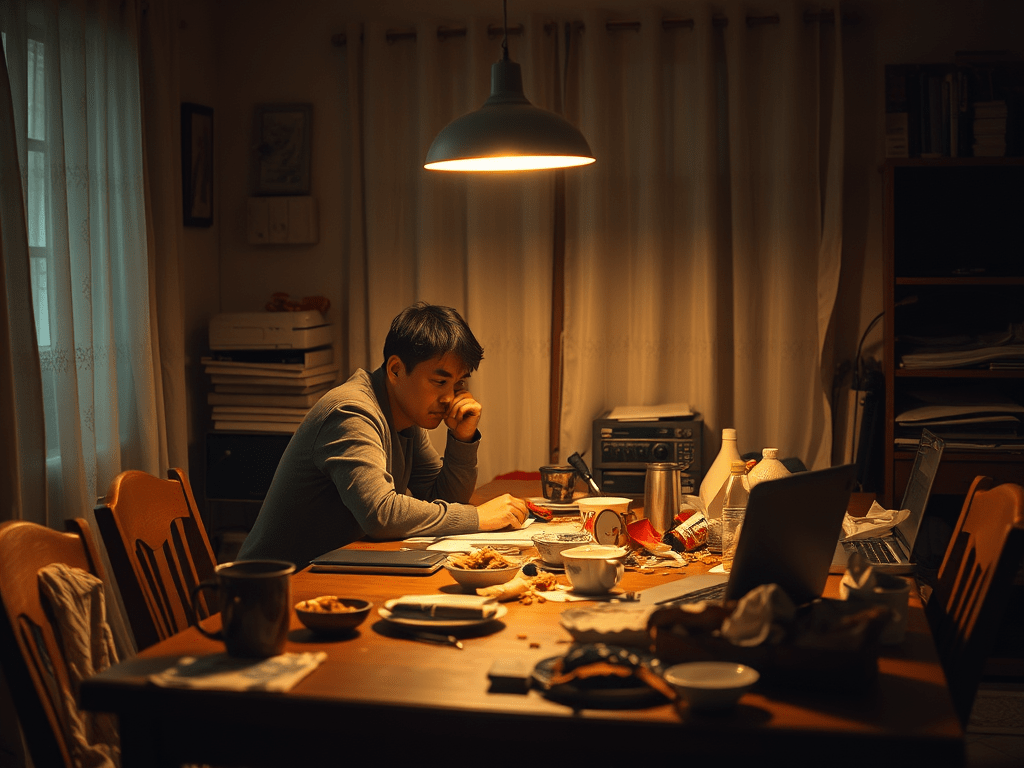
At the beginning of my stay, when I lived on my own, I believed the most challenging aspect was loneliness: long evenings, silent meals, and solitude with my thoughts. I did not anticipate that, when I found myself alone, the habits I masked with noise, schedules, and other human beings would be revealed rather quickly. Residing alone did not make me develop the worst habits; instead, it deprived me of the distractions that concealed them.
The first point was my time usage. My days lost form soon, without another person’s schedule. I kept myself awake late, saying I deserved it. I overstated small tasks to become larger issues. The laziness increased unobtrusively. There was no external force to wash, to go to bed early, or to wake up with a purpose in the day. According to a study conducted by the American Psychological Association, social cues and accountability are usually what keep you in a habit, and when you move in alone, they disappear. I wasn’t lazy. I was just not watching.
The Myth of Immediate Self-Discipline
Living alone would result in better discipline, fewer distractions and interruptions, and complete control. I instead came to understand that discipline is a result of routine and self-awareness. In their absence, loneliness can be liberating. I ate meals standing. I skipped breakfast. I replied that I would clean up later, which turned out to be the following day, then the following week. I noticed these patterns and made a few changes.
The finding that surprised me was that small indulgences quickly became habits. An omission of one exercise resulted in a one-week gap in exercise. Habit became a routine of one of those late nights. Bad habits don’t shout out. They creep in the darkness disguised as either rest, freedom, or convenience.
Emotional Avoidance Is Easier Alone
The second habit that was developed was avoidance of emotions. When you coexist with others, you sort out your emotions through conversation, joking, or complaining. Alone, there’s no quick outlet. I noticed that I quickly find distractions when I’m uncomfortable. I scrolled. I watched shows I didn’t enjoy. I filled the quiet with noise.
This phenomenon is referred to by psychologists as experiential avoidance: the refusal to deal with unpleasant feelings or thoughts rather than to avoid them. It did not begin when I started living alone, but it aggravated it. None of the other people intervened to help me avoid it or asked whether I was fine. Just me and my sitting habits with my thoughts– something I had known I needed to work on.
Money Habits Fleece in Loneliness
My lifestyle of living alone also caused me to review my spending habits. All the decisions were transparent, with no shared bills or accountability. I noticed how I was making frequent purchases and spending out of convenience. Nobody was around to share expenses or recommend that people cook instead of ordering.
According to a Bureau of Labor Statistics study, household expenditures on food and housing cost more per capita for people living alone than for people living in a household. That is what I experienced in real life. Living alone only indicated the extent of the payment and its rationale. My spending was often motivated by stress, boredom and the need for reward.
The State of My Space Reflected My Mind
My room mirrored my mind. Clutter piled up when I was overwhelmed. I cleaned well when I was calm. All plates and all loads of washing were mine.
This was not a pleasant sight to behold. When living in the same house, it is easier to point the finger at someone as the source of the mess. Alone, there’s no one to blame. According to a study published in the Personality and Social Psychology Bulletin, individuals tend to avoid responsibility, especially when in close proximity, and accept blame in solitary environments. I needed to possess my habits, including the bad ones.
Productivity Without Witnesses
My work habits changed, too. Lacking colleagues or friends, my efficiency was not so show-offish but rather sincere. When I performed well and when I faked that I was, I saw that. I also learned that motivation does not just come from being quiet.
My experience of living alone taught me that my own structure is essential to productivity. Weaknesses can be masked in the outward form, which are only revealed when we stand alone. The knowledge cleared up the situation rather than demoralizing me.
Small Wins Felt Bigger
Everything I learned was not difficult. There is also the issue of living alone, which revealed my ability. When I used to cook, it was my decision. I cleaned because I am concerned about my surroundings. Little achievements were personal. No other person was there to impress or disappoint.
With time, I developed milder routines. I have learned to look into myself, rather than evading pain. I began to think of habits as facts, rather than sins. That change mattered.
Lesson Headings Hinted Minimal
- What Solitude Reveals – Social shields are eliminated by living alone. Habits show up faster.
- Why That’s Not a Bad Thing – The first step to change is knowing.
- What Actually Helped—Basic habits, self-benevolence, and authentic anticipations.
Living alone also helped me understand that the worst things about me were not virtues. They were previously helpful coping ways that were no longer helpful. Being alone did not condemn them; it revealed them. It was challenging but empowering honesty. Living alone won’t fix you. It will demonstrate what you are like, not in the presence of a watching eye.
When you are considering living alone, or you live alone, make sure that you listen to what appears. Do not do it ashamedly; do it with wonder. Something is telling you through your habits. Hear them out first before you attempt to put them to silence.
If this struck you, choose a single habit you have monitored and write down its contents. The change begins at awareness, unspoken.




 Sure Media Magazine
Leave a comment