
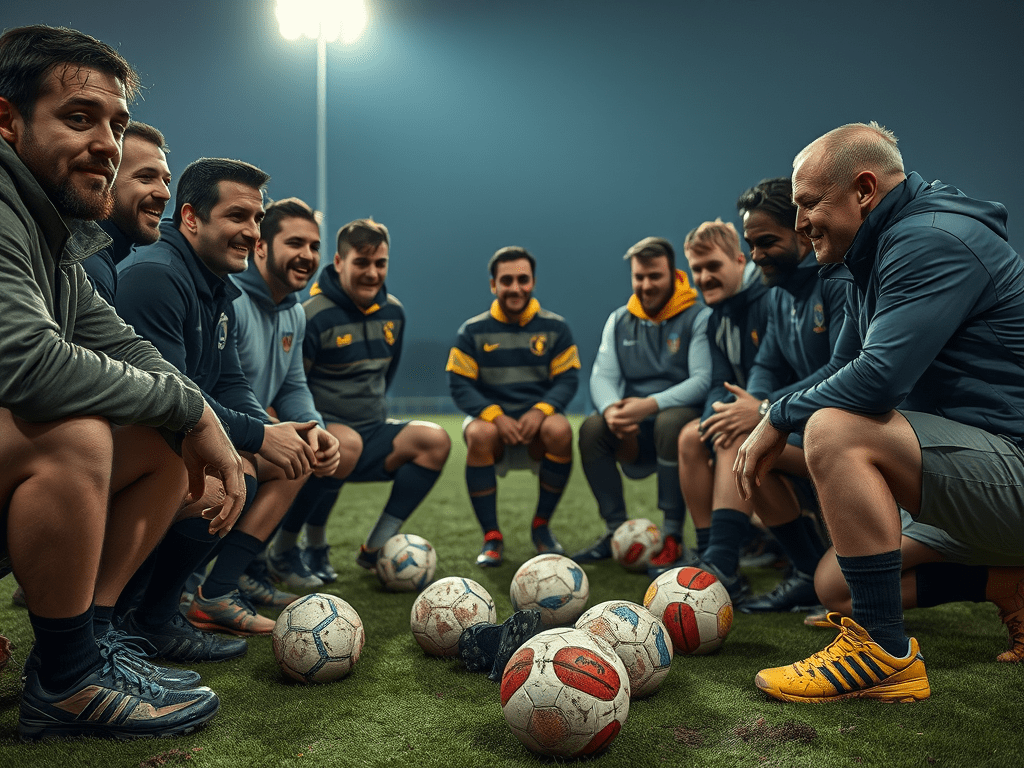
One game at a time, a simple community football pitch in Watford is rescripting the way men cope with loneliness, one goal at a time, muddy goals to midnight confessions. This is why these non-formal areas are the saviors in the time of increasing male solitude.
Alex swipes his sweat off his brow after failing to shoot a penalty under the flickering floodlights of a Watford astroturf pitch. However, as the group hangs after the game, his voice breaks: “Last week was tough – meds no longer doing the job. Heads nod; stories flow. No psychologists, just shoes and joke. It is not only football, but where mourning is released without pre-motives.
The loneliness of men is soaring – one in three say they is constantly lonely, which is a contributor to a depression situation and is two times higher than women. However, formal therapy does not usually work with guys brought up on stoicism. Quickly come into the pitch: this modest green field transforming play into depth. Using actual narratives and statistics we will discover the healing power of these rituals, and why they are necessary today.
The Silent Crisis: Why Men Are Suffering Alone
Male mental health is at the lowest ebb after the pandemic. Polls of the UK indicate that a quarter of men below 35 years of age are emotionally disconnected and unemployment and loss enhance this emptiness. Conventional means of communication such as pubs or work gossip have been swept away with a big number of bottling worries. However the studies of the Movember Foundation point toward a loophole: men prefer to act than to demonstrate, so as to get into sports, it is a backdoor to get vulnerable.
This is being acted nightly in Watford. The Man On group, which is supported by the Community Trust of Watford FC, attracts players of all kinds; unemployed dads, grieving widowers, young guys with disorders to fight. There is no coincidence to this: research published by the British Journal of Psychiatry associates team sports with a reduction in anxiety symptoms by 20 percent. These spaces are nevertheless under-the-radar and vulnerable when it comes to funding reductions.
How the Game Becomes Therapy
It begins easy: 7 p. m. whistle, light drills, no crude tackles. But the magic’s in the margins. Warm-ups generate banter; matches generate trust with the help of passes and saves. Post-game? Hanging around conversations transform to exchanges- “My job gone, mates- I was given nods, not solutions by my peers.
Take the structure: Noncompetitive play even the playing field, as program leads. Drills are a way to learn to communicate, huddles are a way to see each other once in a while, such as Rough week? This is a reflection of cognitive behavioral techniques, only masqueraded as fun. Similar UK programs reveal that 75 percent of the participants have stronger bonds and coping skills as a result of qualitative data. No titles were required–lads and a ball.
However, here is the rub: It is not staged but is organic. It is rainy one night, and we see players under the umbrella; the other, a goal celebration, turns into a confession. Such flexibility makes it true to life, attracting men who avoid clinics.
Alex’s Rebound: From Relapse to Renewal
The 28 year old, Alex, came in with a schizomatosis episode that ruined his job at the warehouse, making him overweight and withdrawn. He says that he felt that it was impossible to rebuild. His coordinator referred him to the exercise–but remained to the support.
In mid season, following a relapse share, the group re-gathered: family tips, pub meets. He had lost weight by winter, created a book cover with one of his teammates, and he felt together. His arc is research receptive: Football improves self-esteem and lessens isolation in mental health cohorts. Not therapy it is, it is mates, Alex says.
Tom’s Tackle: Beating Unemployment Blues.
At 45, Tom had to confront the abyss having been laid off at the factory. This was all in an isolated flat and, next to no one, despair crept in–a fate that struck one in five unemployed UK men. Thursdays were snatched at him by a friend.
The physical rush -dribbles, goals -reduced rumination. Next, there were confessions: employment anxieties were achieved with prospect and confirmation. He says, “Problems disappear in 90 minutes. It is supported by data: Jobless groups have a 30 per cent reduction in depressive symptoms due to sport. The gigs would come through contacts and Tom would bounce higher than a struck ball.
Then the next item; the elders showing that age does not matter.
David’s Legacy: Grieving on the Green
David was a widower, 62, who paced the suburbs in a fog, the grief epidemic of older men, the risks of suicide are 50% after loss. Wednesday walks football provided easy access.
Cryptic hints were open floodgates: an anniversary share during drizzle incurred hugs. We mourn by acting, he thinks. Research proves: Group work reduces loneliness among older people by creating a sense of purpose. David is now a mentor, he has barbecues–his sadness diffused.
The Bigger Play: Data That Demands Attention
In the UK, results are obtained with such kind of pitches. Kick Start FC is reporting a 60% mood improvement; national statistics associate sports with reduced levels of depression. However, funding is in a bad stride- 15% of mental health budgets reach community programs. Experts beware: Pay no heed to these and isolation swells.
Psychologist, Dr. Mark Curran counters this, however: Not all of them are foolproof–some require clinical assistance. But as a gateway? Priceless.”
So, what’s the payoff for you?
Your Move: How to Find or Start Your Pitch
- Trusts in the area that Scout local relies on: Look up “community mental health football” and find organizations, such as Man On.
- Join low key: Walking variations are available to everyone- visit sites such as Meetup.
- Play it yourself: Get friends together, establish terms of play, no judgment, play.
- Track wins Journal mood pre/post to observe the change.
These actions according to program directions make turf transform.
This pitch lives in a world that is pushing pills and apps, but Healing is in the most basic games. Men are not broken, they are just given room to play with the pain.





 Sure Media Magazine
Leave a comment