
With cities struggling with post-pandemic transit headaches, fare-free experiments in cities such as Kansas City and Boston offer hard data on ridership boosts, equity advancement, and hidden expenses. Here is what worked, and the tough lessons to learn about scaling up.
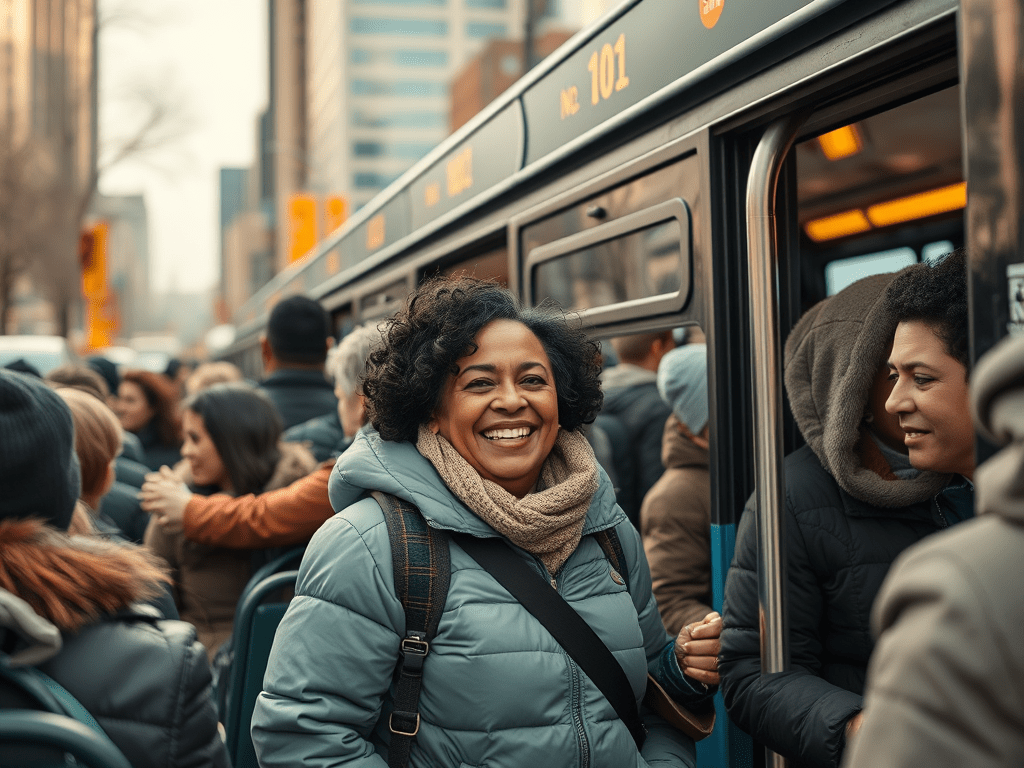
On a cold morning in Kansas City, Maria Gonzalez gets on the No. 101 bus, without to fumbling for change or tapping a card. It is a game-changer, she says, as she relaxes in her commute to her low-wage downtown job. Now that the city is fare-free, riders like her have skyrocketed but so has the controversy surrounding sustainability. It is high time to test transit fares ditching in the real world.
As transit agencies across the country struggle to maintain dwindling ridership and bank deficits six-years post-pandemic, fare-free programs are again being considered an ambitious solution to help agencies attract more riders and restore equity as well as reduce enforcement expenses. However, early adopters also tell a more objective tale: significant improvements in access to low-income users, but ongoing issues with financing and operations that may educate, or warn, other cities looking into the move.
The Rise of Fare-Free Experiments Post-Pandemic
Fare-free transit is not a recent development, but it got a boost by COVID-19. With the number of people taking trains dropping drastically and agencies suspending fares to minimize contact, cities saw an opportunity to rethink revenue models. Chapel Hill, North Carolina, was the first to implement a complete system of fare-free operation in 2002, in large part to cater to its university population. By 2020, bigger experiments emerged; Kansas City became the first large city in the U.S. to become fare-free followed by Intercity Transit in Olympia, Washington state. Boston tested three high-ridership bus routes (23, 28, and 29) in 2022 and had their focus on underserved neighborhoods. The pilots intended to close equity gaps by mitigating equity disparities. Transit fares are disproportionately high among low-income passengers, and they spend as much as 15 percent of their budgets on transport, so while recovering from pandemic losses that saw national ridership drop by over 50%.
Implementation Choices and Funding Shifts
Going Fare Free would require to compensate lost revenues which are usually 10-30 per cent of operating budgets. Kansas City subsidized its revenue of $8-10 million annually of farebox revenue with city sales taxes and with local businesses. Chapel Hill finances its system through university fees, property taxes and state grants, which save the system 390,000 $ annually on efficiencies of easily collecting fares such as quicker boarding. The Intercity Transit of Olympia, with a smaller metro area, used a sales tax increase, which had been approved by the voters, as a cost-covering measure. Boston’s pilot was supported by a city investment of 8 million dollars as it catered to specific routes within the black and low-income neighborhoods to reduce the strain on the entire system. Similarities: smooth operations (no fare skirmishes or machines) and advertising to add new users, though with insurance such as a higher security level to manage any spike of riders.
The Numbers on Ridership and Equity
Statistics of these cities indicate that fare elimination rejuvenates ridership, although the returns differ. The ridership also rose by an estimated 31 percent in Kansas City and recovered at a faster rate than other cities. The effects of equity are bright: Low-income users actually gained a lot, which increased the economic output in the region. Nevertheless, the program was not without its hiccups and fares were partially reinstated in 2025, with low-income riders riding free.
The 43% increase in ridership on the long-standing program in Chapel Hill resulted in high usage as per the mid-sized system in which minorities and student receive the greatest benefit. The Intercity Transit in Olympia recorded a 20 per cent increase and the low-income earners constituted a considerable proportion of new clients. The pilot routes of Boston were faster than the recovery of the MBTA system, and by 2023, the ridership had increased by 20% above average with 70% of the riders being low-income, and saving $50-100 a month in fares. A 2025 national study affirmed the reduction of inequality with fare-free policies, which has increased labor access but had modest effects on the employment situation without services expansion.
Riders and Officials Weigh In
To riders such as Gonzalez in Kansas City, free fare means reliability. She has no excuse to skip work due to the inability to afford the bus fare. At Boston, disabled advocated commend reduced dwell time on free routes, which simplify the entry of wheelchair users. But authorities report hitches: Ridership increased, and so did assaults, says a KCATA spokesman, attributing increased assaults prompting the program to adjustments.
Trade-Offs and the Myth of ‘Free’
Experts indicate that fare free is not cost free. Revenue shortfalls can force service reductions such as in Kansas City where a partial reinstatement of fares was introduced due to budget constraints. According to a report by Transportation for America, it is good for equity, but without reliable frequency since it undervalues low-income time. The implementation of operational wins such as quicker boarding save funds but overcrowding and congestion on specific routes may deter users as it is the case in Boston where traffic erodes speed gains. An analysis carried out at Harvard focuses on other sources of funding: “The gap has to be closed by taxes or congestion fees or quality suffers.
Lessons for Cities Considering the Leap
- Focus on equality: Reach out to low-income markets first, such as Boston.
- Secure Funding: Use Taxes or partnerships to avoid the cuts.
- Safety on monitoring: Enhance security as the ridership increases.
- Pair with service: Free fares go well with regular, frequent transit.
Fare Free transit isn’t a silver bullet. In a country where mobility spells opportunity, these experiments demonstrate that fare-free transit can help overcome barriers – if cities finance the full ride.




 Sure Media Magazine
Leave a comment