
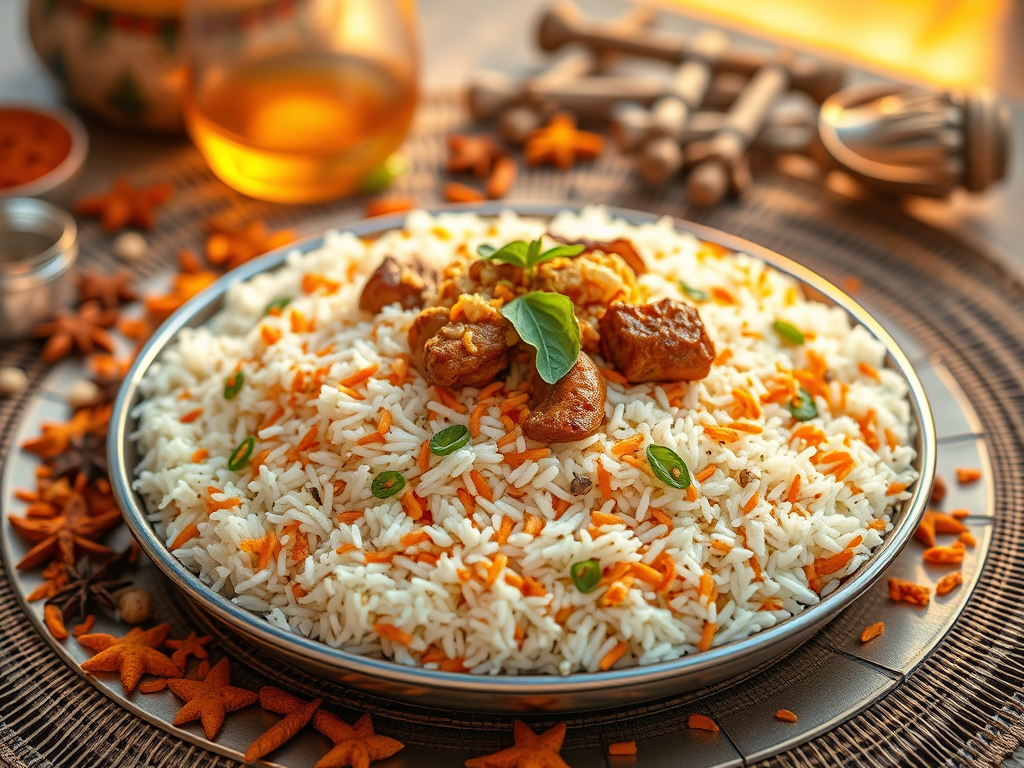
While sunset approaches on the last day of Ramadan, a noticeable change sweeps across the Kenyan Coast. The ancient, winding streets of Old Mombasa’s bustling markets and Lamu’s laid-back shorelines to the vibrant seaside strips of Malindi, a noticeable fragrance fills the air that’s both ancient and intoxicating. It’s made from cloves, cinnamon, cardamom, and braised meats. This fragrance marks the onset of Eid al-Fitr and in a Swahili home, it marks the beginning of the “King of dishes” Swahili Biryani.
Where Kenyan cuisine will forever be tied to the earthy simplicity of Ugali and Sukuma Wiki, the Swahili coast tells a different story altogether. This story is one that has been penned by spice and one that reflects an economic history spanning hundreds of years and reaching across the Indian Ocean. There can hardly be anything as resplendent as Biryani.
The Crown Jewel of the Festive Table
For the Swahili, meals are more than a source of nutrition; they are a language of welcome, of prayer, of devotion. During a Muslim holiday such as Eid, the kitchen is a place of sanctuary. Although Pilau is a common Friday meal, Biryani is saved exclusively for the most momentous occasions weddings, the arrival of a child, or the two Eids.
It is the mode of preparing the dish that makes the Swahili version of the biryani differ from its Indian and Persian roots. It is unlike the Hyderabadi Dum Biryani, where the meat and rice are steamed together in the same vessel. The Swahili dish is actually a two-component masterpiece. There is the Mchuzi (meat gravy) and the Mchele (rice).
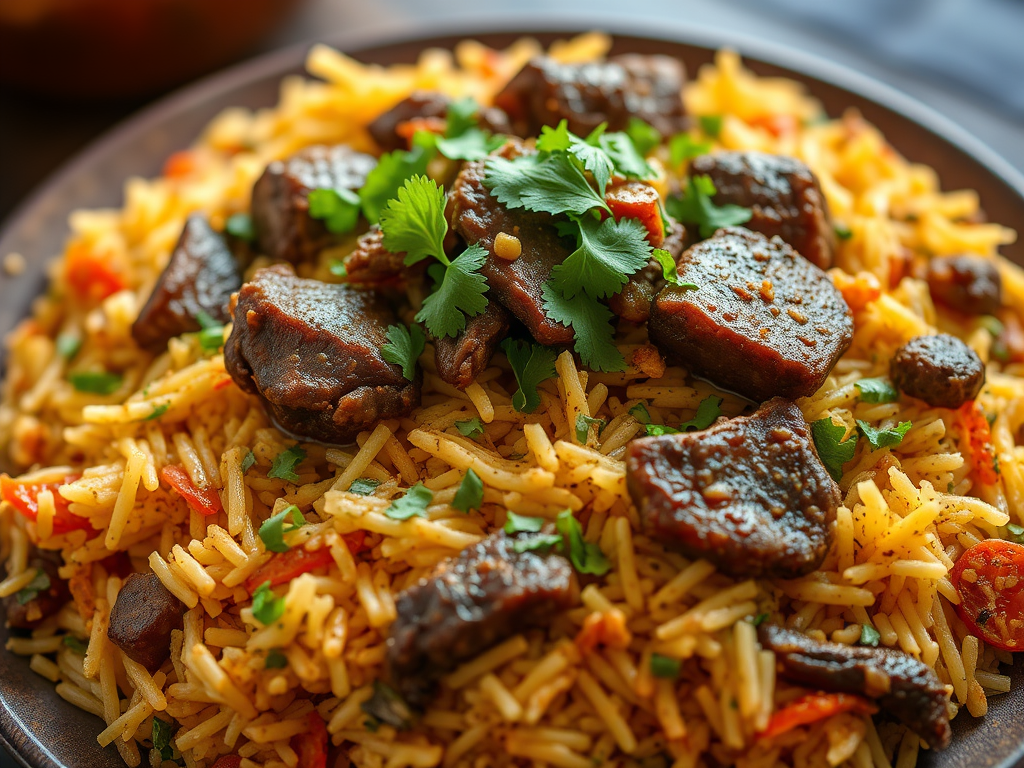
Image: A vibrant plate of Swahili Beef Biryani, showing the characteristic orange and white rice grains.
The Anatomy of Taste: Ingredients and Influence
The key to an elite Swahili Biryani is in the Onions. To get this rich foundation of a taste, a massive amount of onions is sliced thinly, going into a hot fry until they turn a deep, golden-brown crunch. This is what is termed Bagaar. Crushed in a paste of thick yoghurt (Mala), paste of tomatoes, ginger, garlic, and an abundant addition of Biryani Masala, they make a sauce as rich as velvet.
The Meat: The meat used in Eid al-Adha celebrations is goat meat, while in Eid al-Fitr, the meat used is beef. The meat is marinated in the yogurt and spice mix for hours until the meat fibers are tender enough to be pressed by a thumb.
The Rice: This has to be the best Basmati rice. It’s parboiled with whole spices such as cloves, cardamoms, and cinnamon sticks. Later, when it’s partially cooked, it’s drained and some colored water typically ‘Sunset Orange’ is poured over the rice. This gives the rice an amazing pattern when it’s fluffed up with the fork. This pattern decoratively depicts white and orange rice marking the occasion.
A Culinary Ritual: How Biryani is served
Eating in Swahili culture is as important as what is being eaten. In Eid celebrations, eating is a communal activity. Huge, round, metallic plates called Siniya are full of rice, with the meat gravy poured into a well in the middle.
Families dine on traditional mats called Majamvi on the floor. Before dining, it is common practice that a young person in the family is expected to bring hot water with a basin, called Karai, to enable guests to wash their hands. In line with Sunnah, eating is done using one’s right hand, with guests making balls of both rice and meat to be taken together.
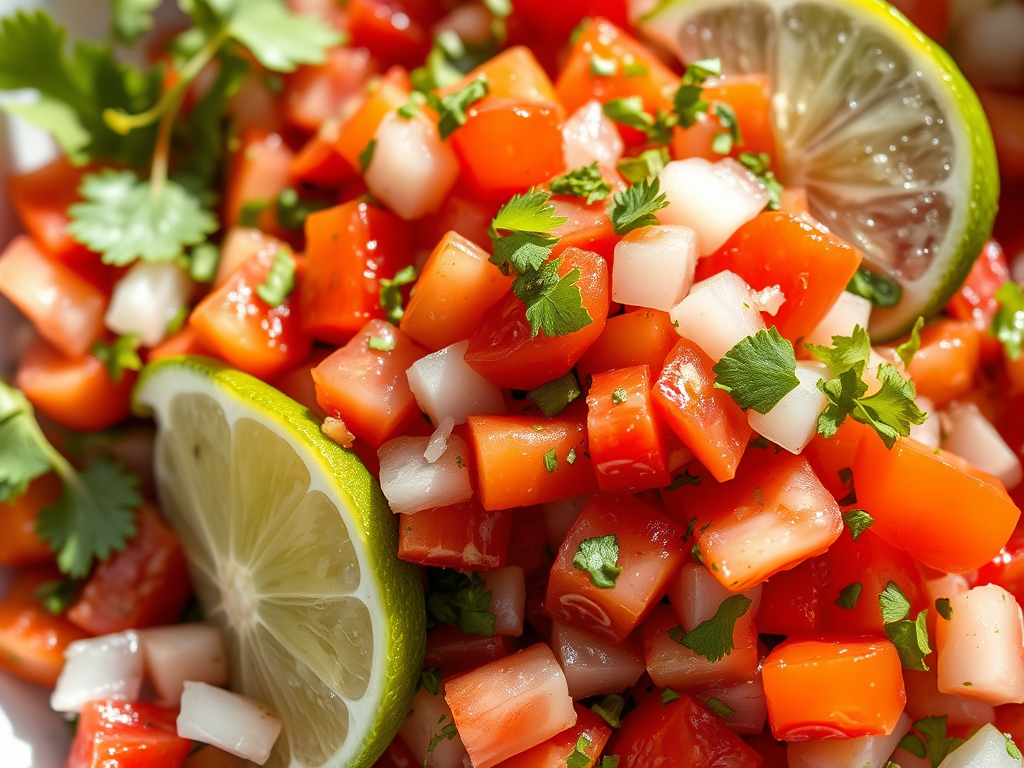
Image: Kachumbari is the essential acidic balance to a heavy Swahili meal.
The Essential Sides: Kachumbari and Ukwaju
A meal of Biryani is never complete without its supporting cast of dishes. To counter the richness that comes from the yogurt and the meat, two popular sides that are often accompanied with a meal of Biryani are:
1. Kachumbari: A raw, uncooked vegetable salad made from tomatoes, red peppers, and copious amounts of cilantro. Around the coastal regions, a squeeze of lime juice and slices of green chilies add their pungency to it.
2. Ukwaju Sauce: It is a sour sauce made from tamarind. Dry tamarind is soaked in water, filtered, and then flavored with salt and chilies. Taking a spoonful of this sauce with the Biryani helps in cleaning the palate.
Beyond the Main Course: The Sweet Finish
However, the feast is not over yet. The “Tea Culture” of the coastal regions kicks in as the day progresses. The Kenyans have a reputation for their “Chai ya Viungo” tea boiled with milk, ginger, and cardamom. This will be accompanied by either Mahamri, coconut milk doughnuts, or Kashata, a brittle confection made of peanuts or coconut.
And to round it all off, there’s the small cup of Kahawa, or Arabic coffee, made in the brass kettle, flavored with cardamom. Its bitterness is the only contrast to the sweet treats that fill the day.
Learn more and try it yourself
“If you’re inspired to bring the flavors of the Kenyan coast to your kitchen, there are some great resources:
- Authentic Recipes: You can find one of the best Swahili Biryani recipes at Fauzia’s Kitchen Fun.
- Cultural Context: Investigate the National Museums of Kenya to gain background information on the Swahili heritage of Gedi and Mombasa.
- Travel and Food Tours: For the best Swahili dish at the coast, visit Magical Kenya.
Conclusion
Swahili Biryani is more than a meal, it is a celebration of a multicultural identity. Swahili Biryani is a testament to the ability of the Swahili people to take the best from the world and turn it into something that is specifically Kenyan. Whether you’re breaking your fast on the Swahili Coast or cooking it in a far-off place, a bite of Swahili Biryani is all the information you’ll ever need about the warmth and history that comes with the Swahili lifestyle. “Karibu chakula!” (Welcome to the meal!)






 Sure Media Magazine
Leave a comment