
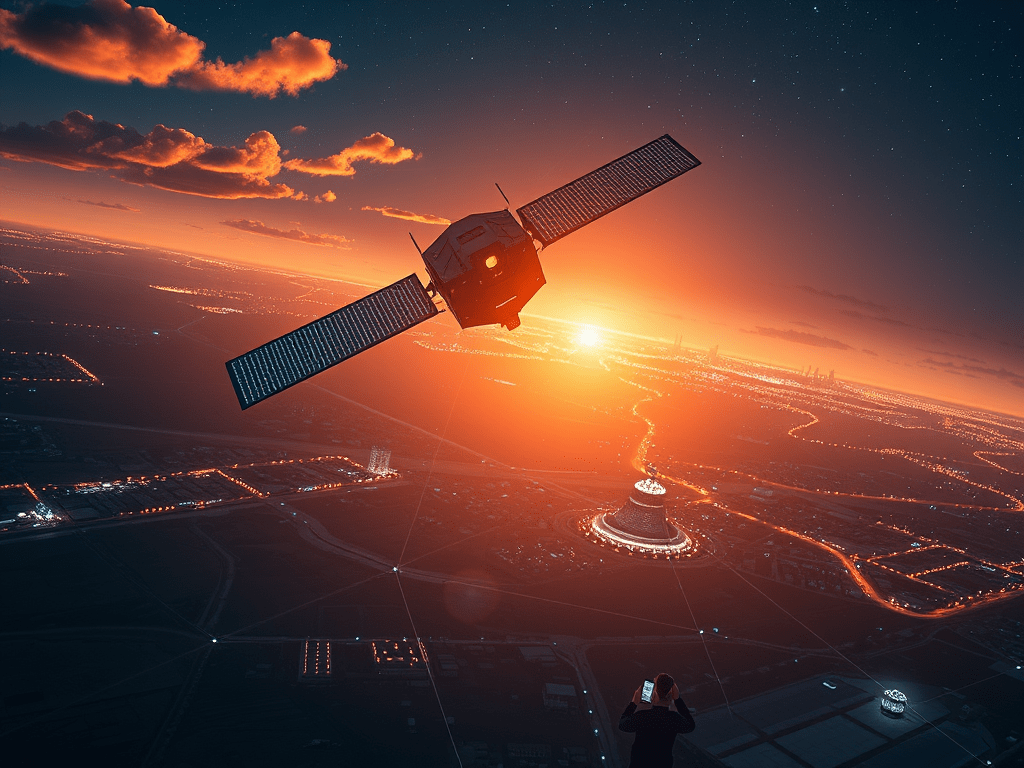
From the remote areas of the country to the corporate offices in Nairobi, Starlink’s presence in Kenya will redefine internet connectivity in the country – faster, cheaper, and light years ahead of Safaricom.
For many years, Kenyans have had to put up with unreliable internet. In rural areas, connectivity drops from “slow” to “non-existent,” frustrating remote workers and students who learn online. Elon Musk’s Starlink is a God-sent. The technology did not come with fiber trenches or cell towers, but satellites orbiting the Earth at lightning speed.
Surprisingly, remote areas that were ignored by conventional internet service providers gained internet access. This is the reason Starlink has become a hero not only for the millions of digital natives in the country but also by the dominant telecommunication companies.
Why This Moment Matters
Kenya prides itself in mobile money innovation, digital government services, and a fast-growing tech workforce. However, the truth is that the country is barely keeping up with this reputation. Internet access is limited to those who are in urban areas and those who have deep pockets, while the poor and those in remote areas remain disconnected. Additionally, the infrastructure required to keep internet services afloat is heavy and expensive.
Starlink is the game-changer. The technology does not require fibre or towers for users to connect since it relies on low-Earth orbit satellites. These dynamics caused panic and tension between Starlink and local telcos. The good news is that Musk and industry giants such as Safaricom and Airtel managed to come to a truce. To be objective, the local companies realized it was to their advantage to stop fighting Starlink and instead adapt to it.
Why Starlink Is Different From Everything Before It
In the past, setting up internet was dependent on physical infrastructure like undersea cables, masts, and maintenance crews. Starlink relies on Space. No wonder Sam Altman recently talked about the future of jobs being in space.
Anyway, there are thousands of satellites near Earth that are used to power Starlink. These bodies provide low latency and consistent internet speed in areas where it is difficult and expensive to use fiber optic cables. Therefore, for schools, hospitals, companies, and farms in these areas, this technology is timely.
The geography and population distribution in Kenya complicates the dynamics of internet installation. Fortunately, Starlink defies the logic of conventional internet connectivity. For satellite internet, coverage is the top priority while optimization follows later. This is the reason Starlink is not concerned with price or speed, it’s main bargaining power is availability. The local telcos cannot guarantee nationwide internet coverage, which is why Musk’s technology is superior.
Why Safaricom and Airtel Chose Peace Over War
The saying, “if you cannot beat them join them”, is now more relevant than ever to Safaricom and Airtel. Initially, these giant companies were concerned about Starlink undercutting local providers, draining their profits, and destabilizing their ecosystems. Now, they have realized waging war against such a powerful innovation is futility.
Safaricom dominates the mobile data and voice service space while Airtel is popular for its competitive pricing all across the country. On the other hand, Starlink is gaining popularity for fixed broadband and reaching underserved areas.
Safaricom still dominates mobile data, voice services, and M-Pesa. Airtel continues to expand competitive pricing and regional reach. Starlink, by contrast, focuses on fixed broadband and underserved areas. The overlap exists, but it is not absolute.
In a matter of months, Starlink has become a power to reckon with. It is the reason telcos have decided to choose coexistence and to learn and benefit from Musk’s technology while easing the pressure to reach low-return regions.
Who Really Stands to Gain
Many people would think that the winner in this arrangement is Starlink. However, the biggest beneficiaries are the tech elites in Nairobi. While Elon Musk has another feather in his cap, the teachers in rural areas who can stream lessons with ease, the SMEs in remote towns that can access global digital markets, and the remote workers living in the countryside are the net victors.
Moreover, this comes as an advantage to the government. The plans to rollout fiber to the rural and marginalized areas, which could cost billions of shillings, can now be shelved for a better and cheaper option.
Starlink has accelerated the gains of reliable internet which are beyond entertainment and extend to health delivery, productivity, and education outcomes.
Is There More Than Meets The Eye?
Recently, Elon Musk has made headlines for many claims that at first seem absurd but when you think about it , they make sense. Could it be there is a hidden agenda with his move to introduce Starlink in Africa? Since Musk’s ecosystem involves satellites, automation, and artificial intelligence, all of these tools require faster data exchange and edge computing. Therefore, Starlink may just be the beginning of ushering in the artificial intelligence age to Kenya. The question is not whether Musk’s innovations will penetrate Kenya but how intentionally Kenya chooses to redirect that intrusion.
What Happens Next
The coup against the Kenyan telcos is not a straight-forward operation. It is a gradual and somewhat invisible process. Mobile data will still remain intact and fiber will work in dense urban regions. The fact is that there will no longer be a monopoly over internet connectivity in Kenya.
Kenya’s internet future is now a hybrid: terrestrial in urban and easily accessible terrain, and satellite in hard-to-reach places. Which begs the question, if global tech giants continue to provide foundational infrastructure, what is Kenya’s stake in all this? Is Kenya merely consuming these services or actively regulating and integrating them into its long-term economic development goals?
The bottom line is Starlink’s satellites are overhead, let’s wait and see what Kenya builds beneath them.





 Sure Media Magazine
Leave a comment