

As nations plan permanent lunar infrastructure, the idea of space as a neutral commons is eroding—replaced by a quieter struggle for control through energy, endurance, and positioning.
By CHARCHER MOGUCHE
For decades, the moon was treated as a destination rather than a domain. Astronauts arrived, collected samples, planted flags, and returned home. The missions were brief, symbolic, and deliberately noncommittal. Space, at least officially, belonged to everyone and no one at once.
That era is ending.
Governments today are no longer asking how to reach the moon. They are asking how to remain there indefinitely. The shift is subtle but consequential. Permanent presence requires sustained energy, logistics, and protection. Once those elements arrive, the moon ceases to be a backdrop for exploration and becomes something more strategic.
What is unfolding is not a dramatic space race, but a quiet standoff over who can stay, who can operate, and who must work around the infrastructure others build first.
This transition marks a fundamental change in how power operates beyond Earth. Space competition is no longer defined by speed or spectacle. It is defined by endurance. As nations invest in long-term lunar systems—particularly energy infrastructure—the legal and moral framework that once governed outer space begins to strain.
The question is no longer who reaches the moon, but who shapes the conditions under which everyone else must operate once they get there.
From Exploration to Endurance
The original space race rewarded visibility. Firsts mattered more than longevity. Success was measured in launches and landings, not sustainability. Technology enabled short missions, not continuous operations.
Today’s ambitions look different. Policy documents emphasize resilience, redundancy, and long-term capacity. These are not the goals of explorers. They are the priorities of states planning to operate in contested environments over extended periods.
This evolution reflects basic engineering reality. Solar panels alone cannot support uninterrupted lunar operations. Extreme temperature swings, long periods of darkness, and expanding mission scopes demand more reliable energy sources. Without them, permanence remains impossible.
With them, it becomes inevitable.
When Power Becomes Presence
Energy infrastructure does more than keep lights on. It determines who can function, where, and for how long. On Earth, power grids shape cities, economies, and political relationships. Control over energy translates into influence without the need for overt coercion.
The same logic applies on the moon.
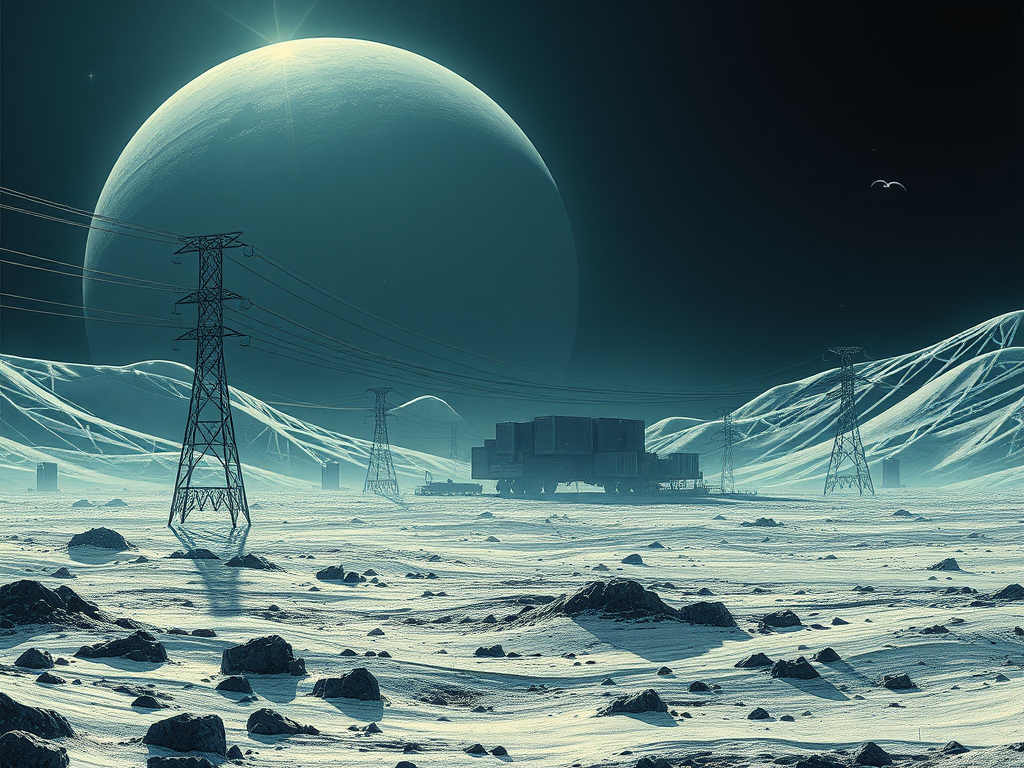
A reliable power system enables continuous habitation, expanded mobility, and support for additional installations. It also creates operational gravity. Activities cluster near energy sources. Safety zones emerge. Access becomes regulated by proximity and compatibility rather than treaties.
This is not territorial conquest in the traditional sense. No borders are drawn. No flags are raised. Yet control materializes through presence sustained over time.
Pull Quote:
In space, sovereignty does not begin with borders—it begins with the ability to stay.
Militarization Without Weapons
Public imagination still associates space conflict with visible violence. In practice, power in space operates through denial, disruption, and dependency. Satellites already underpin navigation, communication, and surveillance worldwide. Interfering with them can cripple modern societies without triggering conventional warfare.
Lunar infrastructure introduces a new strategic layer. Power hubs, communication relays, and logistical facilities become critical nodes. Their protection becomes a security priority. Their vulnerability becomes a strategic concern.
No missiles are required. Control emerges through redundancy, resilience, and integration into broader systems. The most effective space weapons are not projectiles, but infrastructure others cannot easily replicate or bypass.
The Limits of Space Law
International space treaties were crafted for a world of brief visits and symbolic cooperation. They prohibit territorial claims and emphasize peaceful use. What they fail to anticipate is permanence achieved through infrastructure.
There is no clear legal guidance on exclusive operational zones created by safety requirements around reactors or power systems. No framework governs long-term exclusion without ownership. As a result, practical control can expand without formal claims.
This legal ambiguity favors those who move first. Once systems are built and normalized, their presence becomes difficult to challenge. Law follows reality, not the other way around.
From Commons to Strategic High Ground
The moon’s value lies less in its resources than in its position. Cislunar space supports communications, navigation, and future deep-space missions. Control over key nodes shapes what becomes feasible elsewhere.
Military theorists have always valued high ground for its leverage. In space, that leverage is logistical rather than kinetic. The ability to support, refuel, power, and relay determines who can operate freely.
As reliance on space systems deepens, the moon transitions from a shared symbol to a strategic asset. Not because of aggression, but because relevance invites competition.
A Standoff, Not a Crisis
This transformation is not unfolding through dramatic confrontation. It is embedded in technical planning, procurement schedules, and engineering choices. That subtlety is precisely why it matters.
By the time the political implications become explicit, operational realities may already be fixed. Infrastructure will exist. Patterns of access will harden. Exclusion will be justified as necessity rather than policy.
The danger is not war, but normalization—the quiet acceptance of a new order established without debate.
Why Lunar Power Changes Everything
Key implications of permanent energy infrastructure:
• Enables uninterrupted lunar operations
• Creates de facto zones of influence
• Signals long-term strategic intent
• Outpaces existing legal frameworks
• Shifts competition from exploration to control
Space was once imagined as humanity’s chance to escape Earth’s rivalries. That hope rested on the assumption that space would remain marginal. It is no longer marginal.
The moon is becoming important precisely because it enables power elsewhere. And when power arrives, neutrality fades.
The future of space will not be decided by declarations, but by infrastructure built quietly, deliberately, and early.
If space is becoming strategically consequential, then governance cannot remain symbolic. Treaties written for footprints and flags must be revisited before reactors and logistics hubs define ownership by default.
The moon is no longer just a destination. It is becoming a position of power. The question is whether humanity will acknowledge that shift openly—or allow it to solidify without consent.





 Sure Media Magazine
Leave a comment