
Born from Necessity
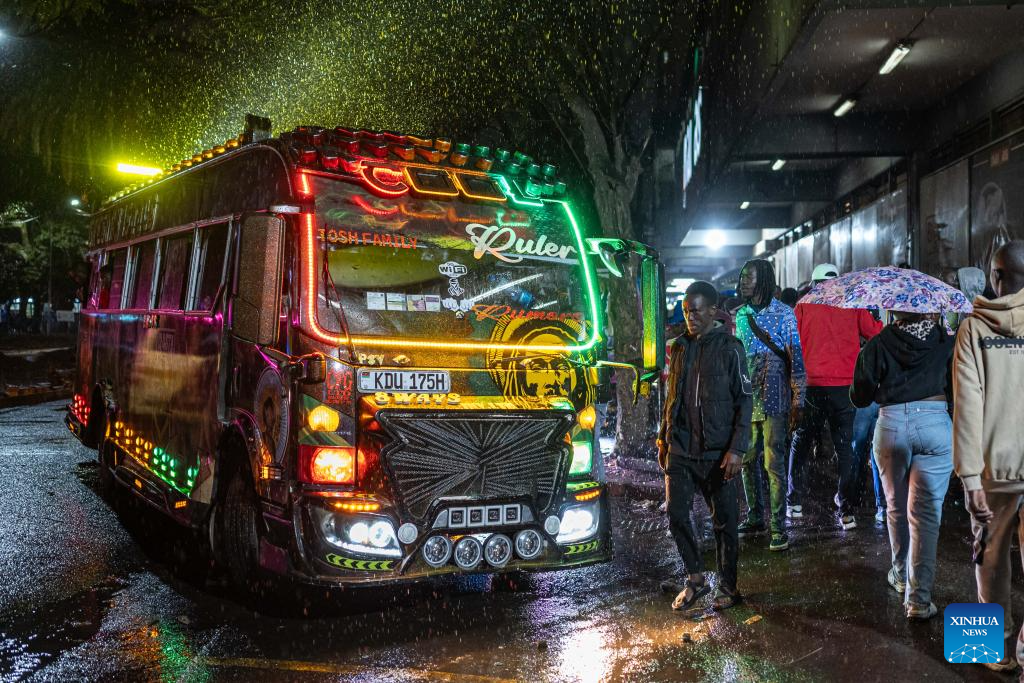
Matatus, Nairobi’s iconic minibuses, emerged in the 1960s after Kenya gained independence, filling gaps left by the colonial transport system. The name comes from Swahili slang for “three,” referencing the original fare. However, it was during the economic shifts of the 1980s and 1990s, alongside the global rise of hip-hop culture, that matatus evolved into cultural icons. “If your matatu wasn’t flashy, you lost business,” says Brian Wanyama, founder of Matwana Matatu Culture, an organization documenting the phenomenon. “Style was survival.” Competition pushed owners to customize their vehicles—first to attract passengers, then to express identity. What began as marketing eventually became a full-fledged cultural movement.
Rolling Galleries on Wheels
Most matatu artists are self-taught, working from small garages in neighborhoods like Eastlands. Using spray paint, vinyl wraps, and LED kits, they transform vehicles into mobile canvases. Portraits of global icons such as Tupac Shakur and Bob Marley sit alongside Kenyan musicians, political figures, and religious imagery. Neon greens, electric blues, and bold slogans like Money Fest or God First dominate the streets.
Inside, customized upholstery, lighting, and sound systems create immersive, moving environments. “Each matatu tells a story,” says graffiti artist Babel Gody, who has worked on several high-profile vehicles. “It reflects the owner’s dreams and the community’s vibe.”
Design as Urban Defiance
Matatu culture openly challenges Nairobi’s formal urban order. While much of the city’s architecture caters to elites—glass towers and gated developments—the majority navigate informal streets and congestion. Matatus reclaim public space through color, noise, and motion, asserting creativity where regulation dominates. “They’re museums on wheels,” Wanyama explains. Unlike static galleries, matatus interact with thousands of people daily. Riders choose which matatu to board, creating a feedback loop where bold design is rewarded. Innovation is truly driven from the street up. Historically, matatus also carried undertones of resistance. During the repressive 1980s, subtle graffiti and music choices became quiet forms of dissent. Today, the movement remains deeply economic. With youth unemployment above 35%, matatus generate jobs for painters, welders, electricians, and sound technicians. Owners can invest hundreds of thousands of shillings in customization, sustaining entire micro-industries. Veteran artist Mohammed Kartar (Moha), active since the early 1990s, recalls: “I wanted something people reacted to.” His work helped shift matatus from simple portraits to full design statements.
A Culture Under Threat
Despite their significance, matatus face pressure from modernization. Past policies sought to replace them with larger buses, framing them as chaotic. More recently, the rollout of Bus Rapid Transit systems raises fears of enforced uniformity. “We shouldn’t erase this culture,” says journalist Janet Mbugua. “It’s how Nairobi speaks outside boardrooms.” Riders agree. “The designs make the ride fun,” says Mary Njeri, a vendor on a Kibera route. “Without them, it’s just another boring bus.”
The People’s Architecture
At their core, matatus represent vernacular design—innovation built with affordable materials, local knowledge, and creativity. Typography mixes Swahili slang with English wordplay, while visuals blend global pop culture with African tradition. The result mirrors Nairobi itself: hybrid, restless, and expressive. “Matatus are the people’s architecture,” says urban designer Naomi Mwaura. While noting ongoing gender imbalances in the industry, she sees matatus as rare spaces where marginalized voices visibly shape the city. As my matatu screeches to a stop downtown, bass still thumping, I step back into the street reminded that cities are most alive when creativity spills into everyday life. In an era of increasingly uniform urban design, Nairobi’s matatus insist on color, noise, and personality, turning the ordinary act of commuting into a statement of cultural defiance.





 Sure Media Magazine
Leave a comment