
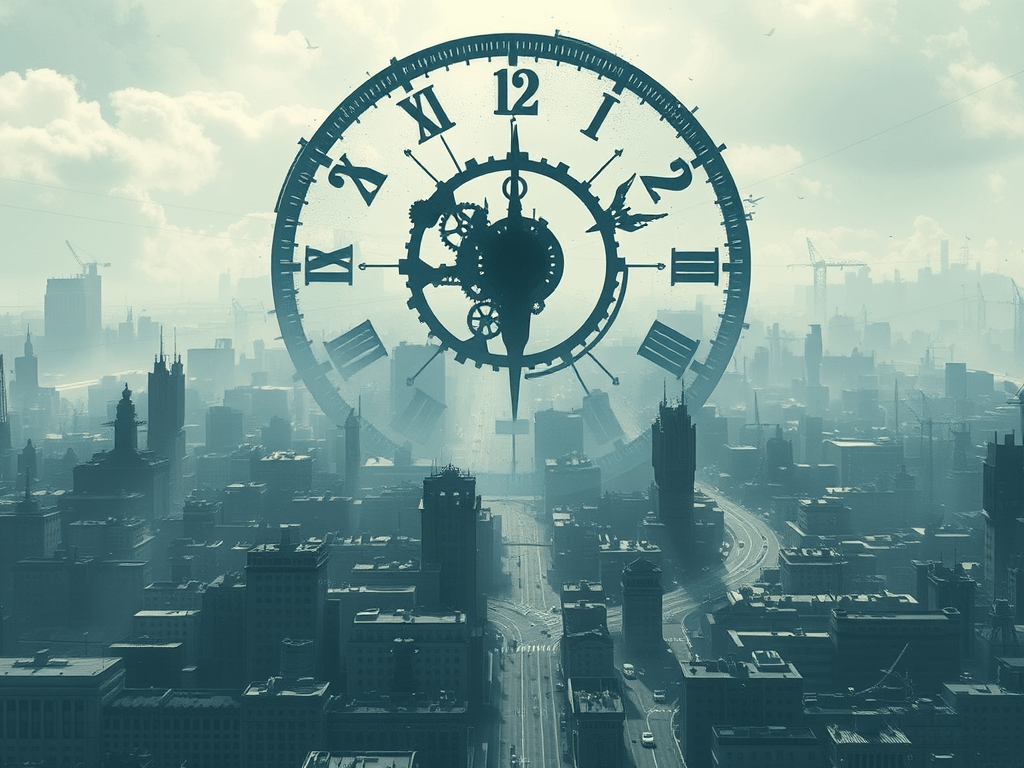
How global crises are ranked, deferred, and normalized—until survival itself becomes conditional.
By CHARCHER MOGUCHE
The world did not stop when the floods came.
It did not pause when crops failed, when hospitals ran out of power, when families learned to live with blackouts as routine rather than emergency. There were no special broadcasts, no urgent summits, no promises that “everything would change.” Life elsewhere continued—markets opened, meetings were held, futures were planned.
For some parts of the world, catastrophe does not arrive like a shock. It settles in. And once it does, it becomes invisible.
This is not because suffering is unseen, nor because the facts are unknown. It is because the modern world has developed a way to manage catastrophe without resolving it. Global crises are no longer simply ignored or denied; they are ranked, scheduled, and triaged. Some disasters are treated as intolerable ruptures that demand immediate action. Others are quietly absorbed into the background—acknowledged, monitored, and indefinitely deferred.
The apocalypse, it turns out, is not universal. It is selectively administered.
Crisis as a Scheduling Problem
In theory, a crisis is an exception—a moment that interrupts normal life. In practice, today’s crises must compete for space on an already crowded global calendar. If an emergency disrupts financial systems, threatens powerful states, or shocks audiences unused to instability, it is elevated to “global.” If it does not, it is reclassified as chronic.

Once suffering is deemed chronic, it loses urgency. Hunger becomes “food insecurity.” Flooding becomes “seasonal risk.” Displacement becomes “protracted.” Language does the work that politics will not: it turns emergency into expectation.
This is not accidental. It is how institutions cope with a world where acknowledging every crisis as urgent would require fundamental change.
A World That Triage Humanity
In emergency medicine, triage is used to decide who receives immediate care, who can wait, and who is unlikely to survive regardless of intervention. On a global scale, a similar logic now governs responses to disaster.
Some populations are stabilized quickly—through massive aid packages, debt relief, reconstruction plans, and sustained media attention. Others are managed indefinitely, kept just functional enough to endure but never fully recover. And some are quietly written off, their suffering normalized as an unfortunate but acceptable outcome of geography, history, or “capacity constraints.”

This triage is rarely stated outright. But it determines whose lives are insured against collapse and whose are expected to absorb it.
Pull Quote:
The world does not deny catastrophe—it queues it.
Deferred Suffering as Policy
Time has become a political weapon. When a crisis can be delayed, stretched, or reframed as long-term, responsibility dissolves. Promises are made not to end suffering, but to manage it. Recovery is always underway—and always incomplete.
For millions, life unfolds in the waiting room of history. Post-disaster reconstruction that never quite arrives. Post-conflict stability that remains fragile. Post-adjustment growth that benefits everyone except those who paid the cost.
Living in a state of permanent “after” erodes more than infrastructure. It reshapes what people believe they are entitled to expect from the world.
Attention Is Not Neutral
Which crises command global outrage is not a measure of scale or severity—it is a measure of proximity to power. Disasters that threaten capital flows, energy markets, or geopolitical stability are elevated. Those that confirm existing hierarchies are absorbed.
This is why some emergencies dominate headlines for months while others struggle to hold attention for days. The imbalance is not about compassion alone; it is about whose disruption matters.
Over time, this produces a cruel asymmetry: some societies are allowed to be surprised by catastrophe, while others are expected to anticipate and endure it.
The Emotional Cost of Being “Manageable”
There is a particular exhaustion that comes from knowing your suffering will not trigger urgency. It is not despair, exactly, but a thinning of expectation. A quiet recalibration of hope.
Resilience is praised in these contexts, but often as a substitute for justice. To be resilient is to adapt without demanding too much, to endure without interrupting the systems that made endurance necessary.
The danger is not that people stop caring. It is that they are trained to survive conditions that should never have been normalized.
How Crisis Triage Shows Up in the Real World
- Media cycles: Some disasters are framed as historic ruptures; others as ongoing conditions.
- Aid structures: Emergency funds flow quickly, while long-term recovery remains underfinanced.
- Policy language: “Adaptation” replaces accountability; “capacity-building” replaces repair.
- Public expectations: Certain populations are expected to cope, not complain.
The most unsettling truth is not that the world is ending unevenly—but that this unevenness has become routine. The apocalypse, for many, is not collapse but suspension. Not chaos, but administration.
When catastrophe is scheduled rather than confronted, survival itself becomes conditional. Not a right, but a decision made elsewhere, according to priorities few ever voted on.
The world keeps ending.
Just not in places powerful enough to make it stop.
If crisis is being managed instead of resolved, then the question is no longer what is happening—but who decides what deserves urgency. Paying attention is not enough. Neither is endurance.
What would it mean to treat chronic suffering as unacceptable—not inevitable?
And what would it require to interrupt a system that has learned to live with unequal endings?





 Sure Media Magazine
Leave a comment