
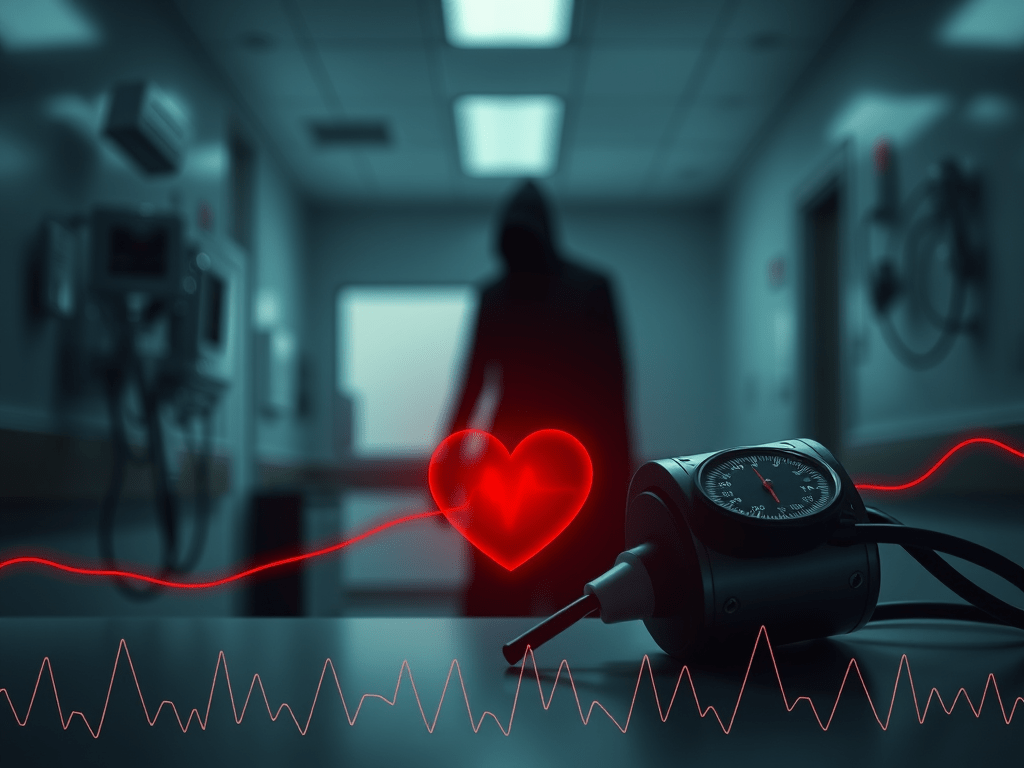
Hypertension isn’t the stuff of cinematic thrills. There are no dramatic swoons or overnight metamorphoses. Instead, it stalks like a silent predator, insidious and devastating, building its merciless grip over time. High blood pressure is the unseen executioner. It lurks in the shadows. Its lethal consequences are revealed when it’s far too late to escape the fatal final act.
Why “Silent” Is Anything But a Gift
Calling hypertension “silent” isn’t poetic. It’s just a vivid description. The elevated blood pressure causes no noticeable symptoms. People stay unaware until a heart attack, stroke, or angina strikes.
But—as physicians and public-health professionals know—silence does not equal harmlessness. Persistently high pressure damages the lining of blood vessels, accelerates arterial stiffening, promotes atherosclerosis, and strains the heart over decades. Over time, it becomes one of the leading preventable causes of cardiovascular death.
When hypertension slips under the radar, the risk factor skyrockets. This can also happen if it is wrongly diagnosed. It flings open the doors to heart-related diseases. These are often preventable disasters waiting to strike.
A Hidden Epidemic
Recent information from the American Heart Association (AHA) reveals the significance of this issue. Their 2024 stats state that around 122.4 million adults in the U.S. — or 46.7% — are considered to have hypertension.
The management of this issue is profoundly inadequate. Among individuals who are diagnosed or eligible for therapy, a significant number stay uncontrolled. The Million Hearts initiative is led by public health and clinical experts. The initiative reveals that a staggering 74% of those requiring treatment fail to achieve adequate blood pressure control.
Recognizing and addressing “the silent assassin” is crucial. Failing to do so hints at clinical inertia. It also highlights deeper social and systemic challenges. We must collectively confront these issues with understanding and compassion.
Redefining the Threshold: Earlier Detection, Better Outcomes.
One key change in recent years is how doctors define hypertension. New guidelines from the AHA and its partners have lowered the threshold to 130/80 mmHg. This is a change from the earlier level of 140/90.
The redefinition reflects growing evidence. Even slight increases in blood pressure raise cardiovascular risk. This allows for earlier intervention through lifestyle changes or medication.
Yes, more people are now slapped with the label of “hypertensive.” But don’t mistake that label for a mere judgment. It’s a rallying cry. This label is a powerful warning that can avert disaster. As the guideline authors boldly declared, this expansion “will save lives … by preventing more strokes, cardiovascular events and kidney failure.”
Why Ain’t we on the Winning Side?
Even though high blood pressure is common, dangerous, easy to detect, and treatable, it is still often uncontrolled. This happens because of many mistakes and gaps, both by individuals and by the healthcare system.
- Lack of awareness: A significant number of individuals do not check their blood pressure. Many mistakenly believe that the absence of symptoms equates to the absence of issues.
- Lifestyle and environment: Poor diets, lack of exercise, processed foods, high stress, and obesity contribute. Poor diets, insufficient exercise, processed foods, high stress levels, and obesity contribute to health issues.
- Inequities in access and outcomes: Some groups, especially marginalized communities, face greater challenges with hypertension and its complications.
We have the tools to control high blood pressure, but often lack the will or teamwork.
The Bold Moves We Must Make Together
Winning against this assassin requires a dual approach: individual responsibility and systemic transformation.
At individual levels;
- Everyone should know their blood pressure numbers. Regular checks at clinics, pharmacies, or at home are important.
- Adhere to antihypertensive therapy and regular follow-ups as recommended. Combining medication and lifestyle changes often produces effective outcomes.
At the system level;
- Health systems should allow affordable blood pressure screening for all adults.
- Public health campaigns should destigmatize hypertension and show it as a manageable condition.
- Deploy community-based and team-based models of care. Pharmacists have shown value in improving control. Community health workers, remote monitoring, and patient education have also contributed significantly.
Why It Matters — Right Now, Right Here
Statistics are from U.S. data, but the logic is global. Hypertension affects everyone, regardless of geography, ethnicity, or income. As diets change and sedentary lifestyles increase, so does high blood pressure, particularly in many African nations.
It is a call to reshape that backward public mindset. Hypertension is quiet, but its impact is deafening. We have evidence, treatment, and increasingly, tools for prevention and control. What remains is widespread awareness, commitment, and action.
Let’s sound the alarm — not out of fear, but with fierce resolve and intent. When we take blood pressure readings, we aren’t just collecting numbers; we are safeguarding futures and actively preventing unnecessary loss.





 Sure Media Magazine
Leave a comment