

As crypto leaders question long-standing market cycles and tech titans push data infrastructure into space, finance may be preparing for its most profound structural shift yet.
By CHARCHER MOGUCHE
The trade cleared faster than expected.
There was no congestion, no visible arbitrage delay, none of the familiar micro-frictions that usually ripple through global markets. It didn’t feel dramatic. It felt efficient—almost indifferent. At first glance, it looked like progress. Only later did the unsettling possibility surface: what if this efficiency wasn’t the result of better software, but of a system no longer constrained by Earth at all?
That question—quiet, technical, and easy to dismiss—may sit at the center of finance’s next great transformation.
In recent months, two developments have emerged that, taken together, hint at a deeper shift in how markets might function going forward. Changpeng Zhao, founder of Binance, suggested that crypto markets could be entering a “supercycle,” one no longer governed by the familiar four-year rhythm tied to Bitcoin halvings. Around the same time, reports began circulating that Elon Musk and Jeff Bezos are competing to push large-scale data infrastructure into space—initially in orbit, with longer-term ambitions that extend well beyond Earth.
Individually, these stories read like industry speculation. Together, they suggest something more fundamental: the gradual uncoupling of computation, capital, and control from the planet that has historically anchored them.
Markets Follow Infrastructure, Not Narratives
Financial markets are often described as psychological systems—driven by fear, greed, and collective belief. But beneath the narratives, markets are infrastructural machines. They respond to latency, energy availability, regulatory friction, and compute capacity just as much as they respond to sentiment.
Every major shift in market behavior has followed an infrastructural change. Railroads compressed time and space for capital. Telegraphs accelerated information asymmetry. The internet turned markets continuous. Cloud computing centralized execution power. None of these changes announced themselves as revolutions; they simply altered incentives until behavior followed.
What’s unfolding now may be the next iteration of that pattern.
The Real Bottleneck Is Compute
Artificial intelligence has made one constraint painfully clear: Earth is becoming an expensive place to run computation at scale. Data centers already consume vast amounts of electricity and water. Cooling costs are rising. Power grids are strained. Local opposition to new facilities is growing. Regulation is fragmented, uneven, and increasingly politicized.
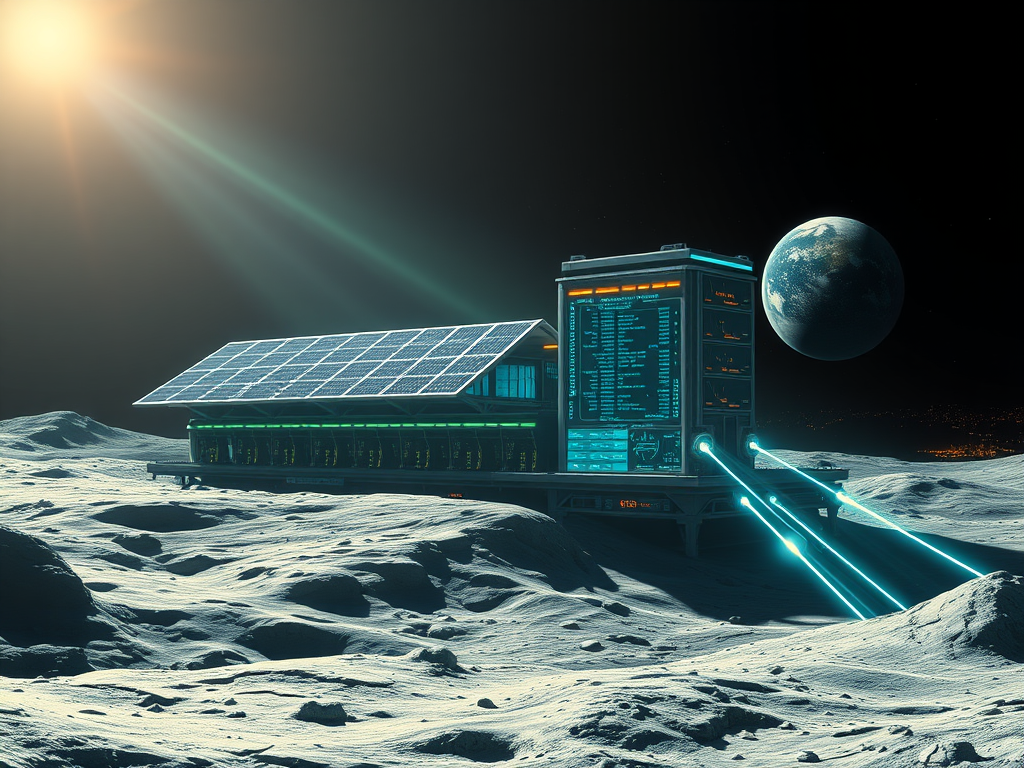
From a purely economic standpoint, moving compute off-planet begins to look less absurd and more inevitable. Space offers near-continuous solar energy, minimal cooling requirements in vacuum environments, and—perhaps most consequentially—distance from national jurisdiction.
For systems that value uptime, neutrality, and scale, those features are not luxuries. They are strategic advantages.
Why Crypto Feels This Shift First
Crypto markets are unusually sensitive to infrastructure changes because they are natively digital, globally distributed, and energy-dependent. Bitcoin’s much-discussed four-year cycle was never just about halvings; it was about how supply shocks interacted with Earth-based constraints—energy costs, miner geography, regulatory crackdowns, and human coordination around predictable events.
If settlement, custody, or even portions of compute migrate beyond Earth’s surface, those constraints weaken. Volatility doesn’t disappear, but it changes shape. Crashes driven by localized disruptions become less frequent. Liquidity behaves differently when systems no longer “sleep” in sync with human time zones or geopolitical calendars.
This is the context in which the idea of a supercycle becomes plausible—not as endless price appreciation, but as a market regime no longer anchored to familiar rhythms.
Jurisdiction Ends Where Orbit Begins
A data center in low Earth orbit does not exist within a traditional legal framework. It does not belong to a city, a country, or a voting population. It cannot be easily sanctioned, shut down, or compelled. It executes instructions, validates data, and routes information according to protocol, not policy.
This does not mean regulation disappears. It means its leverage changes.
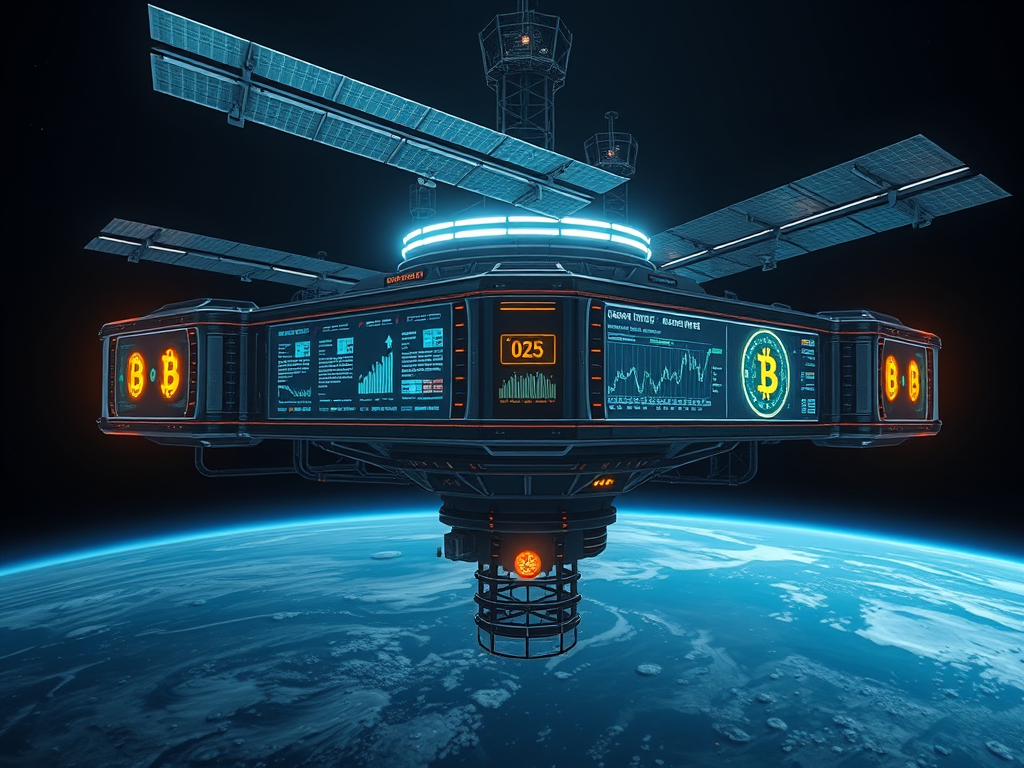
For centuries, states have exercised power by controlling land, infrastructure, and energy. Off-planet compute challenges all three at once. Even partial migration weakens the assumption that markets must ultimately answer to terrestrial authorities.
The result is not chaos, but asymmetry: systems that operate above the planet gain optionality, while those bound to it absorb the friction.
From Offshore Finance to Off-Planet Finance
The comparison is uncomfortable but instructive. Offshore finance didn’t destroy national economies; it restructured them. Capital learned how to move faster than regulation, and states adapted unevenly. Winners were those who anticipated the shift rather than resisted it.
Off-planet compute represents a similar inflection point, but at a higher order of magnitude. This is not about tax optimization or secrecy. It is about where the most critical layers of economic activity physically reside.
Once infrastructure moves, behavior follows. And once behavior follows, narratives adjust to justify what has already happened.
Why This Isn’t Science Fiction
Skepticism is reasonable. Space-based data centers face enormous challenges: launch costs, radiation, maintenance, latency trade-offs. But the question is not whether the transition is easy. It is whether the incentives are strong enough to sustain iteration.
History suggests they are.
Early cloud computing faced similar doubts—security risks, reliability concerns, unclear economics. Today, it underpins nearly every major market. Space-based compute does not need to replace Earth-bound systems entirely to change market behavior. It only needs to handle enough critical load to alter incentives at the margin.
That is how structural change usually begins.
Pull Quote:
“Finance has always followed infrastructure. Infrastructure is leaving Earth.”
Most paradigm shifts feel invisible while they are happening. They don’t arrive with crashes or declarations. They arrive as improvements—faster settlement, lower costs, fewer interruptions. Only later do we realize that the old rules stopped applying somewhere along the way.
If markets begin to feel unfamiliar—less reactive, less cyclical, less tied to earthly events—it may not be because human behavior has changed. It may be because the systems underpinning finance have quietly slipped the bonds of gravity.
Whether or not data centers reach the Moon this decade, the incentives driving computation away from Earth are already reshaping how markets function. For investors, regulators, and builders alike, the greater risk may not be overestimating this shift—but noticing it too late, after the center of gravity has already moved.






 Sure Media Magazine
Leave a comment