

A century-old concept resurfaces with modern engineering—but brutal physics and environmental challenges could keep it from scaling.
By CHARCHER MOGUCHE
Beneath the rolling waves lies a reservoir of untapped energy. Sunlight warms the surface, while the deep ocean remains icy and unyielding. The temperature difference—sometimes as small as 20°C—could, in theory, drive turbines to produce electricity. This is the promise of Ocean Thermal Energy Conversion (OTEC), a technology first imagined over a century ago. Today, climate urgency and engineering innovation have reignited interest in this blue frontier. Yet, for all its elegance, OTEC faces a host of brutal realities: inefficiencies, biofouling, structural strain, and environmental trade-offs. The question is no longer whether OTEC can work in principle—it can—but whether it can ever work at the scale humanity needs.
OTEC is more than a scientific curiosity. With global energy demand rising and fossil fuels faltering, new renewable sources are desperately needed. Oceans cover 70% of the planet; if their thermal energy could be harnessed efficiently, the impact would be enormous. But the devil lies in the details: pumping cold water from 1,000 meters, preventing marine growth from clogging pipes, and overcoming heat exchange limitations remain formidable engineering problems. By examining these challenges through the eyes of marine engineers and thermodynamics experts, we can assess whether OTEC is a visionary solution—or a costly experiment that may never leave the lab.
OTEC relies on a simple principle: heat flows naturally from warm to cold. By creating a closed loop, warm surface water evaporates a working fluid with a low boiling point, such as ammonia. The expanding vapor spins a turbine, generating electricity, before condensation occurs with cold deep water, restarting the cycle. Open-cycle systems operate slightly differently, using seawater itself as the working fluid, producing desalinated water as a bonus.
Yet simplicity is deceiving. Efficiency is painfully low—often below 3%. Engineers must balance fluid dynamics with thermodynamics to maximize output, while avoiding heat exchanger inefficiencies. Pipes must withstand the crushing pressures of the deep ocean, and marine organisms—barnacles, algae, and more—clog intakes over time. As Dr. Keiko Tanaka, a thermodynamics expert in marine energy, notes: “OTEC is elegant on paper, but the physics of the ocean doesn’t forgive shortcuts.”
Quick Facts About OTEC:
- First proposed by French engineer Jacques-Arsène d’Arsonval in 1881.
- Hawaii hosts one of the longest-running pilot plants.
- Net efficiency remains below 3%, compared with 15–20% for solar.
Engineering and Environmental Hurdles
The devil is in the details. Pumping cold water from depths exceeding 1,000 meters is not just expensive; it stresses materials and invites failure. Even a single microfracture can reduce output drastically. Engineers combat biofouling with chemical coatings, but these often have limited lifespans and may harm local ecosystems. Corrosion is another persistent adversary; seawater is unforgiving.
Environmental impacts also complicate matters. Drawing nutrient-rich deep water to the surface alters local marine ecosystems. While small-scale pilots show minimal disruption, scaling to gigawatt levels could have unforeseen consequences. Cost is another barrier: OTEC remains more expensive than solar or wind per megawatt, even before maintenance challenges are considered.

Can It Ever Scale?
Despite decades of experimentation—from Hawaii to Japan—OTEC has never achieved commercial viability. Its niche may lie in island nations, where local energy independence offsets high costs, or as a complement to other renewables. Pilot projects have demonstrated ingenuity: improved heat exchangers, anti-biofouling coatings, and modular turbine designs. Yet scaling globally would require breakthroughs in materials science, fluid dynamics, and economic models.
The core issue remains energy density. A vast array of turbines and pipes would be required to supply even modest urban centers. Governments and investors are cautious, and private funding is limited. While the allure of a 24/7 renewable source from the ocean is tempting, the practical reality is that OTEC is unlikely to replace solar, wind, or hydro at a planetary scale.
Pull Quote:
“The ocean offers power beyond imagination—but harvesting it remains an experiment in patience, engineering, and the cold, relentless physics of the deep.”
As Dr. Tanaka emphasizes: “We may never see OTEC powering entire nations, but its experiments teach us about the ocean, engineering limits, and the creative ways humans attempt to harvest energy from nature.”
OTEC is a story of ambition and restraint. The ocean, vast and constant, beckons with potential energy, yet punishes miscalculations. Engineers and scientists continue to push boundaries, testing new materials, better turbines, and smarter designs. Still, the dream of powering entire continents from the ocean’s temperature gradient remains distant. Perhaps OTEC’s real value is not in the electricity it produces but in what it teaches us about balancing innovation with nature’s immutable rules.
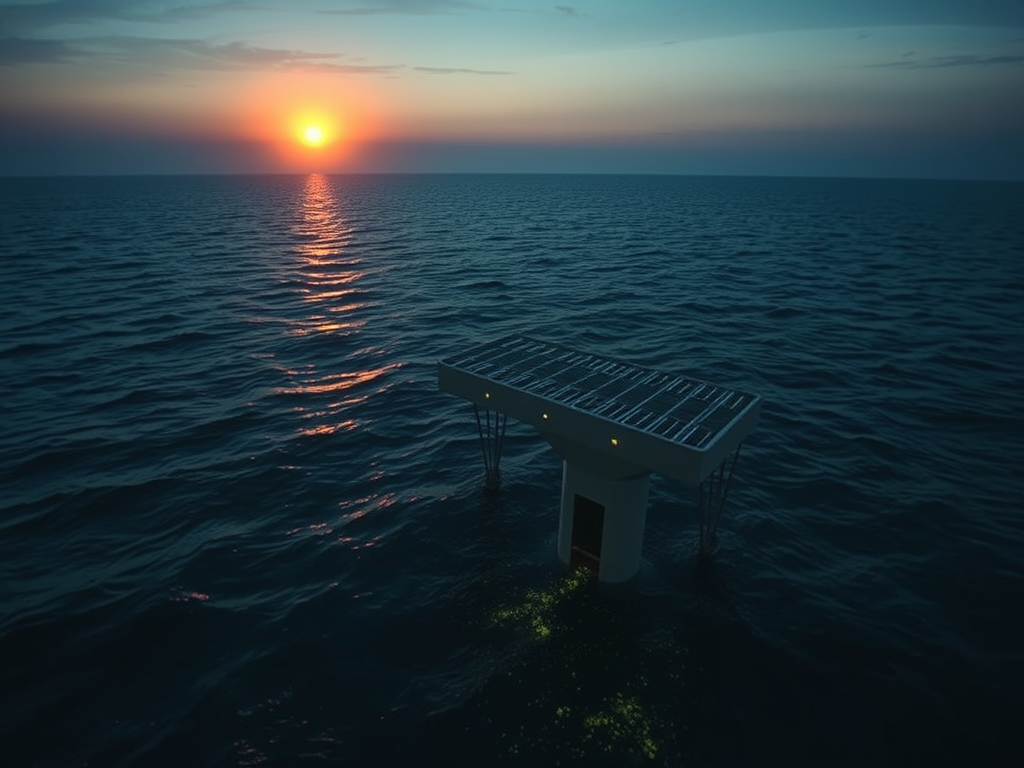
Next time you gaze at the ocean, consider the energy swirling beneath the waves—and the limits of human ingenuity in capturing it. Could the deep sea one day be a cornerstone of renewable energy, or is it destined to remain a laboratory of ideas?






 Sure Media Magazine
Leave a comment