
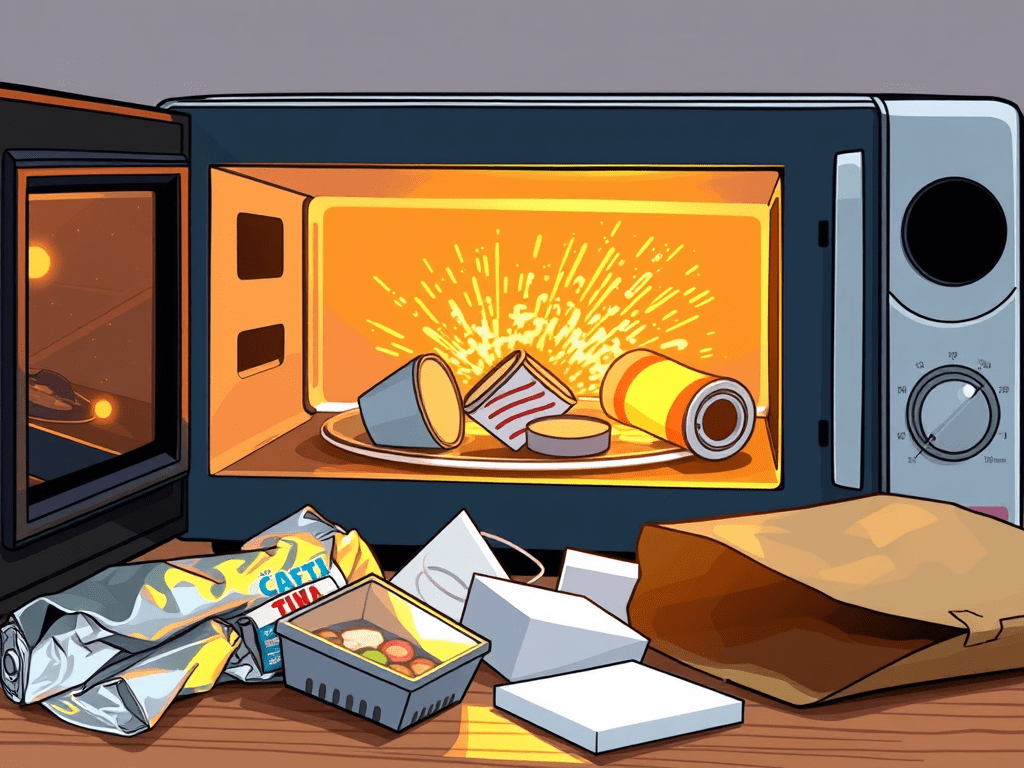
Microwaves are a lifesaver for quick meals and reheating, but let’s be real not everything can be microwaved. Toss in the wrong thing, and you could end up with sparks flying, a melted mess, or even a fire. I’ve seen it happen to friends who didn’t think twice about popping in a takeout container. The good news is knowledge goes a long way in keeping your kitchen safe.
In this guide, we’ll cover the top everyday household items to avoid microwaving, explain why they’re risky, and share smarter alternatives. We’ll stick to the facts from reliable sources, so you can microwave with confidence.
1. Anything Metal, including Aluminum Foil
Metal is public enemy number one in the microwave world. It doesn’t absorb the waves like food does instead, it bounces them back, creating electrical arcs (scary sparks) that can damage your appliance or start a fire.
Steer clear of:
- Aluminum foil or wrappers
- Metal utensils, like forks or spoons
- Dishes with metallic trims & paint
- Takeout containers with staples
Even a tiny bit of metal can cause trouble, if you’ve ever accidentally left a twist tie in there, you know the drill loud pops and potential disaster.
Safer swap: Use microwave safe paper towels or vented plastic lids to cover food.
2. Non-microwave-safe Plastic Containers
We’ve all done it, grabbed a yogurt tub or old takeout box for a quick reheat. But thin, disposable plastics aren’t built for extreme heat they can warp, melt, or release harmful chemicals like BPA into your meal, which is dangerous.
Avoid:
- Yogurt or margarine tubs
- Single-use takeout containers
- Cracked or worn-out plastics
- Any plastic without a “microwave-safe” label
Pro tip: Heat can make plastics break down faster, so even if it looks okay, it might not be.
Safer swap: Opt for glass (like Pyrex) or ceramic containers they heat evenly without the risks.
3. Styrofoam (Polystyrene) Containers
Foam takeout boxes are handy, but they’re a no-go in the microwave. The material softens under heat, can melt into your food, and might leach styrene a potential toxin especially if it’s not labeled as microwave-safe (most aren’t).
What happens:
- It deforms or melts
- Releases chemicals that could affect taste and your health
If you’re reheating leftovers, take an extra 30 seconds to transfer them.
Safer swap: Plate it on a ceramic dish or use microwave-safe paper plates for quick fixes.
4. Paper Bags, Newspapers, and Printed Materials
Plain white paper towels are fine for short bursts in the microwave. But brown paper bags, newspapers, or anything with ink or dyes pose a big risk. They can overheat unevenly, catch fire, or release fumes from the inks and adhesives.
Watch out for:
- Grocery or lunch bags
- Newspaper wrappers
- Printed gift bags or cardboard with coatings
Unless it’s explicitly marked microwave-safe (like some popcorn bags), please do not use.
Safer swap: Stick to plain, undyed paper products designed for microwave use, or just use a microwave-safe plate.
5. Running It Empty
This one catches people off guard no food means no absorber for the microwave energy. It bounces around inside, overheating the machine’s core parts (like the magnetron), which could lead to costly repairs or a fire hazard.
Simple rule: Always have something in there, even if it’s just a cup of water for testing.
Safer swap: If you’re cleaning or testing, add a microwave-safe mug of water.
The Science Behind the Risks
Microwaves work by exciting water molecules in food to create heat. The hazards below are bound to happen in the case of mis-use:
- Fires: Metals and dry papers spark or ignite because they conduct & trap energy.
- Chemical leaks: Plastics and foams break down, releasing stuff you don’t want in your dinner.
- Meltdowns: Heat warps materials, contaminating food or ruining your microwave.
- Overload damage: Empty runs fry internal components over time.
Staying aware prevents accidents think of it as basic kitchen self-defense.
Smart Alternatives for Microwave Safety
Upgrade your routine with these reliable options:
- Glassware: Durable, non-reactive, and easy to clean.
- Ceramics: Great for even heating just check for no metallic accents.
- Labeled plastics: Look for the wavy lines symbol indicating microwave safety.
- Covers: Use vented lids or damp paper towels to prevent splatters without sealing in pressure.
These won’t spark, melt, or taint your food, making mealtime smoother and safer.
Quick Microwave Safety Checklist
Before hitting start ensure you:
✔️ Scan for the microwave-safe symbol.
✔️ Remove any metal, foil, or twists.
✔️ Transfer from foam or thin plastic to something sturdy.
✔️ Vent containers don’t seal them tight (pressure builds up).
✔️ Ensure it’s not empty.
Never microwave:
❌ Metals or aluminium foil.
❌ Styrofoam unless labeled safe.
❌ Disposable plastics.
❌ Paper bags or newspapers.
❌ Sealed jars.
❌ Nothing at all.
Stop right away if you notice:
⚠️ Sparks or arcing.
⚠️ Smoke or burning smells.
⚠️ Melting or warping.
⚠️ Unusual noises like popping or zapping.
Wrapping It Up
Microwave mishaps are more common than you’d think, but avoiding unsafe everyday items keeps things safe and simple. Stick to glass, ceramic, or certified-safe plastics, and you’ll protect your appliance, your food, and yourself. Remember the golden rule: If it’s not labeled microwave safe, leave it out. Next time you’re in a rush, you’ll thank yourself for double checking happy (and safe) microwaving!





 Sure Media Magazine
Leave a comment