
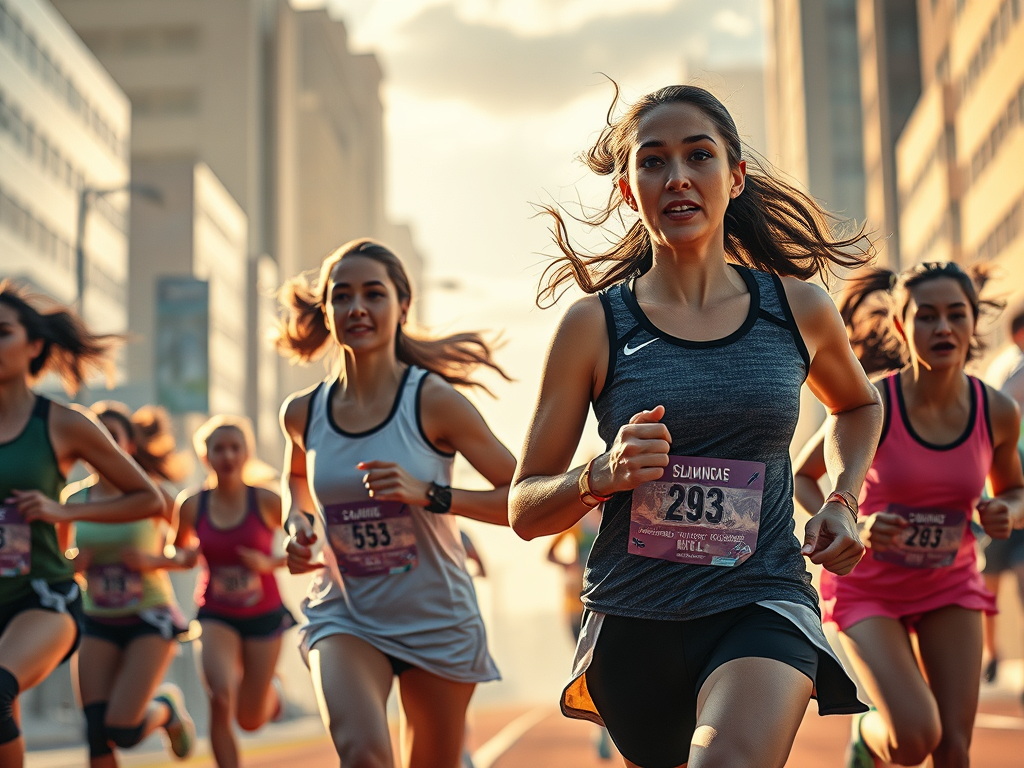
Running looks simple from the outside—laced shoes, open road, and a steady heartbeat syncing with the world. But for women, running carries a deeper weight. It is exercise, yes, but also politics, risk, visibility, and sometimes a fight for respect. Despite the explosive growth of women in marathon fields, track events, trail ultras, and recreational running communities, the sport continues to expose gaps in safety, representation, science, and equity.
Women are running faster, farther, and with more cultural impact than ever. But beneath the celebration lies a set of provocative questions: Why is the act of running still so complicated for women? Why does the world cheer female athletes yet create barriers that silence, control, or endanger them? Why is a woman runner’s body still treated like public property?
This article unpacks the ten most urgent cultural, scientific, and structural challenges women face in the running space today—and why answering them is essential for the future of the sport.
1. The Safety Paradox: Why Does a Simple Run Still Carry Fear?
For many men, a morning run is a warm-up. For many women, it is a risk assessment.
Route planning becomes a mental checklist:
Is it too dark? Too isolated? Too crowded? Will someone follow me? Will I come home?
In 2025, women still run with pepper spray, share live locations, and brief family members on expected return times—rituals that men rarely consider. The global rise of harassment incidents, disappearances, and attacks on female athletes has hardened a truth that should be unacceptable: running is not equally safe for everyone.
A run should never feel like a negotiation with danger. Yet many women admit the constant sense of hyper-awareness—scanning cars, shadows, figures, and sounds—is mentally exhausting. The safety conversation has evolved beyond personal strategies and into a social question:
Why is society normalizing women’s danger instead of eliminating the systems that create it?
2. The Performance Double Standard: Why Are Women Still Asked to Prove Themselves?
The running world celebrates elite female athletes with record-breaking headlines and marketing campaigns. But underlying attitudes remain outdated. Women still hear comments like:
- “Wow, you’re fast—for a girl.”
- “You don’t look like a runner.”
- “Are you sure you can handle that mileage?”
Women athletes often face skepticism, condescension, or surprise when they excel—as if excellence is unusual. This reduces their accomplishments to exceptions, not expectations.
The unspoken rule of the industry? Men’s performance is assumed; women’s performance is interrogated.
Beyond recreational spaces, even elite athletes encounter biased commentary analyzing their bodies, hormonal cycles, or motherhood choices more than their achievements. Despite scientific evidence proving women’s growing dominance in endurance and ultra-distance events, society still grapples with accepting women as true athletic equals.
3. The Body Expectation Trap: Why Is the Female Runner’s Body Still Treated as Public Property?
This is one of the most provocative and emotionally loaded issues in women’s sports.
A female runner’s body receives endless opinions—many unsolicited and often contradictory:
- “You’re too muscular.”
- “You’re too skinny.”
- “You don’t look feminine enough.”
- “You’re too curvy to be an athlete.”
- “Why do you dress like that when running?”
No matter how a woman looks, there’s always someone ready to judge.
Even worse, running gear has historically been designed around a narrow body ideal. Women with larger busts, wider hips, or shorter torsos struggle to find high-performance clothing that fits. Sports bras—the single most essential piece of women’s athletic gear—often remain expensive, poorly sized, or dismissive of the realities of running with breasts.
The question that cuts deepest:
Why does society feel entitled to define, critique, and control what a woman runner’s body should be?
4. Sponsorship Inequality: Why Are Female Athletes Paid Less for Equal Impact?
Major brands profit from women’s interest in fitness, wellness, and sportswear. Yet female runners—especially elite athletes—remain underpaid, under-promoted, or entirely overlooked.
Research from the past decade consistently shows:
- Women receive fewer sponsorship deals.
- Their contracts tend to be shorter and less secure.
- Pregnant athletes have historically been penalized or dropped entirely.
- Media coverage heavily skews toward male events and male athletes.
A woman should not need to choose between motherhood and a running career. The fact that this is still a negotiation shows how far the industry must go.
5. The Period Problem: Why Is Female Physiology Still an Afterthought?
Women make up at least half the running community worldwide. Yet the science guiding training, performance, recovery, and sports medicine is still largely based on male physiology.
This leads to massive gaps:
- Period pain is often dismissed or labeled as “weakness.”
- Many coaches lack training on the menstrual cycle and performance.
- Wearable tech rarely accounts for hormonal fluctuations.
- Research funding for female-specific studies remains limited.
Periods affect hydration, injury risk, energy levels, oxygen uptake, and temperature regulation—yet many athletes receive no structured guidance. Hormonal contraception and pregnancy-related performance changes are similarly misunderstood.
The question is not simply scientific—it is political:
If women are central to the sport, why isn’t their biology central to the science?
6. The Coaching Gap: Why Are Women Underrepresented in Leadership?
Women are present on start lines but nearly absent from coaching benches, team management, and sports policy boards. An overwhelming majority of elite-level coaches are men.
This imbalance creates several issues:
- Lack of mentorship for aspiring women coaches.
- Miscommunication about female physiology, body image, and safety.
- Power dynamics that can lead to emotional or even sexual exploitation.
Women need coaches who understand them not as medical anomalies or emotional mysteries, but as equally capable athletes with specific physiological patterns and social challenges.
7. Online Harassment: Why Does Visibility Invite Risk for Women Athletes?
The digital era has turned many runners into content creators, influencers, or micro-entrepreneurs. Running communities thrive on Instagram, TikTok, YouTube, and Strava.
But women who post running content face:
- Sexualized comments
- Unwanted advances
- Body shaming
- Location-tracking harassment
- Doxxing or stalking threats
This creates a chilling effect. Many women censor their outfits, locations, or training details—not for privacy, but for protection.
The internet promised empowerment. For female athletes, it often delivers exposure and vulnerability at the same time.
8. The Culture of Pain: When Does Mental Toughness Become Medical Neglect?
The running world glorifies pushing limits—“no pain, no gain,” “grind harder,” “run through it.” For women, this culture becomes complicated.
Many conditions that disproportionately affect women—like stress fractures, anemia, RED-S (Relative Energy Deficiency in Sport), endometriosis, and hormonal imbalances—are often misdiagnosed or ignored.
Female athletes, eager to prove themselves, sometimes internalize harmful messages like:
- “Pain means progress.”
- “You’re just being emotional.”
- “You need to toughen up.”
But pain is not character. Pain is data.
A running culture that celebrates resilience must also respect biology, rest, and recovery—especially for women whose symptoms are dismissed as exaggerations.
9. Representation: Whose Bodies, Stories, and Faces Are Shaping the Running Narrative?
Scroll through a typical running brand campaign, and you’ll often see a similar image: young, slim, light-skinned women. But the real running population is far more diverse.
Underrepresented groups include:
- Plus-size women
- Older women
- Women with disabilities
- Women of color
- Postpartum athletes
- Hijabi runners
- Low-income runners
When brands ignore them, they send a silent message:
“You are not the ideal athlete we want.”
Representation isn’t aesthetic—it’s access. If women cannot see themselves in the sport, the sport loses them.
10. The Economics of Running: Why Do Women Pay More for Basic Gear?
Running is marketed as the most accessible sport. You only need shoes, right?
Not exactly—for women, the list grows:
- A high-quality sports bra (often overpriced)
- Women-specific shoes, often more expensive
- Safety devices
- Compression gear designed for hormonal bloating
- Apparel adapted for pregnancy or postpartum bodies
The “pink tax” is alive across sportswear platforms. Women pay more for gear simply because it’s made “for women.”
At scale, this creates economic barriers that keep many women from participating fully in the sport they love.
Where Do We Go From Here? The Future of Running Depends on Listening
Women are not asking for special treatment. They are asking for equal safety, equal representation, equal data, equal science, and equal respect.
The running world is on the brink of transformation. Women are pushing boundaries, setting records, rewriting norms—and demanding better from the institutions around them.
The real question is no longer whether women belong in running.
They always have.
The question is whether the running world is ready to evolve with them.
A future where women’s experiences are normalized—not marginalized—will make the sport better for everyone. And if the industry listens, women will not just shape the future of running. They will lead it.




 Sure Media Magazine
Leave a comment