
Archivists, spiritual leaders, and young technologists are building privacy-first repositories to protect endangered cultural memory from AI scraping, platform extraction, and data colonialism.
By CHARCHER MOGUCHE
Digital Memory at Risk
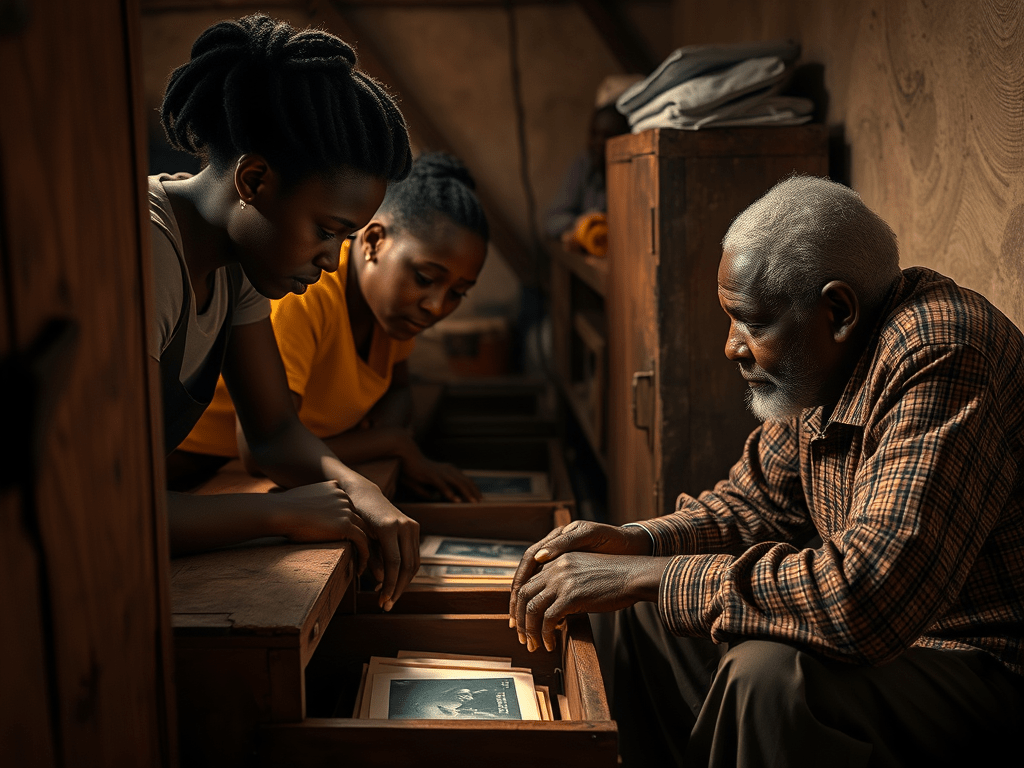
In a small Nairobi compound, a group of young archivists lean over a weathered wooden cabinet, its drawers filled not with files, but with memories: recordings of sacred chants, photographs of rituals, and transcribed oral histories passed down for generations. Nearby, encrypted folders on a laptop remain offline, accessible only to a handful of trusted custodians. Here, the digital world is not a friend—it’s a threat. AI algorithms, platform scraping, and global data collectors lurk in the background, ready to absorb what these communities have fought to preserve. And yet, some knowledge is intentionally withheld, safeguarded in silence.
Preservation vs. Protection
Across Africa, privacy-first cultural guardians—archivists, elders, and tech-savvy youth—are quietly shaping the rules of the digital world. They face a profound choice: preserve endangered histories by digitizing them, or protect sacred knowledge by keeping it unrecorded. Their work is not just about safeguarding local memory—it challenges the assumptions of AI, global platforms, and Big Tech, redefining privacy as a cultural, ethical, and spiritual value. Every decision about what to store, encrypt, or withhold tells a story about who controls the digital inheritance of humanity, why some knowledge is untouchable, and what it means to assert sovereignty in a universe obsessed with data.
Guardians in Action
Some stories live only in memory. Amina, a student archivist in Nairobi, spends her nights scanning fragile audio recordings of Maasai rituals. She carefully encrypts the files, deciding what will be stored online and what will remain offline. Elders sit beside her, debating which chants carry spiritual power that could be diluted or misused if digitized. One elder explains, “The internet cannot hold our respect or the way we honor our ancestors. If it tries, the story dies.”

In another village, a tech-savvy collective in Lagos has built a private, decentralized server to house oral histories. They monitor who accesses the data and under what conditions, framing it as a form of digital guardianship. Across these communities, technology is not neutral—it is a tool of protection, a way to assert control over what is shared and what remains sacred.
Even more quietly, in South Africa, elders working with young archivists are experimenting with offline-first methods—transcribing stories in secure notebooks or on encrypted USB drives—so knowledge survives without being exposed to the internet at all. Every decision about what to digitize, and what to withhold, is a negotiation between survival and sanctity.
Ethics, Philosophy, and Cultural Sovereignty
Digital preservation is a moral act. Communities deliberate over which knowledge is communal, which is private, and which carries moral responsibility. Rituals, chants, and oral histories are treated as living entities—they carry power only when experienced in context, not when digitized. Digitizing improperly risks stripping meaning, violating spiritual protocols, or allowing misappropriation.
These choices illuminate how privacy can be cultural, not just technical. Communities are asserting agency over what the digital world inherits, ensuring that the stories passed down through generations survive on their terms.
“Some stories are meant to live in memory, not on a server. Our ancestors trusted us with them—we cannot betray that.”
Privacy as Cultural Value
Guardians are redefining privacy. Encrypted, access-controlled archives challenge Big Tech’s default assumptions that everything should be public, monetized, or extractable. These “closed archives” are more than repositories—they are acts of resistance, asserting that some knowledge is too sacred to be owned by an algorithm.
Through these efforts, communities are balancing ethics, technology, and culture, negotiating not only what survives digitally but how it survives. Every withheld chant, every decision to remain offline, becomes an assertion of cultural sovereignty and a rejection of extractive digital norms.
Lessons from the Guardians
- Only digitize content agreed upon by the community.
- Use encrypted, access-controlled repositories.
- Preserve context alongside content—stories without context lose meaning.
- Recognize that some sacred knowledge is best kept offline.
- Treat digital storage as stewardship, not ownership.
The Stakes in the Digital Age
Every withheld story is resistance. Every encrypted folder, every decision to remain offline, is a declaration that some histories, rituals, and oral traditions cannot—and should not—be commodified. These communities are quietly asserting the first real limits on what the internet can inherit, protecting what defines a people in a world increasingly dominated by extractive technology.
Some stories must remain untouchable. In safeguarding what is unrecorded, these communities quietly set the rules for the digital inheritance of cultural memory. In a universe obsessed with data, certain knowledge belongs only to the people who live it. And it is in this quiet act of resistance—encrypted, offline, and fiercely protected—that the future of Africa’s cultural memory is being shaped.





 Sure Media Magazine
Leave a comment