
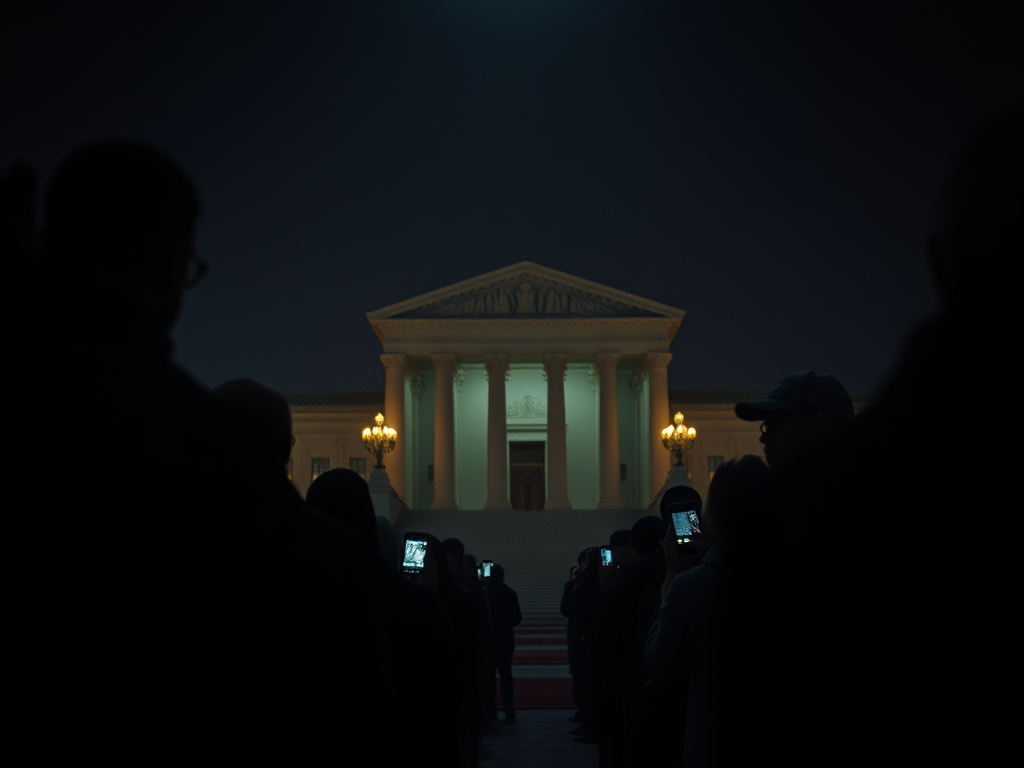
Across the country, life-changing Supreme Court decisions now arrive without hearings, without explanations, and often after midnight. For millions of Americans, democracy is no longer shaped in daylight but in the quiet hours when the public is asleep.
A Country Governed by Unnamed Orders
At 12:03 a.m. on a humid August night, a group of Tennessee parents awoke to notifications that their children’s gender-affirming healthcare appointments had been cancelled. No doctor had called. No agency had issued guidance. The only change came from a one-paragraph Supreme Court shadow-docket order, unsigned and unexplained, reinstating a statewide ban.
The ruling appeared online with no legal reasoning.
But its consequences were immediate.
This is how the Court now increasingly shapes American life, not through landmark arguments or public scrutiny, but through procedural shortcuts delivered after dark.
What Exactly Is the Shadow Docket?
The “shadow docket” refers to emergency orders the Supreme Court issues without:
- oral arguments
- public hearings
- signed opinions
- transparent reasoning
- full briefing
Historically, these were used for genuine emergencies.
Today, they have become the Court’s fastest-growing tool of political power.
Between 2017 and 2024, shadow docket use increased at least 600%, according to multiple legal scholars.
In 2025, the trend accelerated even further especially in cases involving:
- immigration
- LGBTQ+ rights
- voting laws
- reproductive freedom
- environmental protections
- and now, birthright citizenship
These rulings aren’t temporary blips.
They are shaping national policy without democratic oversight.
Real Lives, Real Consequences
Emergency orders are supposed to prevent imminent harm. Instead, they now create it.
Across the country:
- In Arizona, a previously registered voter discovered she’d been purged from the rolls after a late-night order reinstated a suspended voter-ID rule.
- In Florida, a trans teen’s medical care was halted mid-consultation after an unsigned ruling reversed a lower court injunction.
- In Texas, hospitals began delaying newborn birth certificates for parents with “incomplete documentation,” citing legal confusion after a shadow-docket intervention on birthright citizenship.
The Court has repeatedly argued these are “procedural actions.”
For the people living under them, nothing could feel more substantive.
Why These Orders Happen at Night
It is not coincidence that the Court’s most controversial orders often appear:
- late at night
- on weekends
- during holiday weeks
Releasing them at times of low public attention reduces:
- media coverage
- public backlash
- accountability
- political pressure
The result is a two-tiered Supreme Court:
1. The public-facing Court of arguments and opinions
2. The hidden Court that quietly remakes national rights in silence
More and more, the second Court is the one actually running the country.
The Disappearing Explanation
When the Court issues a landmark ruling through its normal process, it provides:
- majority reasoning
- concurrences
- dissents
- constitutional analysis
- historical context
Shadow docket rulings provide none of this.
Without explanation:
- lower courts cannot apply the ruling consistently
- agencies do not know how to implement it
- states improvise their own interpretations
- everyday people are left scrambling to understand their rights
Legal scholars call this “policy by ambiguity.”
For millions of Americans, ambiguity is becoming the new law of the land.
Power Without Transparency
The shadow docket allows the Court to:
- change federal policy instantly
- avoid public scrutiny
- sidestep legal debate
- maintain plausible deniability
- shield individual justices from criticism
It is power without accountability — an unreviewable form of judicial governance.
And because these rulings lack signatures, the public cannot even know which justices approved them.
A system where the most consequential decisions come from unnamed judges in unsigned orders is difficult to square with democratic principles.
The Costs of a Midnight Court
Late-night rulings have upended lives in ways the Court never publicly acknowledges.
Parents lose healthcare for their children.
Immigrants lose protection from deportation.
Voters lose access to the ballot.
Newborns lose clarity on their citizenship.
Families lose certainty in the law.
The Court insists that these are narrow rulings, mere procedural pauses.
The country feels the opposite.
A Democratic System Running in the Dark
America was designed with separation of powers.
But shadow-docket rulings increasingly create:
- law without legislation
- rights without stability
- precedents without reasoning
- governance without transparency
As the Court’s public approval plunges to historic lows, trust is unraveling with it.
The danger is not that the Court will overturn a major precedent in a late-night order; it’s that it won’t need to. By issuing dozens of incremental, unexplained rulings, it can change constitutional meaning without ever announcing that it has done so.
Conclusion: The Sunrise Arrives, but the Damage Remains
When daylight comes, most Americans never realize the country changed while they slept. Hospitals open. Courts resume. Agencies adjust their rules. Life continues.
But the rights lost at midnight do not return with morning.
The shadow docket has become the unofficial Supreme Court, faster, quieter, and far more powerful than the one the public sees. If democracy depends on transparency and accountability, America must confront the uncomfortable truth:
The nation is now governed by decisions no one fully sees, issued by justices who do not explain themselves, changing rights that citizens still believe are secure.





 Sure Media Magazine
Leave a comment