
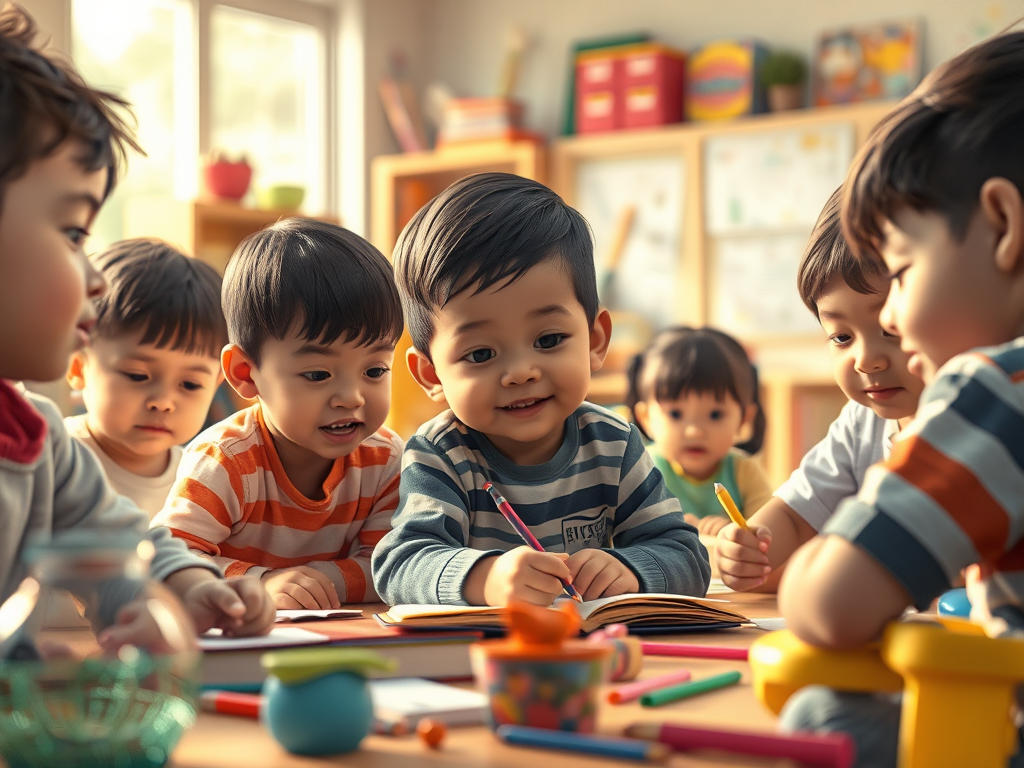
For generations, early schooling has been viewed as a universal rite of passage—an unquestioned standard that marks the beginning of a child’s formal education. Parents pack lunches, snap first-day photos, and send their children off with excitement and hope. Yet beneath this familiar routine lies a set of truths about young schooling that often go unspoken.
In this blog, we look past the glossy brochures and tidy classrooms to explore the deeper realities of early education—its strengths, its blind spots, and what children truly need during their formative years.
1. Learning Begins Long Before School Does
One hidden truth is that the foundation for learning is laid in the earliest months of life, long before a child enters a classroom. A child’s brain develops faster from birth to age five than at any other time. But despite this, early schooling systems often treat children as blank slates waiting to be filled with letters, numbers, and routines.
In reality, every child walks into school already carrying emotions, and learned patterns. Young schooling often fails to recognize or build on these individual differences.
2. Not All Children Are Ready at the Same Age
Schools love standardization—standard ages, standard tests, and standard expectations. But child development is not standard.
Some children thrive in structured environments at age five. Others develop language, attention, fine motor skills, or emotional regulation months or even years later. Yet many systems label these natural variations as “delays,” creating stress for families and pressure for the child.
The quiet truth?
A child’s readiness for school is deeply individual, and early labeling—though often well-intentioned—can shape their confidence for years.
3. Social-Emotional Skills Matter More Than Worksheets
Parents often worry about whether their child is reading early enough or doing math fast enough. But long-term studies consistently show that social-emotional skills—self-regulation, empathy, curiosity, and problem-solving—predict future success more strongly than early academic milestones.
Yet many early schooling environments prioritize worksheets and early literacy drills over open play, creative exploration, and emotional learning.
Children don’t only need to learn letters.
They need to learn how to understand themselves.
4. Play Isn’t a Break From Learning—It Is Learning
A surprising truth is that play, often dismissed as downtime, is actually the primary engine of learning in early childhood. Through play, children experiment, negotiate, imagine, question, collaborate, and adapt.
But as modern schooling becomes more academic earlier and earlier, recess is shrinking, creative corners are disappearing, and unstructured time is being replaced with test-oriented instruction.
A reduction in play is a reduction in how children naturally learn.
5. Teachers Are Overburdened, Though They Understand Children Best
Young-school educators are often among the most knowledgeable about childhood development, yet they are also among the most overworked and under-supported. The hidden truth is that the emotional and structural weight placed on early educators often limits their ability to give individualized attention, even though they know how necessary it is.
Behind every classroom routine is a teacher juggling administrative tasks, curriculum pressures, and the emotional needs of dozens of children.
6. What Children Truly Need Isn’t Always What the System Offers
Despite good intentions, many early schooling systems focus on preparing children for the next grade rather than nurturing the child they are today.
But what do young children truly need?
- Time to explore
- Emotional safety
- Adults who listen
- Opportunities to fail safely
- Routines that support, not suppress, individuality
- Play that fuels curiosity
- A sense of belonging
- They are the core of early development.
7. Parents Play a Bigger Role Than Any Curriculum
Perhaps the most important hidden truth is this:
No school—no matter how good—can replace the influence of a supportive home.
A child who feels secure, heard, encouraged, and emotionally connected at home enters school with resilience. The partnership between families and teachers is far more impactful than any standardized program.
Final Thoughts: Rethinking Young Schooling for the Future
The purpose of early schooling shouldn’t be to rush children toward academic benchmarks. Instead, it should be to foster curiosity, emotional strength, joyful learning, and a sense of self.
The hidden truth isn’t that the system is broken—it’s that it often emphasizes the wrong things.
If we can shift the focus from early performance to early development, from uniformity to individuality, and from pressure to presence, we can create an early education environment where children don’t just learn—they thrive.





 Sure Media Magazine
Leave a comment