
Introduction
Cities often tell stories of power, culture, and belonging through the spaces they create. Yet, much of modern architecture claims neutrality, as if buildings and public spaces exist outside politics. In reality, design choices are rarely apolitical. They influence who feels welcome, who can afford to live where, and who has access to public resources. This article explores how urban design, ostensibly neutral, shapes social hierarchies, reinforces exclusion, and subtly dictates the rhythms of city life.
The Illusion of Neutral Design
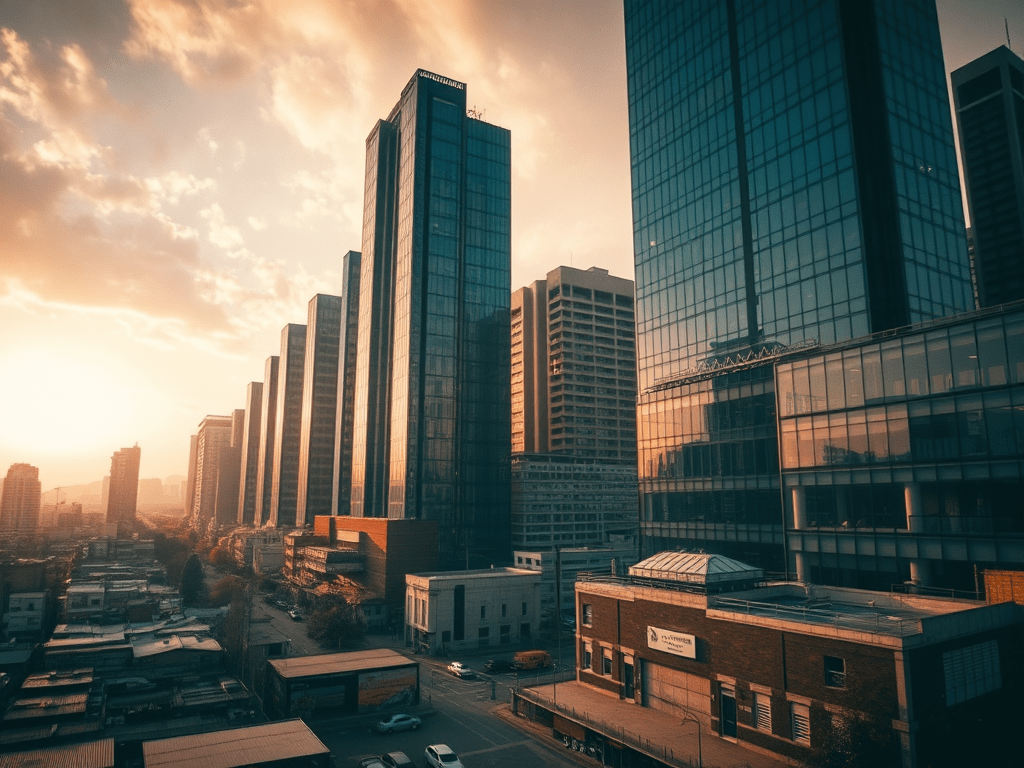
Modern urban planning frequently presents itself as “rational” or “neutral,” focusing on aesthetics, efficiency, or functionality. Glass skyscrapers, minimalist public parks, and uniform streetscapes suggest universal accessibility. But neutrality is often a veneer. Decisions about zoning, public space placement, and building regulations reflect underlying social priorities.
For example, gentrifying neighborhoods often feature parks, bike lanes, and cafés designed for new, wealthier residents, while affordable housing and community centers are pushed to the periphery. Architecture itself its style, materials, and spatial allocation, becomes a tool of subtle social engineering, privileging certain groups while marginalizing others.
Public Space as a Tool of Inclusion—or Exclusion
Public spaces are a city’s social backbone. They facilitate gathering, leisure, and civic life. Yet, design can also enforce exclusion. Consider benches shaped to prevent lying down, security cameras dominating squares, or privatized plazas accessible only to certain users. These choices may seem minor, but they have profound consequences for who belongs in a city.
Take the example of high-end urban developments in cities like London or New York. Parks, plazas, and shopping areas are designed with aesthetics and safety in mind but often for residents who can afford nearby apartments. Those without means are subtly discouraged from participating in public life. The same principle applies globally: cities in Nairobi, São Paulo, and Mumbai exhibit similar patterns, where design decisions reinforce socioeconomic divides.
Architecture and Cultural Identity
Architecture not only structures access it also communicates identity and power. Monumental buildings, government headquarters, and cultural institutions symbolize authority, often overshadowing marginalized voices. Meanwhile, informal settlements, historic neighborhoods, or vernacular housing are frequently overlooked, underfunded, or demolished in the name of progress.
These choices convey a message: some communities are valued more than others. The supposed neutrality of urban design is, in fact, a statement about whose culture and lifestyle are prioritized. For residents navigating these spaces daily, architecture becomes a lived experience of inclusion or exclusion.
Rethinking “Neutral” Cities
Recognizing the political nature of design opens the door to more equitable urban planning. Cities can be intentionally inclusive:
- Participatory design: Engaging communities in planning decisions ensures their needs and voices shape the space.
- Adaptive reuse: Transforming neglected or abandoned buildings to serve local populations rather than catering exclusively to investors.
- Accessible public spaces: Designing parks, plazas, and streets that accommodate people of all ages, abilities, and economic backgrounds.
These approaches challenge the myth of neutrality, embracing a vision of urbanism where architecture serves as a tool for social justice, rather than a silent instrument of exclusion.
Reflection: Cities as Lived Stories
Walking through a city is a daily negotiation of privilege, accessibility, and belonging. From the choice of materials to the placement of buildings and benches, urban design communicates who is welcome and who is not. By understanding these dynamics, we can approach architecture not merely as form, but as narrative: cities tell stories of society, power, and culture through their physical spaces.
Recognizing this allows architects, planners, and citizens to imagine cities that are not neutral but consciously just, inclusive, and vibrant. Architecture can then become a medium for empowerment rather than marginalization.
Conclusion
Cities are more than their buildings they are social organisms shaped by design. Neutrality in architecture is often an illusion; every planning decision carries political, cultural, and economic implications. By interrogating the choices embedded in urban environments, we uncover the subtle ways cities influence social hierarchies and human behavior.
Ultimately, architecture can be a force for inclusion, equity, and empowerment but only if we recognize that design is never neutral. The city’s story is written not just in laws or policy, but in bricks, streets, and spaces that either invite us in or keep us out.





 Sure Media Magazine
Leave a comment