
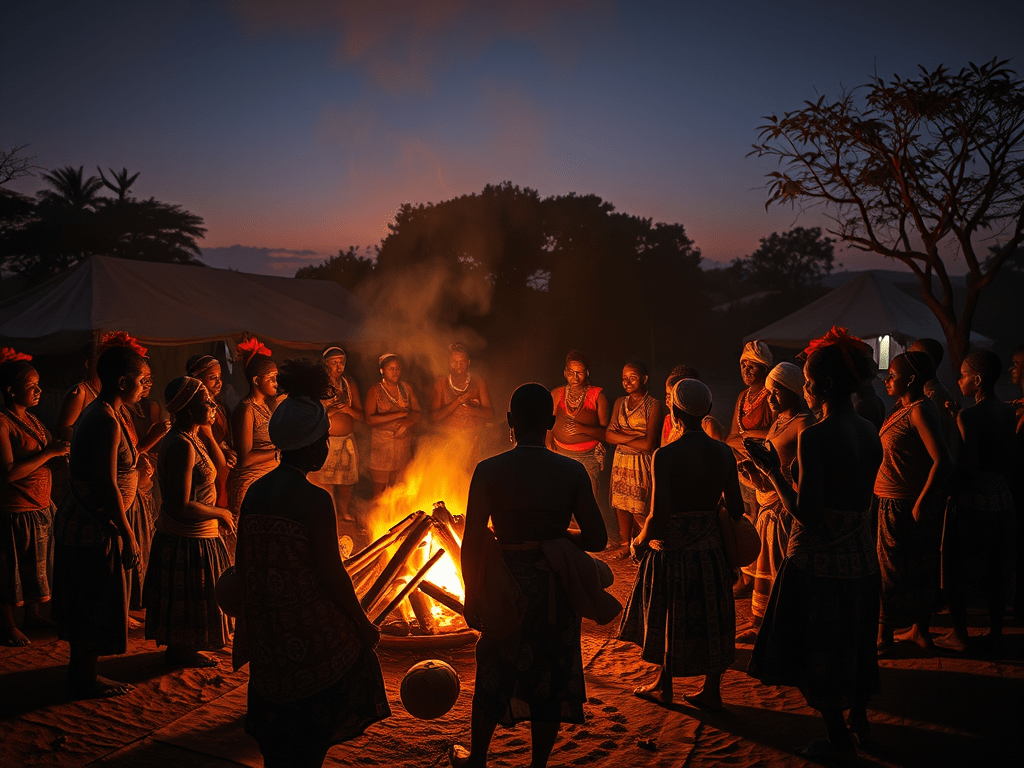
Long before travelers were crossing borders for raves in Berlin, for neon pilgrimages in Nevada, for seaside trance in Thailand or color-soaked revelry in India, human beings gathered around fire. They danced, chanted, drummed, and told stories that stitched their spirits back together.
Today, the names have changed festivals, carnivals, mass meetings, spiritual retreats but the instinct hasn’t. And nowhere is that instinct more alive than in Uragate, the all-night ancestral gathering in Tharaka, Kenya, a ritual so raw and magnetic that those who witness it describe it not as an event, but as an encounter.
Uragate is the kind of gathering people travel for not because a tourist website advertises it, but because it carries the ancient energy modern festivals are trying to imitate.
This is a story about that energy.
About why it calls people across borders.
And why, in Tharaka, that call is impossible to forget.
I. The Gathering That Isn’t Trying to Impress Anyone
Most global festivals are built to be seen.
Uragate is built to be felt.
It takes place deep in Tharaka, off paved roads, where cellphone service thins and the modern world loosens its grip. As dusk falls, villagers make their way toward a central clearing a circle of earth that becomes, for that night, the pulsing heart of community life. There are no ticket booths, no stages, no merchandise stalls. What rises here rises from memory, not marketing.
Travelers who arrive antropologists, cultural seekers, diaspora Kenyans returning to rediscover identity are warned to come not as spectators but as witnesses. Uragate doesn’t perform; it reveals.
When the first drumbeat cracks the silence, people of all ages step into the circle. Women carry gourds, men wear traditional regalia, elders carry histories in their voices. The fire snaps upward, illuminating bodies that move in patterns older than the borders that now cut the continent.
This is where the night begins.
II. Why They Travel
People travel for Uragate for the same reason they fly across continents for Rio Carnival, Burning Man, Holi, or Notting Hill. They want to touch something greater than themselves. But unlike those polished global spectacles, Uragate offers something rarer: a gathering untouched by performance culture.
Those who come from abroad describe the experience with a kind of reverence.
“A lot of festivals feel like escape,” one German traveler said. “But Uragate felt like arrival.”
A Kenyan-American researcher said, “I traveled back because I wanted to know where my joy came from. I found it here in the dust, in the rhythm, in the collective breath.”
In a world where identity is fragmented and digital noise overwhelms human connection, gatherings like Uragate offer clarity. They remind people that culture is not a costume; it’s a pulse. And at Uragate, that pulse is unmistakable.
III. The Fire That Holds the Night Together
The fire is more than light; it is the axis around which everything turns.
Around it, the dancers move in spirals. Young men leap and stomp in warrior rhythms. Women’s dances curve like water. Children mimic the steps, learning without instruction, absorbing the unspoken rules of belonging.
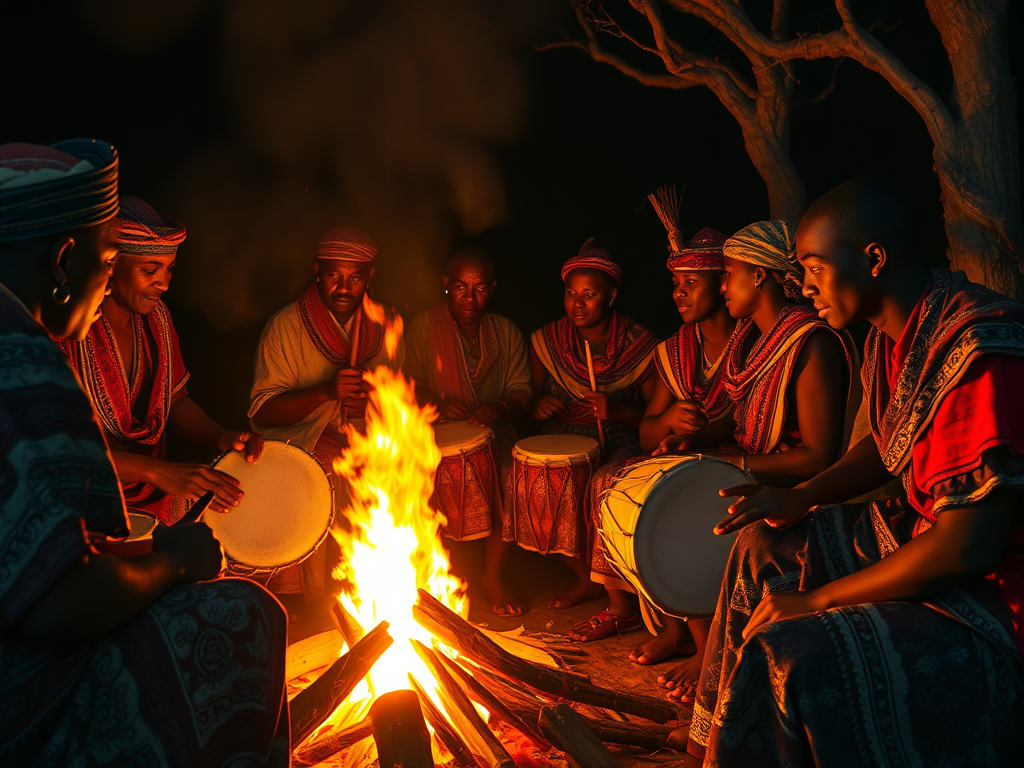
The drumming is relentless, hypnotic. At global raves, DJs use electronic basslines to create collective movement. At Uragate, the drum creates something deeper: collective memory.
Elders chant stories of migrations, victories, ancestors, and cosmology. These chants become the narrative spine of the night. The fire crackles, bodies sweat, feet pound the earth until dust rises in clouds. There is no separation here: no backstage, no VIP, no performer and audience. Everyone is both.
This is why the night feels alive.
This is why travelers return changed.
IV. Collision of Joy, Identity, and Culture
Uragate is as joyful as any global festival. There is laughter, flirtation, teasing, public declarations, communal feasting. But beneath the joy is a deeper current identity being performed in real time.
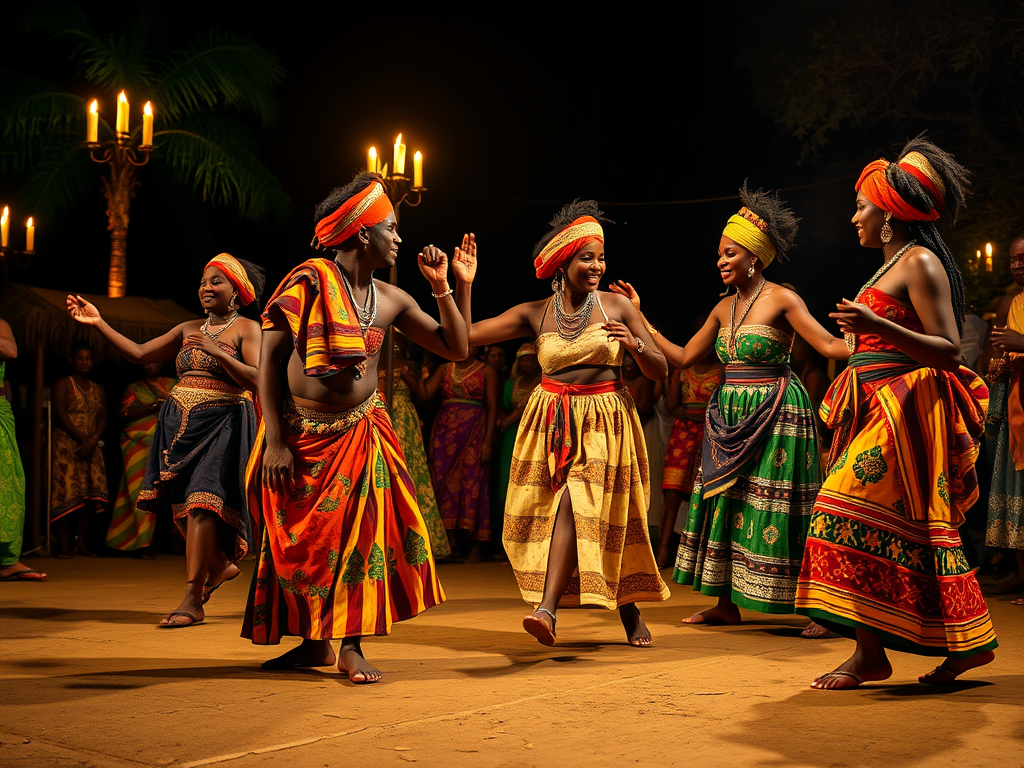
In Europe and the Americas, people fly to festivals searching for a temporary sense of belonging. In Tharaka, belonging is not constructed; it is remembered.
When a young initiate steps into the circle for the first time, the entire community erupts in cheers. When an elder performs a warrior dance they haven’t danced in years, people shout encouragement. When a traveler hesitates on the edge of the circle, someone takes their hand and pulls them in not as a tourist, but as a human being.
Here, joy and identity aren’t separate ideas. They collide. They merge. They become the same thing.
That collision is what attracts people across borders not just to Uragate, but to global gatherings everywhere. People are searching for versions of themselves that only appear when the world becomes one vibrating body.
V. The Modern Traveler Meets the Ancient World
Many who attend Uragate have been to the world’s biggest festivals. They’ve danced at Tomorrowland. They’ve sprayed paint at Holi. They’ve worn feathers at Carnival. They’ve camped in desert heat at Burning Man.
But when they arrive in Tharaka, the contrast is stark.
No sound system. Yet the drumming is louder.
No lasers. Yet the firelight feels more cinematic.
No influencers. Yet everyone is seen.
No massive crowds. Yet the intimacy feels global.
What modern festivals attempt to create artificially realese, unity, ecstasy Uragate generates organically.
It is the clarity of a tradition practiced for meaning rather than spectacle. And for many travelers, that difference is seismic.
VI. When the Night Peaks
Every gathering has its peak its “drop,” its crescendo.
At Uragate, it arrives sometime after midnight.
The fire burns highest.
The dancers move fastest.
The chants intensify.
The air thickens with dust, sweat, and spirit.
And then something happens something indescribable, yet universally felt. The rhythm shifts. The circle tightens. A collective energy surges through the crowd. It is not frenzy. It is alignment.
People cry. People shout. People laugh. People surrender to something beyond language.
For a moment brief but undeniable everyone in the circle shares a single heartbeat.
Those who travel for global celebrations say the same thing: the reason they go is not the event itself, but that moment. The moment when the world makes sense.
Uragate has that moment.
Every single year.
VII. The Morning After
Dawn in Tharaka is soft.
The fire has collapsed into embers.
The dancers are exhausted.
The elders sit with quiet pride.
Travelers look transformed, as if they have walked through a portal.
Children chase each other through the dust. Women distribute food. Men discuss livestock, rainfall, politics. The community returns to ordinary life yet the night lingers in the air like incense.
Travelers pack their bags, not because they want to leave, but because leaving is part of the ritual. They must carry something of the night with them.
And they do.
Some carry the rhythm.
Some carry the symbolism.
Some carry the sense of belonging.
Some carry the questions the night awakened.
But all of them carry the spark.
VIII. Why They Will Return
People travel for festivals and rituals because they are looking for reminders of joy, identity, community, transcendence. They want to know that somewhere in the world, people still gather without pretense. They want to feel a human connection untouched by algorithms.
Uragate gives them that.
Not by catering to them.
But by being utterly, unapologetically itself.
Travelers return to Tharaka not because Uragate is famous, but because it is true.
It is the night the world comes home.
And in a century of noise, nothing is more powerful than a place where people meet themselves again through fire, rhythm, and the collective heartbeat of a community that remembers who it is.





 Sure Media Magazine
Leave a comment