
By Salome Juma
The Secret Lives of the People Who Step Into the Worst Moments, and Learn How to Put Lives Back Together
Subheadline
They step into homes moments after tragedy, witness grief at its rawest, and quietly restore dignity to lives that have ended. Few people ever see them, yet their work leaves a mark on both the living and themselves.
The phone never rings at a convenient time.
It rings when someone hasn’t slept for three nights. It rings in the middle of lunch. It rings on birthdays, holidays, and the rare days when you thought life might actually be calm. And always, the voice on the other end is carrying something: fear, exhaustion, disbelief.
“Hello… is this the team that helps families?”
There’s always a pause. The tiny inhale before the truth.
“My brother passed… and I don’t even know where to start.”
No one ever does.
You don’t think about the logistics of tragedy until you’re standing in it. You don’t think about the clothes left in drawers, the half-finished cup of coffee on the counter, the handwritten note folded neatly in a book. You don’t think about the silence, thick as velvet, waiting for someone to step in. That’s where grief cleaners come in, the quiet people who arrive when the story’s worst chapter has ended and everyone else has gone home. Most people call us “trauma cleaners,” “biohazard teams,” or, if they’re trying to soften it, “the aftercare crew.” But what we really are is this: people who walk into rooms filled with the heaviest silence and try to make them gentle again.
You never forget the first time you walk into a room that someone didn’t walk out of. I remember an elderly man living alone. His niece met me outside, twisting her fingers nervously. “I don’t know what you’ll find,” she said. What she really meant was: “I wasn’t there when he needed me.”
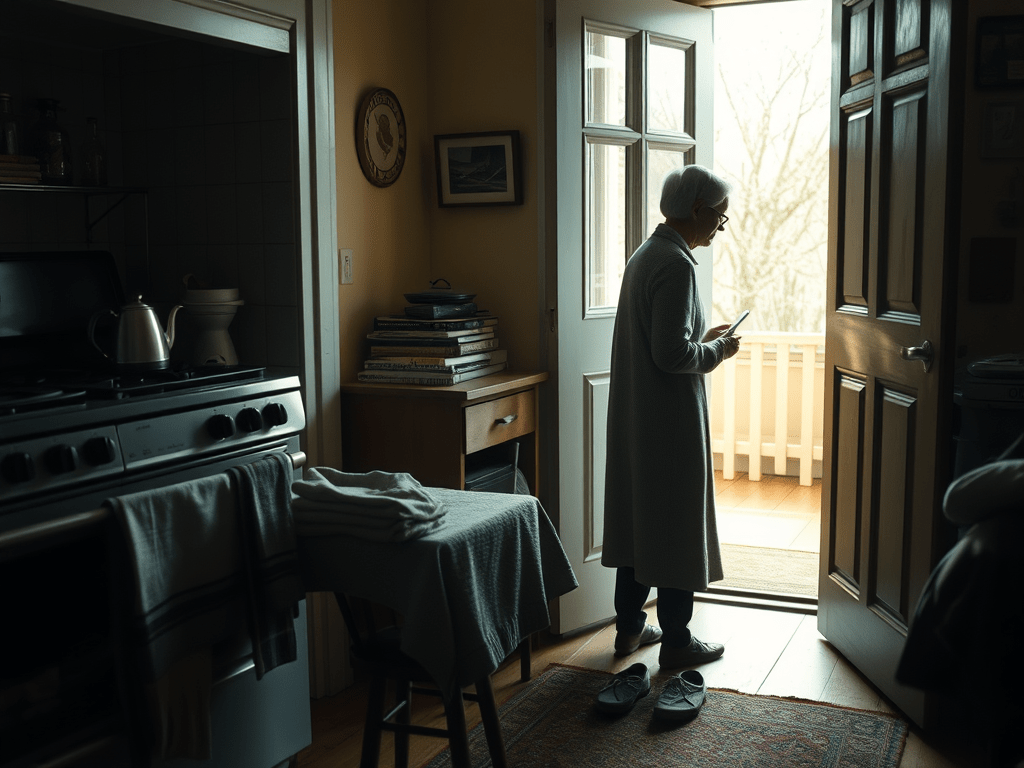
Inside, the apartment was warm. A kettle sat on the stove. A crossword puzzle lay half-completed. His handwriting was neat, careful, and alive. A cardigan draped over a chair, ready for someone who would never return. Standing there, I felt the weight of responsibility. The unspoken rule became clear: You are not there to erase a life. You are there to respect it. Before I touched anything, I whispered a small acknowledgement: I see you. I’ll be gentle. That first room taught me the job was not about what you remove. It is about what you protect: dignity, memory, the softness around a story that ended too soon.
People assume this job hardens you. It doesn’t.
It sensitizes you to details you used to rush past: the way someone arranges books, the notes they leave for themselves, the shoes aligned by the door. You learn to see the world as grief sees it, every gesture matters.
The people who do this work come from unusual backgrounds. Some are nurses. Some are teachers. Some are social workers burned out from bureaucracy. Some are military veterans. Some stumbled into it by accident, others deliberately sought it out.
All share common traits: they don’t flinch from hard truths, they understand silence, and they can step into grief without breaking it.
No one trains you for that. You learn it standing in living rooms, listening to stories from people you just met.
Some rooms linger long after the door closes.
An elderly woman, ninety-four, living alone, caught me that way. She had no family listed, and when the building manager called, it was simply to ensure someone cared. Her apartment radiated a quiet presence, her life woven into the curtains, the cushions, the photographs on the dresser. And then I noticed a tiny tattoo on her wrist: a faded anchor.
I froze. I had seen that tattoo before, on my grandmother, decades ago. She had worked in a shipyard during the war. Seeing it here made the woman suddenly familiar, alive in ways that transcended death. I spent extra time: brushing her hair, arranging photographs, dabbing soft perfume on her neck. Then, I did something I never normally did: I sat beside her chair and held her hand. It was cold. But it wasn’t mechanical. It was human. I see you. You were loved. You mattered.
That moment crystallized the truth of the job: it is about bearing witness.
I remember a man in his forties who had died suddenly. His apartment smelled faintly of coffee and old newspapers. I was alone there for hours, taking care of his belongings, arranging his books and photographs, and noticing the small ways he had shaped his life.
He had lined his shoes at the edge of the closet. The coffee mug was placed carefully beside a newspaper, marked at a crossword clue he hadn’t yet solved. The smallest details spoke louder than words ever could.
It is in these tiny acts that the job teaches you: silence is not emptiness; it is narrative. Objects are not clutter; they are fingerprints of presence. And you are entrusted with them.
I learned early that this work is not solitary. There is a secret community of grief cleaners, people who carry empathy like a badge, who navigate tragedy with care and precision.
I met Mara, who had been a hospice nurse. She told me, “I came here because I wanted to keep witnessing lives with dignity, even after they’re gone.” Then there was Jamal, a former firefighter. He said he learned to carry silence like a shield, and to respect what others could not face. Each had their own method: some were meticulous with objects, some meticulous with words, some meticulous with presence itself. Each carried the invisible burden of empathy, polished into skill.
The stakes are psychological. One misstep can make a family feel their loved one was disrespected. One forgotten object can feel like a betrayal. One failure to notice subtle details can erase the story entirely.
I remember a young man who had died suddenly. His mother’s relief was tinged with heartbreak when she saw the apartment. At that moment, I understood: perfection is never the goal. Presence is. Attention is. Witnessing is.
This is what separates amateurs from professionals. You must carry grief without letting it crush you. You must move forward even when every instinct tells you to step back.
There is something cinematic about grief cleaning.
- Light spilling across a room in mid-morning
- Dust catching on a windowsill
- Footsteps echoing down an empty hallway
- Photographs and small objects placed with care
Each scene tells a story. Each story stays with you.
Occasionally, you witness transformation in the living: a mother finally letting herself cry, a son preserving his father’s belongings exactly as you arranged them. These are the moments that make you hope for the next page, literally and metaphorically.
Every room leaves a mark. The quiet moments teach you about your own life:
- Dignity exists even when life ends quietly.
- Love persists in gestures, even the smallest ones.
- Transformation comes from witnessing, not controlling.
- Hope exists even in grief, if you look for it.
You begin to notice life differently: the way someone folds a shirt, the way a mug is placed beside a notebook, the way a room smells of sunlight. These tiny patterns are life, preserved in absence.
The secret nobody tells you about this work: It is not about cleaning. It is not about organizing.
It is not about efficiency.
It is about love, attention, respect, gentleness, and witness. Love for those who are gone, for those who remain, and for the lives that intersect in between. It changes you quietly, subtly, almost imperceptibly. You begin to carry more compassion, more attention, and a readiness to embrace what is fleeting.
I have walked through thousands of rooms since that first apartment. Each has left its mark. Some rooms stay with you longer than others:
- The elderly woman with the anchor tattoo
- A mother leaving a note under a pillow
- A boy’s stuffed animal perfectly placed
Grief cleaning is a hidden world. But it teaches something most people never learn: how to move through life with empathy, attention, and courage. It is quiet bravery, invisible work, and a gift, for the living, and for those of us lucky enough to witness it.






 Sure Media Magazine
Leave a comment