
Why every tribe, every wallet, and every nutritionist secretly agrees on one thing
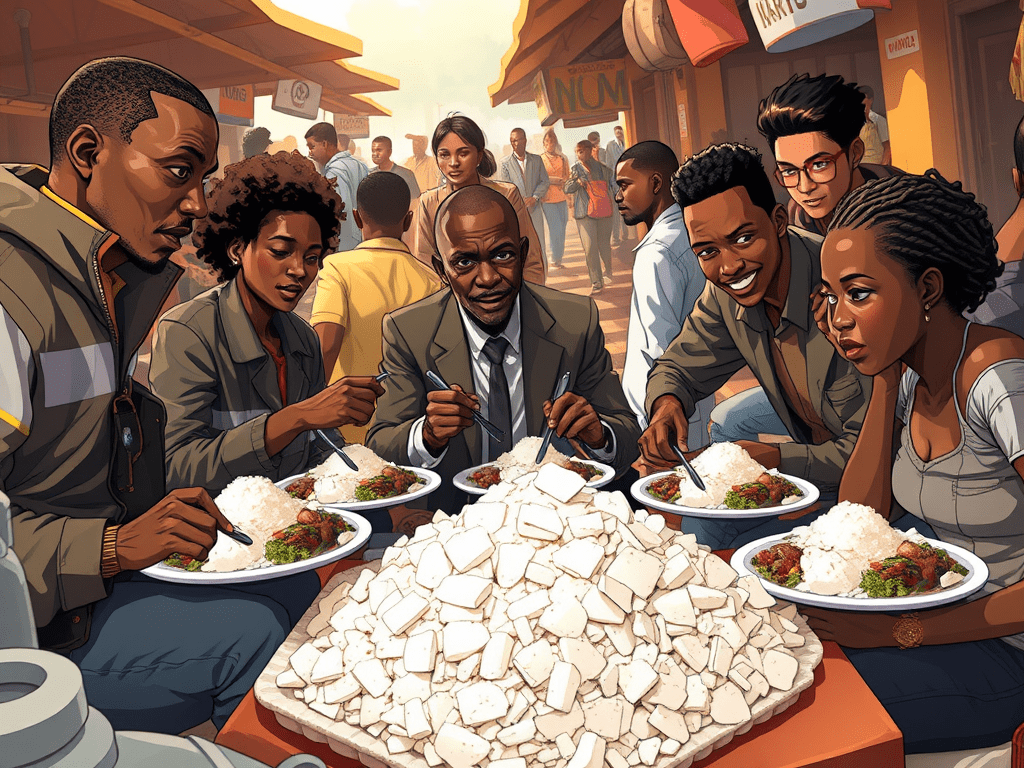
I see it every day in Nairobi’s CBD: a watchman in a reflector jacket, a CEO in a tailored suit, and a university student in ripped jeans all queuing at the same kibanda for the same plate — ugali + sukuma + whatever protein is going. Same hunger, Same comfort, Same silent nod of respect when the mountain of white arrives.
We joke that ugali is “Kenya’s national Wi-Fi” because it connects everyone, but after digging into the numbers and the traditions, I’m convinced it’s something bigger: the most democratic nutrition program the world never bragged about.
1. The Energy That Built a Nation (and Still Powers It)https://www.nutrinformation.com/nutrition-benefits-of-ugali
One fist-sized ball of ugali (about 200 g cooked) delivers ~150–180 kcal of clean, slow-burning carbs. Eat two or three of those with greens and you’re looking at 600–800 kcal that keeps you going from 4 a.m. tea to 10 p.m. supper.
That’s why:
- Boda boda guys can do 300 km a day
- Marathon world records keep coming from the Rift Valley
- Mama mboga can stand in the sun selling vegetables for 14 hours
No energy drink on the planet comes close at 50 bob a plate.
2. Gluten-Free Before It Was Cool
Maize ugali has zero gluten. Cassava ugali (coastal favorite) and sorghum/millet ugali (north-eastern and western Kenya) also zero. The Luhya have been mixing finger-millet ugali since before “gluten-free” was a marketing word. Today, every Kenyan with celiac or gluten sensitivity eats exactly what their grandparents ate — no expensive imports needed.
3. The Ultimate Protein Stretcher
Ugali itself is low in protein, but it was designed — by centuries of mothers — to make tiny amounts of protein feed many mouths.
Look at the genius tribal combos:
- Luo → ugali + kuon with omena (2 tablespoons of tiny fish feed 8 people calcium and omega-3)
- Kikuyu → ugali + njahi or irio (black beans + peas + potatoes = complete protein)
- Kalenjin → ugali + mursik (fermented milk = probiotics + high-quality protein)
- Somali/Kamba → ugali + camel milk or mbaazi wa nazi
- Kisii → ugali + mrenda + groundnuts
Result? Even the poorest households hit the protein + carb sweet spot every single day.
4. Hidden Micronutrient Bomb (Thanks to Government + Grandmothers)
Since 2012, every bag of subsidized maize flour in Kenya is fortified with iron, zinc, folic acid, vitamin A, and B vitamins. That means the same ugali that costs 150 bob a kilo is quietly fighting anemia in pregnant women in Turkana, preventing neural-tube defects in babies in Kisumu, and keeping kids’ immune systems strong in Mathare slum.
Add the traditional sides (sukuma, managu, terere, mchicha, osuga) and you have vitamin A and C levels that would make a kale smoothie blush.
5. Diabetes Doesn’t Have to Win
White ugali alone is high GI, yes. But Kenyans fixed that centuries ago:
- Mix in sorghum or millet (common in Kitui, Busia, and the north) → GI drops dramatically
- Cassava ugali (Coast) → lower GI than wheat bread
- Sweet-potato ugali (Kisii) → natural low-GI magic
Doctors in Kenyatta Hospital and Aga Khan now prescribe “brown ugali” recipes to diabetic patients — recipes your great-grandma already knew.
6. The Meal That Costs Less Than Your Phone Credit
Daily cost to feed a family of 5 a solid ugali-based meal (with greens and a little protein): ~KSh 180–250 in 2025 money. Try finding any other complete, hot, fresh meal for that price anywhere else on earth.
Final Verdict From Every Corner of Kenya
Ask a Luo fisherman in Mbita, a Maasai moran in Kajiado, a Kikuyu tea-picker in Murang’a, a Somali trader in Eastleigh, or a campus student in Parklands what the healthiest food in Kenya is.
They will all give you the same one-word answer, in their own language: Ugali, Posho, Ngima,Soor, Busa.
Because ugali never discriminated. It fed us when we were colonies. It feeds us when we break world records. It will feed our children long after we’re gone.
So next time someone overseas calls it “just cornmeal mush,” smile, take a perfect ball between your fingers, dip it deep into that steaming stew, and answer for all of us:
“This is the taste of survival. This is the taste of pride. This is the taste of home.”
Now pass the plate — dinner’s getting cold.
Share this with someone who grew up fighting for the “mchirchi” (the crispy burnt bits at the bottom of the sufuria). They’ll understand.




 Sure Media Magazine
Leave a comment