
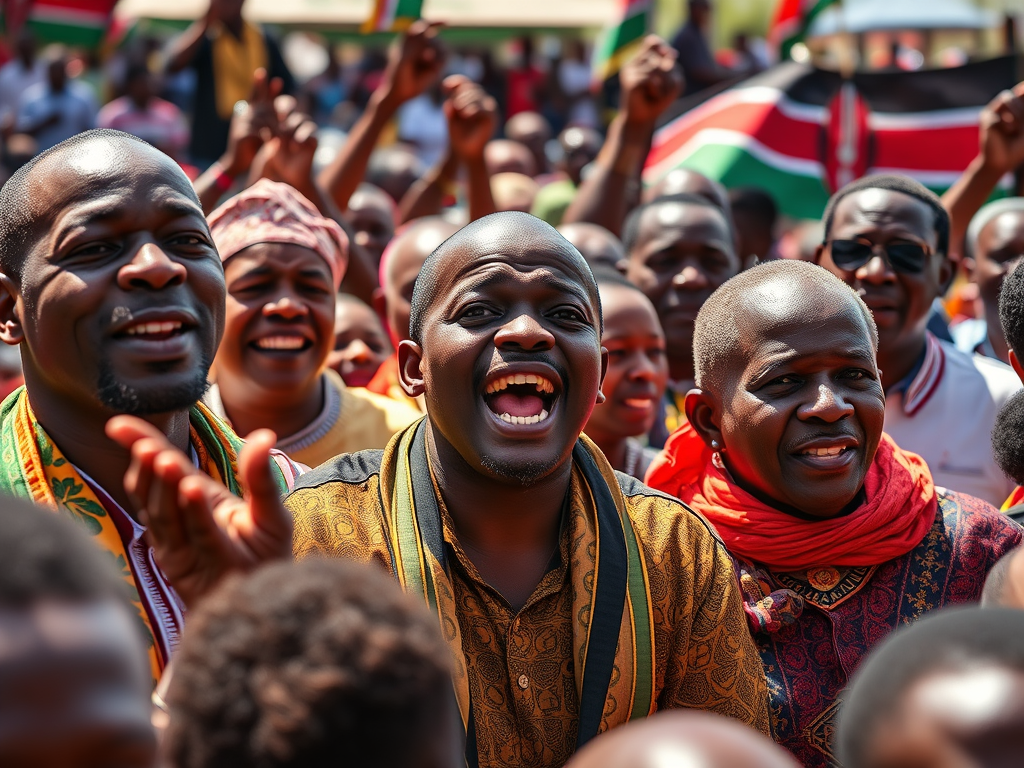
For decades, Mbeere politics remained relatively calm, understated, and often overshadowed by larger political movements in Embu County. While the region has always had its own cultural identity, its political story was frequently generalized, simplified, or absorbed into what many understood simply as “Embu politics.” The Mbeere community with its unique heritage, clans, language variations, and cultural expression was often masked beneath the broader Embu narrative.
But the current Mbeere North by-election has changed everything.
What was once a quiet political terrain has erupted into one of the most heated, closely watched races in the country. And for the first time in decades, Mbeere politics are taking center stage not just locally, but nationally. This unexpected awakening has brought visibility, assertiveness, and a renewed sense of identity to a community that has long felt politically overshadowed.
Key Contenders, Big Stakes
Among the nine clear contenders, three have emerged as the main heavyweights:
Leonard “Leo” Muriuki Muthende (UDA): The ruling United Democratic Alliance (UDA) chose Muthende by consensus after several aspirants stepped down. He is perceived as the establishment pick, carrying the weight of government support as well as promises to continue development in the area.
Newton “Karish” Kariuki (Democratic Party, DP): A well-known figure in the region, Karish was endorsed by DP leaders like Justin Muturi and Lenny Kivuti. His local service record — including as an MCA — provides him strong grassroots credibility.
Duncan Mbui (Independent): Originally aligned with the Democracy for Citizens Party (DCP), Mbui broke away after accusing the party of stifling his ambitions. He is leaning on his strong base in Evurore Ward, where he previously served as MCA.
Beyond these, IEBC has cleared others: Lawrence Ireri, Isaac Muringi, Albert Ngari, Daniel Ngari, Reuben Njeru, and Simon Waiharo. While these may not have national profiles, their inclusion highlights how competitive and broad-based this by-elections.
From Calm Waters to a Political Storm
Historically, Mbeere’s political contests were predictable. Leadership transitions were calm, candidates were few, and campaigns rarely attracted national media or heavyweight politicians. The region voted, leaders assumed office, and life went on without dramatic political battles.
For many Mbeere residents, this calmness was comforting but it also had a downside. It meant the region did not receive the political attention or development focus that more politically competitive regions enjoyed. With little conflict or competition, there was also little scrutiny or national conversation about Mbeere’s unique needs, identity, and representation.
Today, things are drastically different.
The by-election has brought an influx of political parties, national campaign machinery, opinion leaders, and strategic alliances. The once silent Mbeere political space is now bursting with tension, energy, and national interest. Every major party wants a stake in the region. The stakes are high, the conversations loud, and the competition fierce.
Breaking Free From the Embu Shadow
One of the most profound effects of the current political heat is how it has revealed the longstanding political overshadowing of the Mbeere by the Embu.
For years, the Mbeere community felt their political identity was submerged under Embu representation. When politicians spoke of Embu County politics, Mbeere issues were rarely distinguished. Development priorities often followed Embu-majority voting patterns. Even national observers routinely bundled Mbeere’s political dynamics under the label of “Embu politics.”
The current contest has disrupted that pattern.
Suddenly, the country is talking about Mbeere politics, not Embu politics. Analysts are discussing Mbeere voting blocs, Mbeere cultural identity, Mbeere leaders, and Mbeere political aspirations. Political parties have noticed the need to speak directly to Mbeere voters not through Embu leaders, not through general county messaging, but through tailored engagement.
For the first time in a long while, the political identity of the Mbeere people is no longer masked beneath the Embu tribe. It is visible. Recognized. Asserted.
A New Light and Awareness
This by-election has done what many years of advocacy could not: it has shone a bright national light on the Mbeere people. Questions are being asked:
Who are the Mbeere?
What are their political needs?
What is their stand on national issues?
Why has their identity been overshadowed for so long?
Political interest has created awareness and awareness has created empowerment.
Young Mbeere voters are speaking up. Elders are demanding fair representation. Leaders are articulating Mbeere-specific development needs water, infrastructure, education, and agricultural support suitable for Mbeere’s semi-arid conditions.
For once, the community is not being spoken for.
They are speaking for themselves.
Why the Heat Matters for Mbeere Identity
- Political Visibility
The fact that UDA and DP are not simply parachuting a candidate but choosing someone locally rooted shows that Mbeere matters politically. Party strategists know that Mbeere North’s vote could swing future regional and national dynamics. - Broader Awareness
The contest has sparked conversations: who are the Mbeere? What do they want? Why were they historically marginalized in political conversations? This by-election is forcing both local and national actors to confront those questions. - Reclaiming Local Power
Through its candidates especially local figures like Karish and Mbui Mbeere is asserting its right to locally driven leadership. These are not outsiders; they are people who know the ground. - Young Mbeere voters are speaking up. Elders are demanding fair representation. Leaders are articulating Mbeere-specific development needs water, infrastructure, education, and agricultural support suitable for Mbeere’s semi-arid conditions.
A Community Reclaiming Its Identity
The most transformative effect of the current political climate is the reclaiming of identity. Mbeere people have long been proud of their distinctiveness from language to culture but politically, they were subsumed under the Embu framework.
Today, that narrative is shifting.
Mbeere is asserting itself culturally, socially, and politically.
This by-election has awakened something deeper than political interest. It has reminded the community of its strength, its rights, and its voice. It has emphasized that even smaller tribes and regions have the power to shape the national conversation if they stand united and demand recognition.
Conclusion: A Turning Point for the Future
The unanticipated intensity of Mbeere politics has exposed a powerful truth: the region is no longer content with being politically overshadowed. The rising heat, though surprising, has become a catalyst for identity, visibility, and political evolution.
For the first time in many years:
Mbeere politics are being discussed nationally.
The Mbeere tribe is stepping out from beneath the Embu political umbrella.
The region is positioning itself as a significant political actor for the future.
What began as a simple by-election has become a profound moment of awakening one that will shape not only today’s politics, but the region’s political destiny for years to come





 Sure Media Magazine
Leave a comment