


After every 5years, Kenya puts on its biggest show: “the election” Politicians roll out dazzling campaigns, make grand promises — jobs, economic transformation, better healthcare — and many of us buy into the hype. We vote with hope. But after the smoke clears and the crowds disperse, we’re often left with disappointment, deeper problems, and a familiar question: how many more times will we fall for the same lies?
The Reality Behind the Rhetoric
Youth Unemployment: Not Just a Talking Point
Unemployment is not a side issue — it’s a full-blown crisis. According to the Ethics & Anti-Corruption Commission (EACC), nearly 49.1% of Kenyans name unemployment as a top problem.
In fact, in the 2024 EACC National Ethics and Corruption Survey, corruption and unethical conduct remain deeply entrenched, making it even harder for young people to access real opportunities. Another report linked to youth employment shows that many job seekers must pay bribes — on average over KSh 163,000 — just to get public service roles.
That’s not just inequality. It’s a system built to reward connections and money, not merit.

Graft Is Bleeding Our Economy Dry
Kenya isn’t just losing money — it’s hemorrhaging it. The African Development Bank (AfDB) estimates that corruption, state capture, and financial mismanagement are draining KSh 195 billion (about $1.5 billion) from the economy every year.
That money could fuel education, health, infrastructure — but instead, it’s being siphoned off by a well-entrenched elite.
In parallel, there are repeated procurement scandals. The Kenya Kwanza government, for instance, has been tied to massive losses: from fake fertilizer schemes, huge misspending at the National Youth Service, to over KSh 24 billion in fraudulent health‑authority claims.
These aren’t small corruption stories — they are systemic looting operations that cripple public service delivery.
State Capture Isn’t Fiction — It’s Reality
Independent watchdogs now call Kenya’s elite out for “state capture.” What does that look like in practice?
Projects like the Arrow-Kimwarer dam and other large public‑private deals are alleged to have massive cost overruns and shady procurement, but without real auditing.
Powerful political actors maintain control over key ministries, with little accountability.
Institutions meant to check power — law enforcement, regulatory bodies — are weakened or co-opted.
Broken Promises in Social Services
Some of the most visible campaign promises have fallen flat:
Housing: The goal was 250,000 houses per year, but only about 103,000 units have been built in three years.
Health: A procurement scandal involving the transition to the Social Health Insurance Fund cost KSh 104.8 billion — and public workers like doctors are striking over unpaid salaries.
Education: Secondary school capitation hasn’t increased since 2018, despite inflation.
Debt & Fiscal Risk: Kenya’s debt burden is becoming riskier. In 2024, credit rating agency S&P downgraded Kenya citing worsening fiscal trajectory.
Angry Youth, Real Protests
The frustration isn’t theoretical — it’s boiling over.
In 2024 and 2025, Kenya saw a new wave of Gen Z-led protests, sparked by the controversial Finance Bill and broader discontent with corruption and economic hardship.
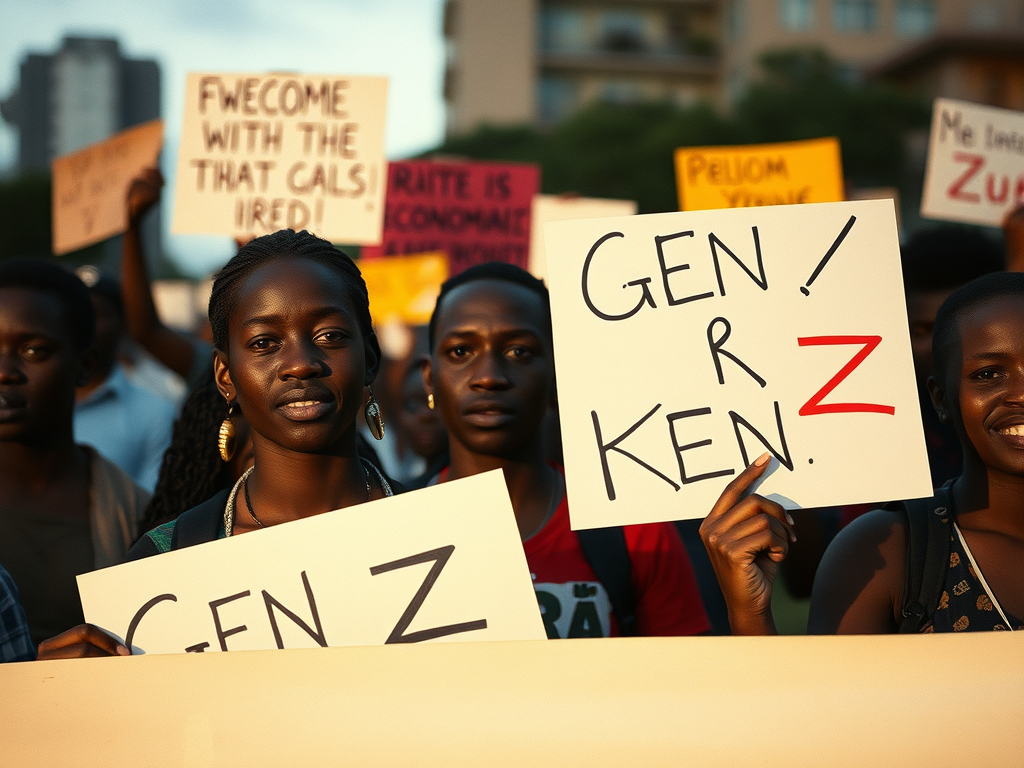
Many young Kenyans feel pushed out, even encouraged to emigrate. Recently, President Ruto urged young people to go abroad for jobs — a shocking admission of how deep the job crisis runs.
How Kenya Became a Breeding Ground for Empty Promises
So how did we get here, again? A few real reasons:
- Elite Capture – Political and economic elites rig systems to benefit themselves. State resources are funneled into private pockets.
- Culture of Bribery – Bribery is normalized. It’s not just “you pay to get things done”; sometimes, it’s the only way to access a job.
- Lack of Institutional Strength – Oversight bodies either lack teeth or are deeply compromised. Even when corruption is exposed, follow-through is weak.
- Short-Term Populism – Politicians prefer flashy, popular promises over long-term structural reforms. It’s easier to sell “houses for all” than to fix procurement systems.
- Citizen Complacency – Many of us vote emotionally, not materially. We elect for “our person” rather than assess policy. As one Reddit user put it:
“You say you want good leaders … but you voted for ‘mtu wetu.’ … They went to your church once and you gave them your future.”
- Fear & Repression – Dissent is often met with force. Civil society and youth protests are being suppressed, limiting real accountability.
Lessons from Neighbors — Why Kenya Can’t Afford to Be Complacent
Look at Tanzania or Uganda: in both countries, leaders have consolidated power for years under weak accountability. Over time, that has eroded democratic institutions and stagnated development. Kenya is dangerously close to following that trajectory if we don’t change course. We must demand more than headlines. We must demand systems that work — not just for the elite, but for us. Real, Raw Advice: How Kenya Elects Differently (So We Don’t Get Played)
Here’s how Kenyans can flip the script — stop being spectators, start being agents of change.
- Vote With Strategy, Not Emotion
Read manifestos. Don’t just cheer when promises flash on TV.
Ask for track records. What has this candidate done before?
Hold leaders accountable between elections — not just during campaign season.
- Insist on Transparency and Auditing
Demand independent audits on big deals (especially public-private partnerships).
Push for better funding for watchdog institutions like EACC, and ensure they’re free to operate.
Call out “state capture” — it’s not a conspiracy, it’s happening. Know the deals, know who benefits.
- Reform Employment Systems
Campaign for merit-based hiring in public service — no bribes, no connections.
Support youth employment programs only if they have real deliverables and transparency.
Encourage local entrepreneurship: hold your leaders responsible for creating an environment for real business growth.
- Demand Real Public Services, Not Campaign Stunts
Hold leaders accountable for the promises on housing, health, education.
Insist on mechanisms like participatory budgeting — citizens decide part of where money goes.
Use data: when costs balloon, ask questions; when delivery is slow, demand answers.
- Support Active Civil Society Participation
Join or support youth movements pushing for accountability.
Use digital platforms to demand transparency — social media isn’t just for memes.
Make protesting meaningful: peaceful, consistent, and strategic. Know your rights, and don’t let fear silence you.
- Promote Institutional Reform
Advocate for judicial independence: courts must be strong enough to prosecute corruption, even at the top. Push for campaign finance reform: no more opaque billion-shilling campaigns funded by unaccountable money. Support electoral reform: vote for independent electoral bodies, transparent voter registration, and fair vote counting.
Final Word: We Can’t Be Fooled Again
This isn’t just another “why our leaders disappoint us” post. This is a call to arms — mental, civic, strategic. Kenyans deserve more than recycled lies.
The stakes are too high: our economy, our future, our dignity. We can’t afford to be passive. We need to elect smarter, demand more, and refuse to be blinded again.
We are not just spectators in this story — we are the authors.





 Sure Media Magazine
Leave a comment