

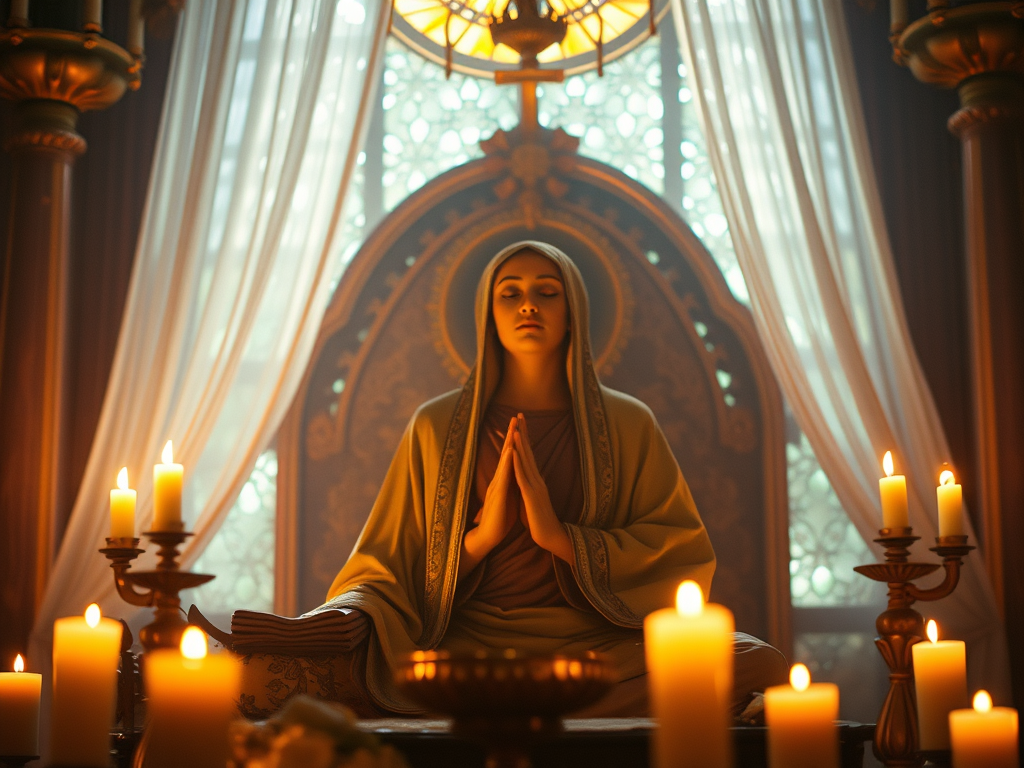
Every human being, regardless of where they were born or what they believe, eventually reaches a moment where life becomes too loud—or too quiet—and they are forced to pause. Sometimes it happens in the middle of joy, when everything feels perfect and we wonder what we’ve done to deserve it. Sometimes it happens in grief, when life breaks open and we realize how fragile everything is. And sometimes it happens in the most ordinary moments: sitting in traffic, watching a sunset, holding a child’s hand, or lying awake at night.
Those moments bring questions.
- Who am I?
- Why am I here?
- Who is guiding this life?
- What happens beyond what I can see?
These questions are ancient. They live inside every culture, every tribe, every person. And over centuries, people have explored them through two profound paths: religion and spirituality.
Some people see these paths as rivals. Others see them as identical. But the truth is more graceful—they are two different ways of reaching toward the same longing: the longing for meaning, belonging, and connection.
Religion: The Heartbeat of Community
Religion is one of humanity’s oldest and most enduring structures. It’s not just a system of beliefs—it’s a way people learn how to live together, how to treat one another, and how to make sense of life’s mysteries. For many, religion is the root that keeps them grounded when life becomes difficult.
Religion gives us:
- A deeper story to belong to
- A sense of identity
- Rituals that mark milestones—birth, marriage, loss, new beginnings
- A community to stand with in celebration and struggle
- A place where our fears and hopes can be held
Think about the comfort of familiar hymns, prayers, or spiritual songs sung during both joy and sorrow. Think of the smell of incense, the rhythm of a drum during worship, the soft echo of voices praying together, or the warmth of hands held in a circle of faith. Religion holds memories—those of our parents, our grandparents, our ancestors. It carries history, wisdom, and tradition.
But religion is not without its struggles. Institutions are run by imperfect humans, interpretations vary, and communities change. Yet despite these imperfections, religion remains a powerful guiding force. It continues to shape cultures, values, laws, and the moral compass of societies across the world.
At its best, religion is a home for the heart. It reminds us we’re part of something bigger than ourselves.
Spirituality: The Quiet Journey Within
Where religion gathers people, spirituality gathers the self.
Spirituality is deeply personal. It often begins in silence—not in a crowded sanctuary but in the quiet corners of everyday life. It’s the awareness that something sacred is happening within us, even when the world outside is chaotic.
Spirituality invites us to:
- Ask questions that don’t have simple answers
- Trust our intuition
- Reflect on our emotions and experiences
- Build a personal relationship with nature, God, energy, or the universe
- Listen to our inner voice
Many people today describe spirituality as a journey back to themselves after years of being pulled in every direction—work, responsibilities, expectations, fear. It’s a return to presence. A return to stillness.
Practices like meditation, journaling, mindfulness, breathwork, nature walks, or quiet prayer have become lifelines. Not because they follow any specific doctrine, but because they help people feel a little more whole, a little more centered, a little more alive.
Spirituality doesn’t demand membership. It doesn’t require a building. It doesn’t even require a name. It simply asks you to be honest with yourself—to nurture the inner world that often gets ignored in a busy, noisy life.
Where Faith and Inner Journey Meet
Although religion and spirituality are distinct, they are not opposing forces. In fact, they often complement each other.A religious person can be deeply spiritual—seeking a personal, intimate connection with God beyond structured practices.
A spiritual person can find wisdom, grounding, or inspiration from religious teachings without adopting the whole tradition.
Both paths share common ground:
- A longing for meaning
- A desire for peace
- A search for purpose
- A connection to something bigger than ourselves
- A need to navigate suffering and celebrate joy
Both paths help us make sense of life—the beauty, the grief, the uncertainty, the miracles. They remind us that we’re not the only ones trying to find our way.
Why These Conversations Are Still Important
In today’s world, people are more connected digitally and yet more disconnected emotionally. Many feel overwhelmed, isolated, or spiritually exhausted. And so, conversations about faith and spirituality matter now more than ever.
They help us understand:
- Why we value what we value
- Why we behave the way we do
- How we approach challenges or heartbreak
- How we heal
- How we treat others
- How we rebuild hope when life falls apart
These conversations also help bridge divides. They allow us to respect differences instead of fearing them. They invite empathy, curiosity, and openness—qualities the world desperately needs.
Whether through religion, spirituality, or a blend of both, people everywhere are seeking ways to feel rooted, connected, and whole.
Conclusion: Many Roads, One Human Journey
The paths may look different—churches, temples, mosques, forests, quiet rooms, books, songs, silence—but the destination is often the same: inner peace and a sense of belonging.
Your path may be shaped by tradition. Or it may be shaped by personal exploration. Or by a mixture of both. There is no wrong way to search for meaning.
The important thing is the journey itself—the willingness to ask, to listen, to grow.
You are not alone in this search.
Everyone is walking their own road.
Everyone is trying to understand life.
Everyone is reaching for something greater than themselves.
And that makes the human journey profoundly beautiful.
Call to Action
Take one moment today—just one—to check in with yourself.
Close your eyes.
- Breathe deeply.
- Ask:What brings me peace?
- What brings me closer to who I want to be?
Choose one small action today—prayer, meditation, gratitude, reading, reconnecting with someone, spending time in nature, or sitting quietly with your thoughts.
Your inner world matters. Nourish it. Honor it. Begin your next step today.




 Sure Media Magazine
Leave a comment