
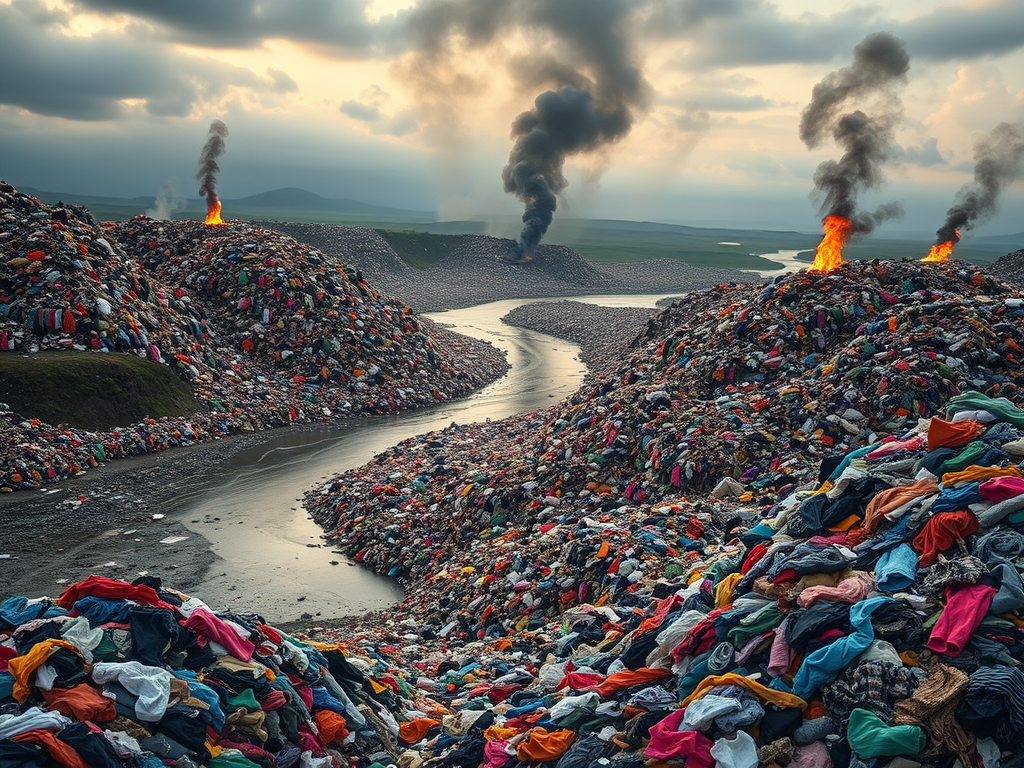
Fast fashion has revolutionized how we dress: trendy pieces at rock-bottom prices, new drops every week, endless scrolling. It feels harmless—until you see the real price tag the planet is paying. The fashion industry is the second-most polluting industry on Earth, behind only oil. From choking rivers in Asia to textile mountains burning in Africa and South America, the damage is staggering—yet largely invisible to consumers.
Here’s the unfiltered truth, backed by the latest data, plus practical steps you can take today to shrink your wardrobe’s footprint.
🌍 1. The Invisible Environmental Damage Behind Every Cheap Tee
- Water Guilt by the Gallon Producing one plain cotton T-shirt requires ≈2,700 litres of water—enough drinking water for one person for 2.5 years (University of Manchester, 2023). A single pair of jeans can gulp down 8,000–10,000 litres. Most of this happens in water-stressed countries like India, Bangladesh, and Pakistan, where rivers literally run dry to keep the fashion machine spinning. → Source: Water Footprint Network
- A Toxic Rainbow To achieve bright colors and wrinkle-free finishes, factories dump formaldehyde, azo dyes, PFAS (“forever chemicals”), and heavy metals into waterways. In Bangladesh alone, 20% of industrial water pollution comes from textile dyeing (World Bank, 2022). Communities downstream suffer skin diseases, cancer clusters, and poisoned fish stocks. → See: Greenpeace’s “Toxic Threads” report (still relevant in 2025)
- Bigger Carbon Culprit Than Planes + Ships The fashion industry emits 8–10% of global CO₂—more than international aviation and maritime shipping combined (UN Fashion Industry Charter for Climate Action, updated 2024). Polyester production is oil-intensive, factories still run on coal in many countries, and garments routinely circle the globe multiple times before landing in your closet. → Ellen MacArthur Foundation: A New Textiles Economy
- The Global Textile Waste Tsunami Every year we produce ≈100 million tonnes of clothing, and 92 million tonnes become waste—equivalent to one garbage truck of textiles dumped or burned every second (Earth.org, 2025 update). Less than 1% is recycled into new clothes. The rest ends up in overflowing landfills in Kenya (Dandora & Gikomba), Ghana (Kantamanto), and Chile’s Atacama Desert, where satellite images now show 60,000+ tonnes of discarded fast fashion forming visible “clothes dunes.” → BBC Reel: The mountains of clothes in the desert
🧵 2. Why We’re Addicted (Even When We Know Better)
- Ultra-low prices mask exploitation and environmental destruction.
- Weekly micro-trends fueled by TikTok and Shein hauls.
- Planned obsolescence—zippers break, seams split, colors fade after five washes.
- Social pressure: “You already wore that?”
The system is designed to make overconsumption feel normal.
🌱 3. Real, Doable Actions That Actually Move the Needle
You don’t need a six-figure income or a minimalist capsule wardrobe to make a difference. Start with one change and build.
- Adopt the 30-Wears Rule Before buying, ask: “Will I wear this at least 30 times?” If the honest answer is no—skip it. This single question, popularized by Vivienne Westwood and revived by Livia Firth, can cut your fashion purchases by 50% or more. → 30 Wears Campaign
- Make Second-Hand Your First Choice Global second-hand market is now worth $200+ billion and growing 11× faster than traditional retail (ThredUp 2025 Resale Report). Where to shop: • Local: Toi Market, Gikomba, or Ngong Road thrift stalls (Nairobi) • Online: Depop, Vinted, ThredUp, The RealReal, Vestiaire Collective • Kenyan platforms: Suzie Wekesa, Badala Thrift, Zumi pre-loved section
- Learn (or Outsource) Basic Repairs Extending a garment’s life by just nine months reduces its carbon, water, and waste footprint by 20–30% (WRAP UK). Free tutorials: YouTube channels like “With Wendy” or “Sew Anastasia” Nairobi tailors charge as little as KSh 100–500 for most fixes—cheaper than a new top.
- Ditch Virgin Polyester When You Can Polyester sheds up to 700,000 microfibres per wash. Use a Guppyfriend washing bag or Cora Ball to catch 86–99% of them. Better yet, switch to natural or recycled fibres. → Guppyfriend (ships to Kenya via Amazon or Ubuy)
- Support Truly Ethical Brands (Many Are Surprisingly Affordable) Look for independent certifications: • GOTS (organic textiles) • Fairtrade • Bluesign (chemical safety) • B Corp
African & affordable sustainable brands (2025 edition): • Adele Dejak (Kenya) – upcycled & ethical • Maisha by Rehema (Kenya) • Nkwo Onwubuya (Nigeria) • Sindiso Khumalo (South Africa) • Anyango Mpinga (Kenya–UK) Global budget-friendly: Pact, Everlane Essentials, Quince, People Tree, Thought.
- Rent or Subscribe for Special Occasions Platforms like Rent the Runway, ByRotation, or Nairobi’s own Dresscode Kenya let you wear designer pieces for a fraction of the cost—and zero waste.
- Wash Smarter Cold wash, full loads, air-dry, and skip the dryer. One household switching to cold water saves as much CO₂ as planting 1½ trees per year.
💡 The take away : Your Wallet Is a Ballot Box
Every euro, dollar, or shilling you spend is a vote for the kind of world you want. When you buy second-hand, repair, choose linen over polyester, or support a Kenyan designer paying living wages, you’re voting against water pollution in Bangladesh and clothing landfills in your own backyard.
The fast-fashion giants are watching resale numbers explode and repair searches skyrocket. They will change only when we force them to—by changing where we shop.
Start with one conscious purchase this week. One becomes ten, ten becomes habit, and habit becomes a movement.
Further reading & resources • Fashion Revolution – Who Made My Clothes? • Good On You – ethical brand ratings app • Follow @fash_rev_ke on Instagram for local Kenyan events • Watch “The True Cost” (still on Netflix in most regions) or “RiverBlue” on YouTube
Your closet can be part of the problem—or part of the solution. The choice is yours, every time you click “add to cart.”
Let’s build a fashion future we’re proud to wear. 🌿





 Sure Media Magazine
Leave a comment