
Silence is often romanticized as a mere escape. It is seen as a brief respite from the clamor of daily life before diving back into “real” thinking. But emerging neuroscience paints a different picture. Intentional silence isn’t the absence of cognition. It’s a sophisticated cognitive process in itself. Specialized brain networks engage precisely when the mind seems idle. Doing nothing may be one of the brain’s most advanced abilities.
For decades, researchers fixated on the brain’s “task-positive” networks—the circuits that fire during focused work, problem-solving, or concentration. What happens when we pause, however, was largely overlooked. In the early 2000s, scientists discovered the default mode network (DMN). It is a set of interconnected brain regions that activate during rest. Initially, researchers dismissed the DMN as mere background activity. Now, it is one of neuroscience’s most scrutinized systems. It is pivotal to memory, creativity, self-reflection, and even consciousness.
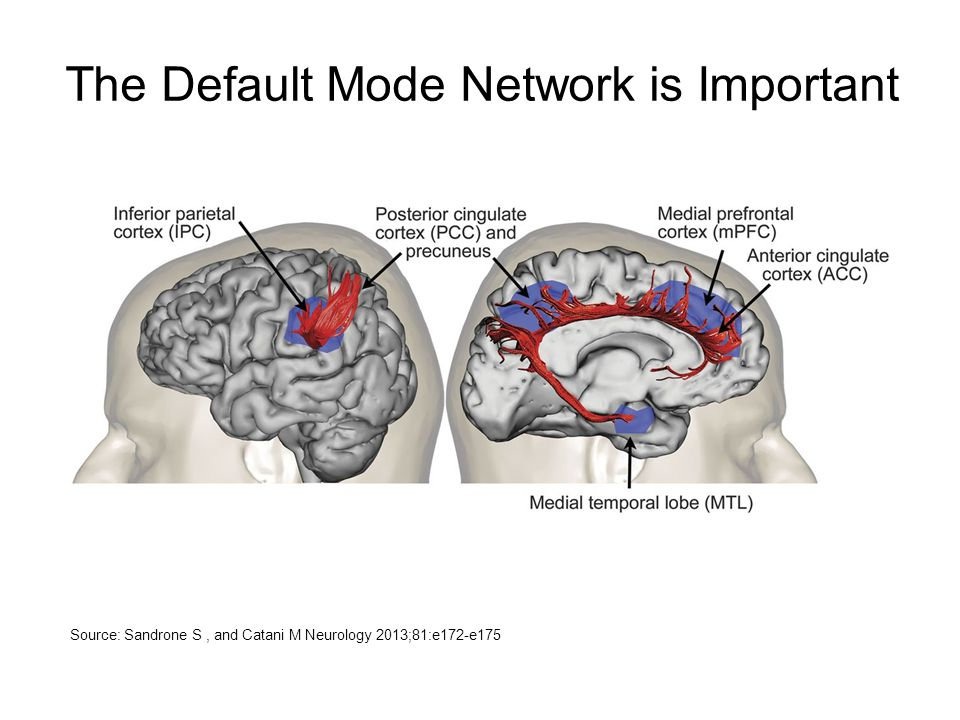
The Default Mode Network (DMN) and training its abilities in the brain
Recent studies suggest silence goes beyond passive DMN activity. Instead, the brain may shift into a dedicated mode—a cognitive reset. In this state, inhibitory and integrative systems dominate. They reorganize thoughts rather than halting them.
The Hidden Architecture of Quiet
Recent research highlights how silence engages two overlapping systems: the DMN and inhibitory-control circuits in the prefrontal cortex. Some neuroscientists refer to this collaboration as a “silence network.” It is a deliberate state of attention. This state is neither externally focused nor aimlessly introspective. Instead, it is grounded and receptive.
In this mode, the brain dampens sensory input, curbs automatic responses, and enhances internal connectivity. It’s like dimming external lights to illuminate inner patterns—not passive downtime, but strategic recalibration.
Intentional silence fosters rare coordination between the DMN and executive control regions. These regions typically alternate like rivals during focus or daydreaming. In quiet, they synchronize, enabling insights, memory consolidation, and emotional balance.
Doing Nothing as Cognitive Work
Counterintuitively, cognitive neuroscience reveals that restful states consume nearly as much energy as active tasks. Silence doesn’t power down the brain; it redirects energy toward internal reorganization rather than external reactions.
This is evident in studies of “conscious offloading.” During quiet periods, the brain swiftly processes recent experiences. It prioritizes, discards, and integrates them into coherent narratives. What feels like idleness is actually essential mental maintenance.
Experts argue that regular silence is crucial for cognitive stability. Without it, unprocessed mental “noise” accumulates, scattering attention, impairing memory, and disrupting emotional regulation. Silence, in essence, prevents the system from overheating.
Why Creativity Thrives in Silence
Creativity is commonly seen as a spark of intense effort. However, neuroscience shows many breakthroughs emerge in quiet interludes. These include walks, showers, or pauses in conversation.
This isn’t accidental. During silence, the DMN strengthens connections for associative thinking and pattern recognition. This allows existing ideas to collide organically rather than being forced.
This explains why creative individuals—writers staring at blank walls, scientists on solitary strolls, composers in quiet contemplation—intentionally carve out silence. It’s not emptiness; it’s incubation.
Silence as Emotional Regulation
Silence also plays a key role in emotional processing. Research indicates that quiet moments reduce activity in threat-detection areas like the amygdala. They also amplify reflective regions, enabling balanced emotional digestion without overwhelm.
In a stimulus-saturated world, emotions can backlog. Intentional silence provides space to metabolize them, averting rumination or burnout.
This underscores why quiet practices work: not by forcing relaxation, but by fortifying the cognitive frameworks that underpin emotional stability. Silence is the foundation, not the fix.
The Discipline of Doing Nothing
Surprisingly, intentional silence demands cognitive effort. The same inhibitory networks that hush mental chatter support impulse control and decision-making. Mastering silence hones the very skills enabling deep focus and complex thought.
This challenges cultural norms that equate busyness with value, viewing silence as laziness. Neuroscientifically, however, silence is rigorous work that builds resilience against distraction.
A society that devalues silence risks undermining cognitive health.
The Future of Silence Research
Silence science is nascent, with labs distinguishing intentional quiet from mind-wandering, meditation, or basic rest. Investigations explore its potential to boost learning, alleviate mental fatigue, and promote emotional well-being.
There’s growing concern about digital interference—endless notifications disrupting quiet modes—potentially altering attention, memory, and self-identity.
As silence grows rarer, understanding its neural benefits could redefine cognitive science in the coming years.
Rethinking Silence in a Noisy World
Ultimately, silence isn’t void; it’s a vital cognitive space where the brain resets, recalibrates, and reconnects. The “silence network” isn’t an evasion of thought—it’s the bedrock enabling it.
In a productivity-obsessed culture, embracing silence might feel radical. Yet, if neuroscience holds true, it’s no luxury: silence is as essential to mental health as sleep or nourishment.
Evolved over eons, the brain’s quiet mechanisms optimize us for life. By choosing silence, we don’t retreat—we equip ourselves to engage the world with greater clarity and insight.





 Sure Media Magazine
Leave a comment