
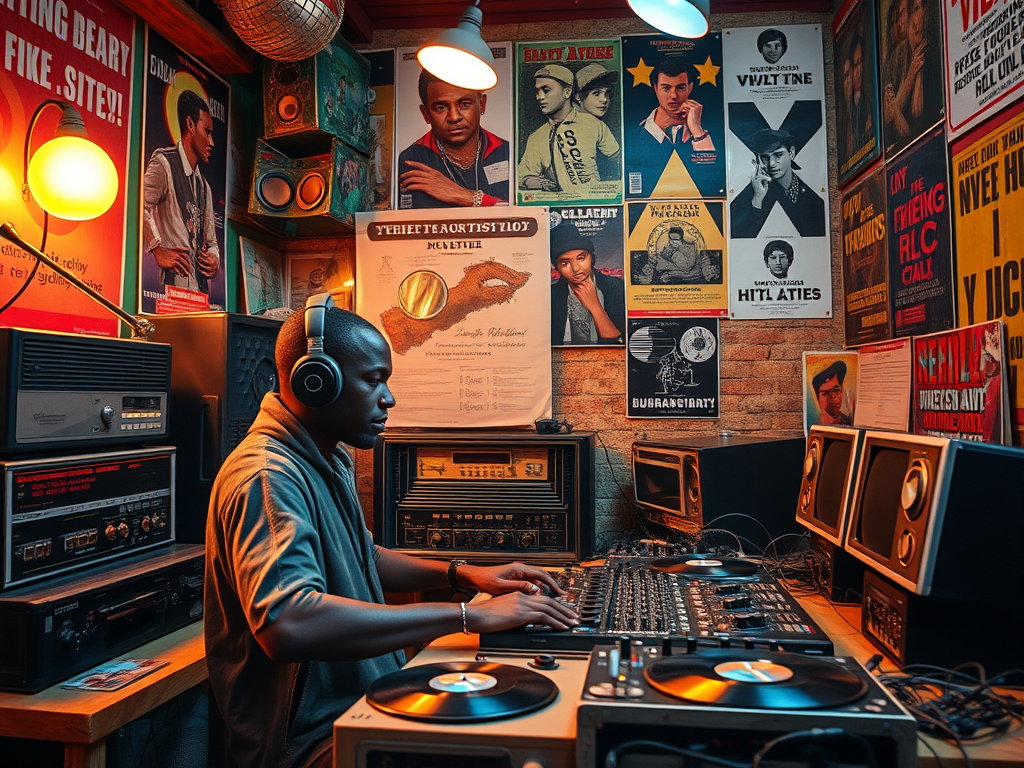
Remember when your biggest dilemma on a Friday night was choosing between Kiss FM and Capital FM on the car radio? Yeah, me too. Then Spotify showed up with infinite playlists and zero static, and suddenly local radio felt like that ex who still calls at 3 AM—kinda sweet, but mostly awkward. Streaming basically body-slammed terrestrial radio listenership. Yet here we are in 2025, and young DJs in Nairobi, Accra, Johannesburg, and even small-town Kenya are dusting off transmitters and bringing back community stations. Wild, right? Let’s talk about how we got here—and why the comeback feels so damn good.
The Day the Music (Almost) Died
Streaming didn’t just compete with radio; it embarrassed it.
- Infinite choice killed the “whatever’s playing” vibe. Why wait for the DJ when you can hear exactly the song you want, right now?
- Ad-skipping murdered revenue. Radio stations in Kenya lost up to 70% of advertising income between 2015 and 2022 (thanks, Spotify Premium).
- Big stations consolidated or flipped to talk formats. Classic FM became a Jesus-and-traffic station overnight. Tragic.
By 2020, the average 18–34-year-old in urban Kenya spent less than 10 minutes a day on traditional radio. That’s less time than most people spend choosing what to binge on Netflix. Ouch.
But Wait—People Miss the Messiness
Here’s the plot twist nobody saw coming: humans crave chaos.
Streaming gives you perfect playlists, but zero surprises. Local radio? That’s where the DJ accidentally plays a raunchy Gengetone track at 8 AM, apologizes in Sheng, then dedicates the next song to “Shiro from Westi who’s crushing on the boda guy.” You can’t algorithm that level of real.
Young people started saying stuff like:
- “Spotify knows my taste, but it doesn’t know my city.”
- “I want to hear someone mispronounce Burna Boy’s name the same way my uncle does.”
Enter nostalgia—with tattoos and AirPods.
The Grassroots Revival Is Actually Happening
Across the continent, 20-something DJs, sound engineers, and broke creatives pool cash for second-hand transmitters and start pirate-ish community stations. Some highlights I’m personally obsessed with:
Nairobi’s Underground Wave
- Ghetto Radio 2.0 kids launched side channels on low-power FM.
- Homeboyz Radio talents who got laid off started Vybez Radio out of a container in Dandora. They pull 30,000+ weekly listeners now—more than some legacy stations.
Campus & Estate Micro-Stations
Kenyatta University, Daystar, and even estates like South C run illegal-but-tolerated 150-watt stations reachable within a 5-km radius. Students play pure drill, bongo, alter-native, you name it. CCK looks the other way because, well, vibes.
The Tech That Makes It Cheap
You don’t need millions anymore:
- A decent transmitter costs under 80K KES on AliExpress.
- Streaming backups via Mixlr or Icecast mean the world hears you even when the signal flickers.
- Solar panels keep rural stations alive when KPLC acts up (which is always).
Why Now? The Cultural Hunger Games
Young Africans want three things streaming can’t sell them:
- Hyper-local identity – Hearing your hood mentioned on air hits different.
- Real-time connection – Shout-outs, traffic updates in rush hour, matatu playlists.
- Cultural preservation – Old-school lingala, kapuka, taarab that algorithms bury on page 47.
One DJ in Mombasa told me, “Spotify can’t play my grandma’s favorite rhumba and then take a call from a fisherman in Likoni who wants to propose on air. We can.”
The Money Angle (Yes, They’re Making Money)
Before you roll your eyes—community stations figured out new revenue that legacy giants still ignore:
- Hyper-local ads: “Shiro, your nyama choma at Kenyatta Market is ready!” – businesses pay premium for that.
- Listener crowdfunding via M-Pesa till numbers (some stations raise 200K+ a month).
- Live events: station-organized raves, album launches, and block parties.
One station in Kawangware cleared KSh 1.2 million from a single Halloween bash. Beat that, Clear Channel.
My Favorite Revival Stories That Make Me Emotional
- Radio Active in Kampala: Started by two broke dudes in a bedroom. Now they have a rooftop studio and mentor teenage girls in production.
- Wazobia FM clones popping up in Nigerian cities with pure Pidgin programming—because BBC Pidgin is too “proper.”
- Co-op Radio in Kisumu: Runs entirely on solar and plays nothing but old-school ohangla and benga on Sunday mornings. My soul leaves my body every time.
The Not-So-Sexy Challenges (Because Balance)
Look, it’s not all fairy lights and retro mics:
- Regulators still shut stations down randomly.
- Power cuts murder momentum.
- Some young DJs burn out because passion doesn’t pay rent forever.

But every time one station dies, two more pop up. It’s like whack-a-mole, except the moles have better taste in music.
So… Did Streaming Really Kill Radio?
Nah. It just forced radio to remember what it was good at—being messy, human, and stupidly local.
Streaming gave us convenience. These young DJs give us belonging.
And honestly? I’ll take a crackly signal shouting “Shoutout to Brian towing on Langata Road” over another “Discover Weekly” any day.
If you haven’t tuned into a community station lately, do it tonight. Search for one on myradiostream or just spin the FM dial like it’s 2008. again. You’ll hear your city breathing—and trust me, it sounds better than any algorithm ever could.
What’s the wildest local station you’ve stumbled on recently? Drop it in the comments. I need new presets. 🙂





 Sure Media Magazine
Leave a comment