
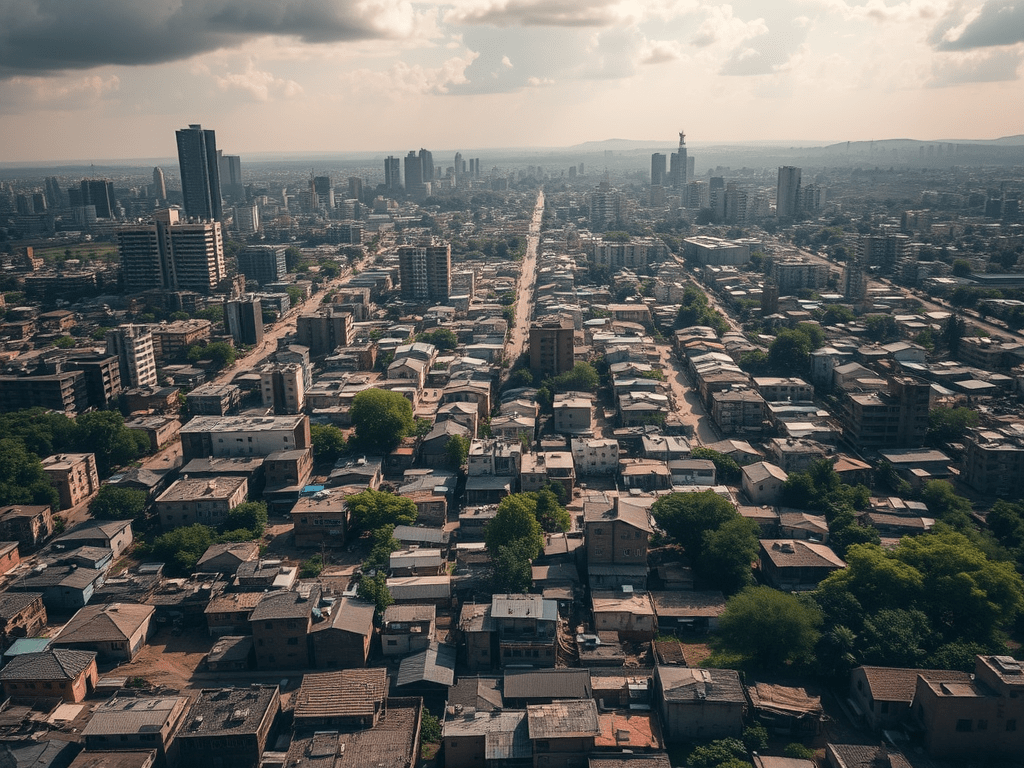
Africa, a continent that has contributed the least to global greenhouse gas emissions, is poised to bear some of climate change’s most devastating consequences. Rising temperatures, erratic rainfall, prolonged droughts, and intensifying storms are forcing millions especially in rural, agriculture-dependent regions to move in search of safety and opportunity. This movement, known as climate migration, is not only reshaping demographics but fundamentally redrawing the urban landscapes of the continent.By 2050, the World Bank projects that up to 86 million people in Sub-Saharan Africa could become internal climate migrants. And among all African cities, Nairobi stands at the center of this transformation, becoming both a refuge and a test case for how African cities will adapt to a warming world.Climate Change: The New Driver of African MigrationClimate change acts as a “threat multiplier” that worsens existing vulnerabilities such as poverty, food insecurity, and resource tensions. Sub-Saharan Africawhere more than 60% of people rely on rain-fed agriculture is especially exposed.Droughts that once occurred every decade now hit every 2–3 years in Kenya’s arid and semi-arid regions.Floods and rising sea levels displace millions annually across East and West Africa.In 2022 alone, climate-related disasters triggered 7.5 million internal displacements on the continent.Pastoralist communities are abandoning traditional livelihoods, farmers are losing entire seasons of crops, and coastal families face rising waters and erosion. All of this drives a massive rural–urban migration wave often toward cities unprepared for the speed of change.Nairobi: Ground Zero for Climate-Driven UrbanizationNairobi, often romanticized as the “Green City in the Sun,” is rapidly becoming the epicenter of climate migration in East Africa.As Kenya’s economic heart, the city attracts migrants fleeing drought in Turkana, Marsabit, and Garissa, as well as families escaping floods from coastal regions.Many newcomers settle in Nairobi’s growing informal settlements like Kibera, Mathare, Mukuru, and Kayole, where:housing is overcrowdedpower outages are frequentwater and sanitation are inconsistentenvironmental risks are risingRecent years have made the climate dangers visible.Severe floods in 2024 and 2025 displaced thousands in Nairobi, Ruiru, Thika, and Kiambu, highlighting how the city is both a refuge and a risk zone.On hotter days and nights, residents now complain of “urban heating”a combination of deforestation, concrete expansion, and towering high-rise developments that trap heat. Major construction projects like the Nairobi Expressway and new luxury apartments have intensified congestion and reduced green spaces, leaving many communities, especially low-income ones, with harsher living conditions.Some urban planners warn Nairobi could become an “unmanaged megacity” resembling Kinshasa if current trends continue. Yet it also remains a Pan-African destination, with neighborhoods like Africa Pipeline attracting migrants from Ethiopia, Somalia, Congo, Eritrea, and beyond blending diversity with overcrowding.Cities Under Pressure: The Challenges AheadClimate migration strains cities already battling rapid population growth:92% of African cities are at extreme climate risk.Urban flooding, heatwaves, polluted rivers, and collapsing drainage systems are becoming common.Housing demand far exceeds supply.New arrivals often fall into cycles of poverty due to limited job opportunities.In Nairobi, polluted rivers like Ngong, Mathare, and Nairobi River reflect decades of environmental neglect made worse by rising populations and waste.Across Africa, cities like Lagos, Dakar, Abidjan, Addis Ababa, and Dar es Salaam face similar pressures as climate migration accelerates.Turning Migration Into Resilience: Nairobi’s Emerging SolutionsDespite the challenges, climate migration does not have to lead to urban collapse.Kenya has begun piloting resilience initiatives that could shape the future of African cities.1. Nairobi Rivers Regeneration Program60 km of new sewer linesPollution cleanupFlood control systemsPlans for green parks and restored waterways2. The Climate WorX ProgramEmploys 20,000 youth from informal settlementsRestores 47 km of Nairobi RiverCreates green jobsTrains youth in climate-smart skillsAims to build 50,000 affordable homes and modern marketsThese efforts show how climate challenges can create new opportunities for youth employment, green industries, and sustainable infrastructure.A Continental Response: Africa Plans for the FutureOn the broader African stage:The Africa Climate Summit in Nairobi pushed for global climate financing and tax justice.The Kampala Declaration on Migration, Environment, and Climate Change (KDMECC–Africa) offers a continental framework for climate mobility.The UrbanShift Africa Forum is helping cities design green infrastructure, early warning systems, and climate-resilient housing.These efforts reflect a growing realization that climate migration must be managed, not resisted.
Conclusion: Migration as Africa’s Path to ResilienceClimate migration will reshape Africa’s cities whether governments prepare or not.The question is whether this transformation becomes:a crisis marked by slums, insecurity, and urban collapse,oran opportunity for green growth, innovation, and inclusive urban planning.Nairobi’s experience — with its challenges, contradictions, and bold experiments — offers the clearest window into Africa’s urban future.With strategic planning, investment in resilience, and regional cooperation, Africa can transform climate migration from a threat into a catalyst for renewal.But without decisive action, the continent risks turning its urban boom into a humanitarian disaster.The time to build climate-resilient African cities I now





 Sure Media Magazine
Leave a comment