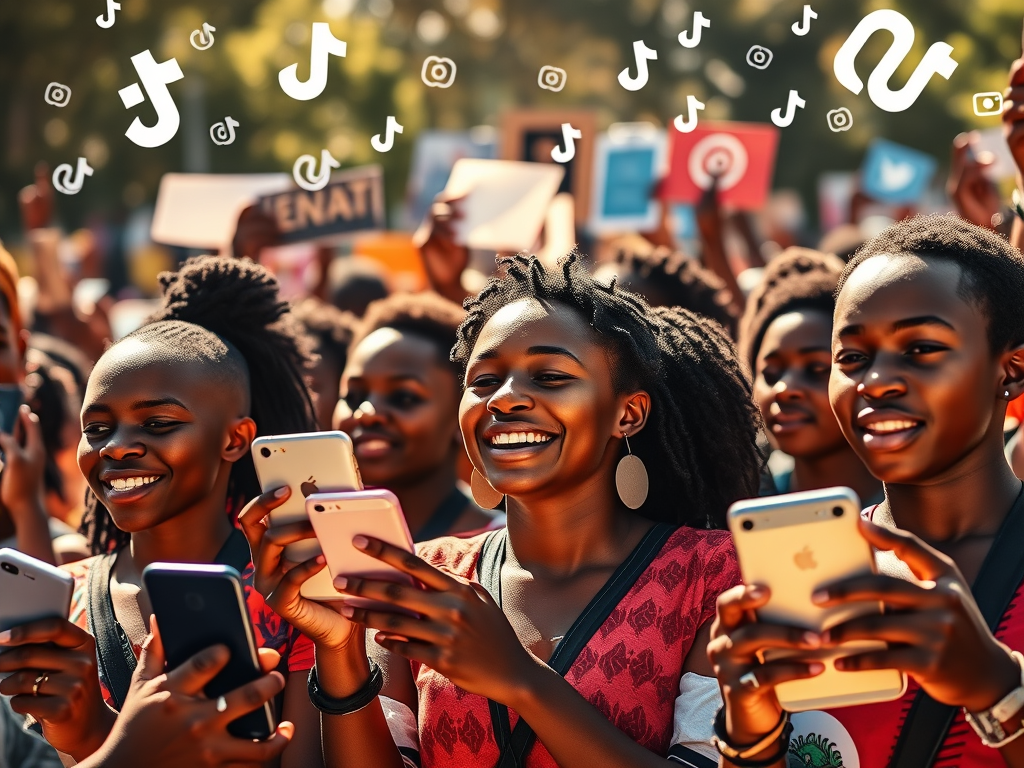
In 2025, Africa stands at a political turning point driven not by presidents, parliaments, or parties, but by its most powerful demographic force: the digital generation. With more than 70% of sub-Saharan Africa’s population under 30, young people are transforming smartphones into political tools, turning hashtags into mass movements, and converting viral content into pressure for accountability. As internet penetration pushes toward 40%—with sharp regional differences—an entirely new civic landscape is emerging, one shaped by speed, visibility, and decentralization.Yet the central question remains: Can Africa’s Gen Z convert disruption into long-term democratic reform, or will digital divides and authoritarian pushback block progress?Digital Activism Goes Mainstream: From Hashtags to Hard Power2025 has produced the most coordinated wave of youth-led digital activism Africa has ever seen. Initiatives such as the Kofi Annan Foundation’s “Digitalise Youth” program reflect the growing importance of civic tech, digital literacy, and online engagement across the continent. Platforms like TikTok, X, Instagram, and WhatsApp have displaced traditional media as the primary engines of political conversation.This year also marked several groundbreaking youth victories:Madagascar: Youth-led digital campaigns coordinated online helped catalyze the first regime change in Africa driven primarily by Gen Z organizing.Morocco: Young activists used livestreams and social platforms to mobilize protests around economic inequality, blending online coordination with street-level action.Women and rural communities are using digital tools to document corruption, expose abuse, and demand accountability in real time.Movements such as #EndSARS, #FixTheCountry, and Kenya’s Gen Z protests highlight how online-driven activism continues to reshape civic action across borders.Case Studies: The Strength—and Risks—of Youth MovementsKenya: Gen Z, Unga Revolution, and a New Social ContractKenya’s youth-driven protests of 2024–2025 transformed earlier food-price movements into a powerful force against tax hikes, police violence, and political impunity. Young Kenyans displayed extraordinary constitutional knowledge, online coordination skills, and cross-ethnic unity—shattering the myth that political power only happens during elections. But organizers warn that digital energy can fade without durable offline structures and institutional engagement.Nigeria: #EndSARS and the Power of Digital MemoryThough #EndSARS began in 2020, its influence in 2025 remains profound. Youth continue to use digital spaces to memorialize victims, demand reforms, and elevate young women’s voices. Events such as “The Future of Conversations” in Abuja show how Afrofuturism and online creativity continue to inspire sustained activism.Uganda: People Power’s EnduranceBobi Wine’s movement—fueled by music, symbolism, and social media—continues to mobilize youth despite surveillance and repression. Across Cameroon, Ghana, Tanzania, and Angola, young people risk arrest and violence to demand justice, using digital platforms to keep pressure on authorities.The Dark Side: Digital Authoritarianism Is RisingThe empowerment brought by digital activism has triggered an aggressive response from governments:internet shutdownsChinese-backed surveillance infrastructurespyware targeting journalists and activistslaws restricting online speechharassment and doxxingstate-sponsored disinformationSpyware like Pegasus has been deployed against journalists and opponents in several countries. Only half of African nations have data-protection laws, leaving millions vulnerable to monitoring. As the UN projects that three-quarters of Africans will be online by 2030, the fight for digital rights has become a central democratic battleground.Beyond Protest: Building the Africa of 2050Despite the challenges, Africa’s youth are not only protesting—they are innovating.Smart Green Schools in NigeriaKenya’s fintech boomRwanda’s drone infrastructureEgypt’s expanding e-commerce sectorThese examples represent a generation preparing to lead Africa into the fourth industrial revolution.But long-term success demands moving from resistance to reconstruction: building institutions, strengthening civic tech, creating cross-border youth networks, and reforming governance structures. With Africa’s population projected to reach 2.5 billion by 2050, the trajectory will depend on whether today’s digital generation can turn activism into lasting democratic renewal.Africa’s youth have the tools. The next step is building the institutions.

East African Living
Africa’s Digital Generation: Pioneers of Democratic Renewal in 2025
In 2025, Africa stands at a political turning point driven not by presidents, parliaments, or parties, but by its most powerful demographic force: the digital generation. With more than 70% of sub-Saharan Africa’s population under 30, young people are transforming smartphones into political tools, turning hashtags into mass movements, and converting viral content into pressure…





 Sure Media Magazine
Leave a comment