


The Night Of Wendo Wa Maatho
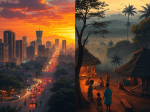
The Image: A grainy Polaroid, edges curling like old petals. I’m Eleven, barefoot in my grandmother’s backyard in Kenya. The night had the kind of quiet that hums before a story begins. Crickets played somewhere in the grass, and the fire snapped like it was keeping rhythm with the stars.I sat beside my grandmother, the orange light dancing across the old woman’s face. The air smelled of roasted maize and earth after rain. Tonight wasn’t just another evening — it was “Wendo wa Maatho” the night of remembrance.
The elders believed that once a year, when the moon hung low and round, the boundary between the living and the ancestors thinned, and if you listened closely, you could hear the voices that built you.
Grandmother began to hum — low, deep, ancient. The kind of sound that seemed to stir something older than bones. “When we light this fire,” she said, “we invite them to join us. Not to haunt — but to remind.”
I watched the flames twist and dance, and for a moment, I swore I saw shadows moving in the smoke. My grandfather, maybe. Or my father before him. The ones who tilled this soil, who carried dreams through drought and plenty.
No candles. No fancy shrines. Just the beat of a drum, the taste of “muratina”, and the courage to remember.
Grandmother’s eyes glowed like embers. “We don’t bury the past here,” she said. “We plant it — so it grows into our stories.”
And as the fire burned lower, I whispered the names I had learned since childhood. Each name drifted up like a spark, joining the stars.
Because in my village, the dead never truly leave.
They walk beside you — quiet as wind, warm as flame,
every time the fire speaks. I found it last month, wedged inside a cookbook I inherited after she died. The spine cracked open to page 87— Mukimo —and there it was, tucked between recipes like a pressed flower. I wasn’t looking for it. I was looking for her.
I used to think memory lived in the mind, tidy and chronological. But this photo taught me it lives in the body first. The second I saw it, my tongue remembered the sour-sweet sting of that mango. My shoulders recalled the weight of her hand guiding mine to the Kerosene lamp’s knob. My lungs filled with the smoky perfume of copal drifting from the altar inside. The image didn’t just show me the past—it returned me to it, like stepping backward through a door I thought was locked.
A Photo That Followed Me Across Continets
I was 19 when I pulled the photo from the book. I’d spent the last decade in the United Kingdom, building a life of clean lines and muted colors: white walls, black coffee, a job in brand strategy that paid for silence. I hadn’t been home in five years. I told myself I was too busy. The truth was sharper: I was afraid of what returning might ask of me.
My Grandma, Waithera, raised me after my mother left for “better opportunities” in California and never came back. Cũcũ never spoke of her daughter’s absence with bitterness—only with the same steady hands she used to knead chapatti dough. “People leave,” she’d say, pressing thumbs into dough. “We stay and make something anyway.” That was her gospel. I grew up believing love was a verb, not a feeling.
But when Waithera died—at 87, peacefully, in the hammock where she napped every afternoon—I didn’t go to the funeral. I sent flowers. White lilies, the kind she hated. “Too funereal,” she’d grumbled once. I told myself the flight was too long, the grief too heavy. I lied.
The photo arrived like a subpoena.
The Homecoming I Tried to Avoid
I flew to Kenya the next week. The house smelled the same—corn husks, lime, the faint metallic tang of the tin roof after rain. My auntie wangari let me in without questions. She knew. She always did.
I sat on the cool tile floor of the kitchen and stared at the Polaroid under the single bulb. The boy in the photo had no idea her grandmother would be gone one day. He had no concept of gone. He only knew the Koroboi would rise, the dead would visit, and tomorrow there would be more mangoes.
I cried so hard I hiccupped. Not pretty tears—ugly, snotty ones that left salt tracks on the cookbook. Then I did something I hadn’t done since childhood: I cooked.
Where Grief Turns to Making
I made Waithera’s Mukimo from scratch. Three kinds of stews,smashed potatoes toasted until they sang. I made the first batch. The second was perfect—bitter, sweet, alive. I ate it straight from the pot with a torn piece of matumbo, standing over the sink like she used to. The heat bloomed in my chest and spread to my fingertips. For the first time in years, I felt full.
I quit my job. I sublet my apartment. I stayed in Kenya for three months, sleeping in Waithera’s old room, waking to roosters and the smell of coffee ground by hand. I learned to make Koroboi again—how to fold the tissue paper so it doesn’t tear, how to balance the candle so the flame kisses but doesn’t consume. I taught the neighbor kids. They taught me TikTok dances. We laughed until our ribs hurt.
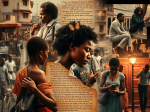
I started writing, too. Not the polished paragraphs I used to sell sneakers, but messy truths. About leaving. About staying. About how grief is just love with nowhere left to go. I wrote at the table where Waithera rolled out matumbos, the same table where I once practiced spelling words with mango juice sticky on my wrists.
What The Dead Leave Behind
The Polaroid sits in my wallet now, edges soft from touch. I look at it on subway platforms, in grocery lines, during moments when the world feels too fast. It reminds me that transformation isn’t always a lightning bolt. Sometimes it’s a match struck in a backyard, a flame passed hand to hand, a boy who learns—decades later—that joy and loss can share the same frame.
Waithera used to say the dead don’t leave; they just change form. I believe her now. Every time I light a Kuroboi, every time I taste mukimo and feel my eyes water from chiles and memory, she’s there. The photo didn’t just change me—it brought me home.
And home, it turns out, was never a place. It was a promise: Stay and make something anyway.



 Sure Media Magazine
Leave a comment