
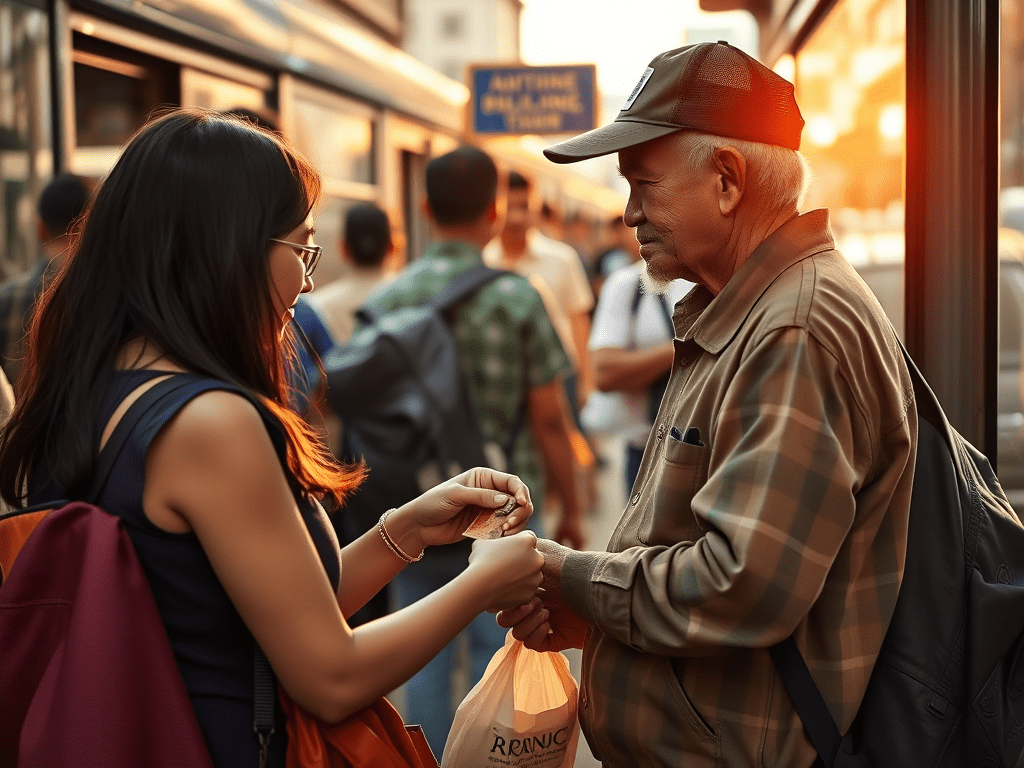
[Introduction] : A busy morning in Manila, where a young woman on her way to work spots an elderly guy fumbling for change at the bus stop. She quietly covers his fare, no big deal, right? But a few passengers notice, and before you know it, someone’s helping with groceries, another offers their seat to a tired mom. That one quiet move sparks a mini-wave of goodness rippling through the crowd. It’s funny how kindness works like that—unseen most of the time, but with the power to shift the vibe of a whole group, even a neighborhood.
In our current mess of a world—full of endless scrolling, political rifts, and that constant low hum of stress—random acts of kindness hit different now. They’re not just some feel-good fluff; they’re like a lifeline for building connections when everything feels so fragmented.
[ The Roots of a Simple Idea] The whole “random acts of kindness” thing kicked off in the 1980s, pushing folks to do nice stuff without expecting a pat on the back. Take this 2023 study out of UC Berkeley’s Greater Good Science Center: They had people dealing with anxiety or mild depression try small kind acts for five weeks, like surprising a friend with a note or helping a neighbor. Turns out, it cut down on those symptoms more than just hanging out socially or journaling thoughts. Participants felt happier, more connected, and even less awkward in social spots. As Yale psychologist Dr. Laurie Santos puts it in her work on happiness, “Kindness kicks off a rush of serotonin and endorphins, giving you that ‘helper’s high.’ It’s not just for the person on the receiving end—it wires us closer together.”
[ Real Stories That Stick With You] All over the globe, people are getting creative with this stuff, and it’s making a dent. In Nairobi, there’s been talk of community “sharing walls” where locals hang up extra clothes or canned goods for anyone who needs them—kind of like a free pop-up shop for the neighborhood. Up in Toronto, cafés have jumped on the “suspended coffee” bandwagon, where you pay for an extra brew upfront, and later some stranger down on their luck can grab it for free. These aren’t huge operations, but they knit people together, turning strangers into a loose-knit community.
Even online, it’s catching fire. Hashtags like #RandomActsOfKindnessDay get millions sharing their stories, showing that good vibes can go viral just as easily as the bad stuff. My cousin told me about a time she posted a simple thank-you note to a delivery driver on social media, and it snowballed into dozens of people sharing similar shout-outs—it was like watching positivity spread in real time.
[ What the Science Says About That Warm Fuzzy Feeling] It’s not all touchy-feely; there’s hard data backing this up. An Oxford University experiment from a few years back had folks do kind acts every day for a week—things like complimenting a coworker or treating yourself to a little self-care. By the end, their happiness levels jumped, and it didn’t matter if the kindness was aimed at friends, strangers, or even themselves. The more acts, the bigger the boost.
Kindness does wonders for your body too. It dials down cortisol (that nasty stress hormone), eases blood pressure, and even gives your immune system a leg up, according to heaps of research from places like Harvard Health and Mayo Clinic. Plus, it’s contagious—watch someone be kind, and you’re more likely to pass it on, creating this chain reaction. Dr. Santos nails it: “Seeing compassion in action reminds us we’re all capable of it, and that builds real trust.”
[ The Flip Side: Challenges and What People Get Wrong] Sure, some folks roll their eyes and say kindness won’t fix big issues like poverty or inequality. And yeah, they’re not wrong—one coffee handout doesn’t solve hunger. But it shines a light on the problem, makes it personal, and often sparks bigger efforts, like community drives or petitions. I’ve seen it happen in my own town, where a simple food share led to a full-on volunteer network.
Another myth? That you need money or tons of time to pull it off. Nah—sometimes it’s just flashing a genuine smile, shooting a quick text to check on a friend, or really listening when someone’s venting. It’s about the heart behind it, not the scale.
[ How to Start Your Own Chain Reaction] You don’t need a fancy strategy to weave kindness into your routine. Just aim for one thing a day: Hold a door, slip a compliment to the barista, donate those clothes gathering dust in your closet, or volunteer for a quick shift at a local shelter. It adds up faster than you’d think.
The Random Acts of Kindness Foundation has some great free resources, like their classroom lessons on things like respect and courage, but the core idea is to make it a habit. Try focusing on gratitude—thank someone daily—or just cut people some slack when life’s rough. Small steps like that turn kindness from a random thing into how you roll.
[ Wrapping It Up: Why Kindness Matters More Than Ever] Kindness doesn’t scream from the headlines, but it shapes lives in quiet, steady ways that stick. The cool part? It’s dead simple—anyone can do it, no matter where you are or what you’ve got going on. Next time an opportunity pops up to make someone’s day a bit brighter, grab it and reflect on how it feels. Who knows? That tiny spark might just create waves that reach way beyond what you can see. Like tossing a pebble into a pond—the ripples keep going.





 Sure Media Magazine
Leave a comment