
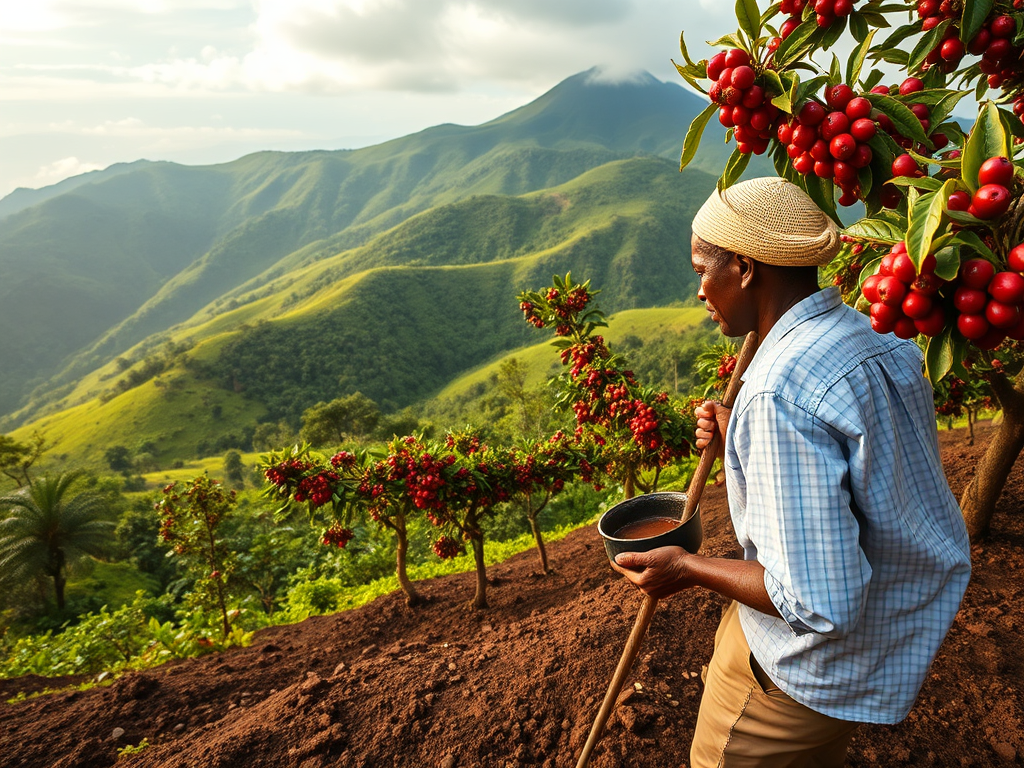
Picture this: You’re grinding up a rutted dirt track on the Kenyan side of Mt. Elgon, the air thick with mist that clings like a lover’s secret. The engine coughs at 1,950 meters, and suddenly the world cracks open—emerald ridges rolling toward Uganda, coffee shrubs dripping ruby cherries. No tour buses. No hype. Just raw volcanic power brewing cups that hit harder than anything coming out of Yirgacheffe or Huila right now.
I’ve chased stories from Nyeri to Kisii, but Mt. Elgon rewrote the script. This is where Kenya’s real coffee rebels live—the ones pulling 87–90+ SCA scores while the world is still sleeping on them.
Misty Slopes of Chepkitale: Ogiek Guardians and Volcanic Magic
Dawn in Chepkitale, ancestral Ogiek territory in Trans-Nzoia. These indigenous legends turned hunter-gatherers into agroforestry masters, growing SL28 and SL34 under avocado shade on red volcanic soils so mineral-dense they basically juice the cherries themselves. The Chepkitale Ogiek have been fighting land grabs since colonial times and now channel that fire through their own NGO into shade-grown, culturally rooted Arabica.
Mary Chebet, 45, with hands like iron, pours uji while fresh cherries stain her fingers red. “The mountain speaks through the beans,” she says. “Ignore it and your cup turns bitter.” Her half-hectare at 1,800 m is proof: slow-ripened cherries exploding with blackcurrant and pineapple because nights drop to 10°C and the soil hoards phosphorus like gold.
Kapcheseny’s Wet-Mill Revolution: 62 Farmers Just Changed the Game
Cut east to Kapcheseny, Bungoma County. In late 2024, Joseph Wekesa and 62 farmers launched their own factory—no more middlemen skimming 30%. Hand-picked cherries, 16-hour fermentation, sun-dried on raised beds. Result? AA washed lots with tea-like brightness and cocoa that lingers forever. Nearby Endebess Estate, sprawling 758 ha across the same altitude band, drops naturals that Nairobi roasters are secretly losing their minds over.
Cupping the Clouds: Flavors That Actually Shame the Big Names
We cupped a fresh Spring Valley roast straight off Elgon—medium body, candied apple up front, dark cocoa finish, and that razor Kenyan acidity. Blind cuppers are scoring micro-lots 88–91. One roaster whispered, “Colombia wishes it had this clarity. Ethiopia wishes it had this sweetness—without the floral hangover.” Dive into the tasting notes, and you’ll see why Elgon’s profiles are turning heads.
The Blockchain War: How Elgon Farmers Beat EUDR Before It Even Landed
While the rest of Africa panics about the EU Deforestation Regulation hitting in January 2026, Kenya’s co-ops already locked in blockchain traceability with Dimitra in October 2025. Every sack now carries a QR code linking to GPS coordinates, soil tests, and harvest logs. Buyers like Sucafina and Covoya are paying 20–30% premiums because they know these cherries never touched a single illegally cleared tree.
Women own 40% of the shares in these new co-ops and run pruning and pricing workshops. The gender script just got flipped.
Why 2025 Is Mt. Elgon Coffee’s Breakout Year
The global specialty market is a $500 billion beast demanding farm-level proof—check the ICO’s latest reports for the raw numbers. Elgon growers are handing it over on a silver platter—1,200–2,200 m altitude, volcanic voodoo, full traceability. Uganda’s Sipi Falls side has already medaled twice in China; Endebess is whispering Cup of Excellence entries for 2026, straight from the Alliance for Coffee Excellence playbook.
Dusk in Chepkitale. Mary hands me a chipped mug. The brew is bright, feral, and unapologetic—like the mountain itself just leaned in and spoke.
Mt. Elgon coffee isn’t “up and coming.” It’s already here. And it’s winning.




 Sure Media Magazine
Leave a comment