
Currently, every two minutes a woman dies from cervical cancer. Most women live in low-resource settings where a simple speculum exam is a luxury, if it is available at all. In 2022, the WHO reported that there were more than 660,000 new cases and 350,000 deaths, with 94% of the deaths occurring in low- and middle-income countries. Sub-Saharan Africa, South-East Asia, and Central America are the most impacted, with increased economic and health inequities, and a higher prevalence of women with HIV (six times the risk of developing cervical cancer). For decades, screening with Pap smears has meant the stigma of long and costly trips to poorly staffed clinics where the aggressive and invasive cervical testing was perceived as punishment. Women across the globe are empowered with the use of AI, self-sampling HPV kits, and portable diagnostics, and self- tests are starting to break the stigma and remove barriers women face in accessing care across Africa, Asia, and Latin America
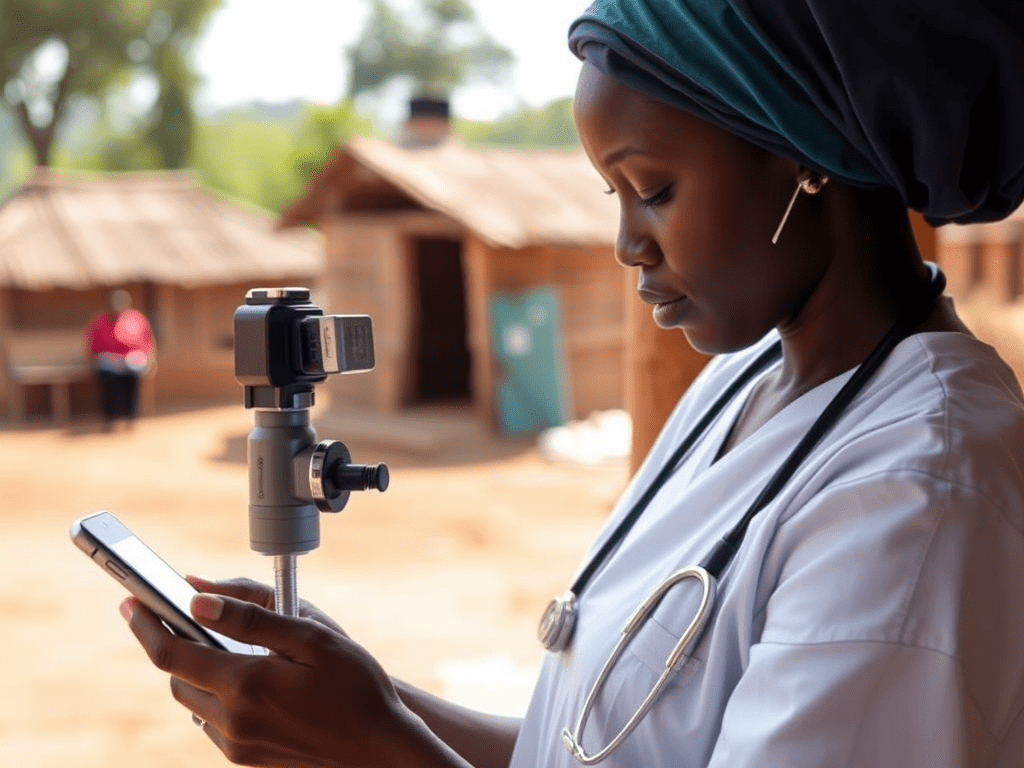
In rural Kenya, a nurse uses a smartphone attachment to scan for precancerous lesions in minutes. In India’s remote villages, women mail in self-collected samples from the privacy of home. These innovations, driven by startups, NGOs, and research labs, are converging to disrupt outdated models, making prevention.accessible and patient-centered. As a medical professional with experience in community health, I’ve seen firsthand how tech bridges gaps, blending data-driven precision with stories of resilience.
The Stark Reality of Cervical Cancer in the Global South
Cervical cancer, caused primarily by persistent human papillomavirus (HPV) infection, is almost entirely preventable with vaccination, screening, and early treatment. Yet, in 2022, it claimed 348,874 lives worldwide, with projections for 2025 estimating 700,000 cases and 375,000 deaths if trends continue. The disparity is glaring: In high-income countries, routine screening has slashed incidence by up to 80%, but in low-resource areas, fewer than 50% of women have ever been screened. In sub-Saharan Africa, it’s the leading cause of cancer death among women in 29 countries.
Traditional screening relies on the Pap smear, involving a speculum to collect cervical cells for lab analysis. It’s effective but fraught with issues: pain, embarrassment, and the need for trained clinicians and labs. In rural Latin America, women might travel hours to a clinic, only to face long waits or stockouts. Stigma compounds this—discussions of reproductive health are taboo in many cultures, associating screening with promiscuity or infidelity. A systematic review of barriers in Africa highlighted poor access, lack of awareness, and socio-cultural norms as key hurdles. Immigrant Muslim women in various settings report religious values clashing with invasive exams.
Here comes tech. By 2030, the WHO wants 70% of people screened, using better HPV tests instead of older cell checks. With do-it-yourself swabs along with smart software, up to 74 million cases might be dodged before 2120 rolls around.
AI: Turning Smartphones into Diagnostic Powerhouses
AI’s now leading the charge, checking pictures more precisely than ever before. Take MobileODT’s EVA tool – a phone-powered scope that snaps sharp cervix shots on site. Running in Kenya from 2017 onward, it uses smart software such as VisualCheck to spot red flags fast, hitting about 90–95% precision while often skipping the need for metal tools. Back during a trial with GE Health in 2018, teams reached distant villages, streaming exams live through web links.
A lady in western Kenya gets checked by a local health helper using EVA. When the tool spots something off, care starts right away with heat therapy – done fast, no hospital stay needed. Research says phone-based cervical imaging works well, especially for women who usually miss out on screening. Across the world, smart software helps doctors spot issues and act then and there, cutting down repeat trips and drop-offs.

In Asia, new gadgets like these are starting to pop up. Over in China, PHASE Scientific is rolling out a pee-test for HPV that uses smart software to read results, kicking off the biggest trial ever by 2025. These tweaks save money – EVA costs way less than old-school scopes – while spreading know-how via remote clinics.
Self-Sampling: Privacy and Empowerment in a Kit
Home-based HPV tests are shifting how screenings work – women can now gather vaginal swabs privately, either at home or in health centers, then send them off by post for lab checks. Take the Eve Kit, widely used across India: it’s helped boost testing rates by 40% in villages. By 2025, locally made versions such as CERVICHECK were proven just as reliable as doctor-taken samples.
In India, cultural hesitations keep many from clinics – so ASHA workers hand out testing kits while talking people through the process. Most women say it’s simple (75–97%) and barely hurts (60–90%), rather than going through a speculum check. One snapshot survey showed strong approval, helping ease worries about discomfort. When looking at cost versus benefit, doing tests yourself makes sense – it could let millions get checked without spending too much.
Across Latin America, progress looks about the same. In Peru or Mexico, people test themselves through national health efforts – helping those cut off in remote areas. Around the world, the WHO says collecting samples alone works well, particularly when folks are tough to get to.

Women-Led Initiatives: Grassroots Change-Makers
Women are stepping up in big ways. Over in Cameroon, the CBCHS connects moms and daughters through health programs – reaching 613 women out in villages, sharing info about HPV along the way. Meanwhile in Nigeria, sisters from a faith-based education network provide no-cost check-ups, mixing mobile tools with community talks. Instead of avoiding tough topics, these efforts face them straight, showing screenings as an act of looking after yourself.
In Tanzania, ICAP checks HIV-positive women while linking them to care. Across the world, groups such as the Clinton Health Access Initiative tested around 1.3 million females in ten different countries. By 2023, Unitaid’s effort had helped a full million people spread through 14 nations.
Overcoming Challenges: Toward a Taboo-Free Future
Even though things have improved, problems still stick around – like not enough facilities, lack of know-how, or costs being too high. Over in parts of the Eastern Mediterranean, people feel shame talking about sex-related spread, which slows acceptance. By 2025, experts say teaching methods should fit local beliefs better.
Still, new tools help fix this. At-home tests keep things private, which lowers embarrassment. Smart software cuts mistakes where staff or supplies are low. The WHO aims for 90% vaccinated, 70% checked, 90% treated – this might drop deaths by a third before 2030 ends. In Latin America, better HPV vaccine use and more testing show progress is possible.
A New Paradigm in Preventive Medicine
Tech is changing how we see cervical checks – no longer scary, but something that gives power. Care moves closer to people, taboos fade, lives get saved where help’s needed most. With each new step forward, wiping out cervical cancer feels more real. In parts of the world with fewer resources, women aren’t just getting treated – they’re leading the way toward better health.




 Sure Media Magazine
Leave a comment