
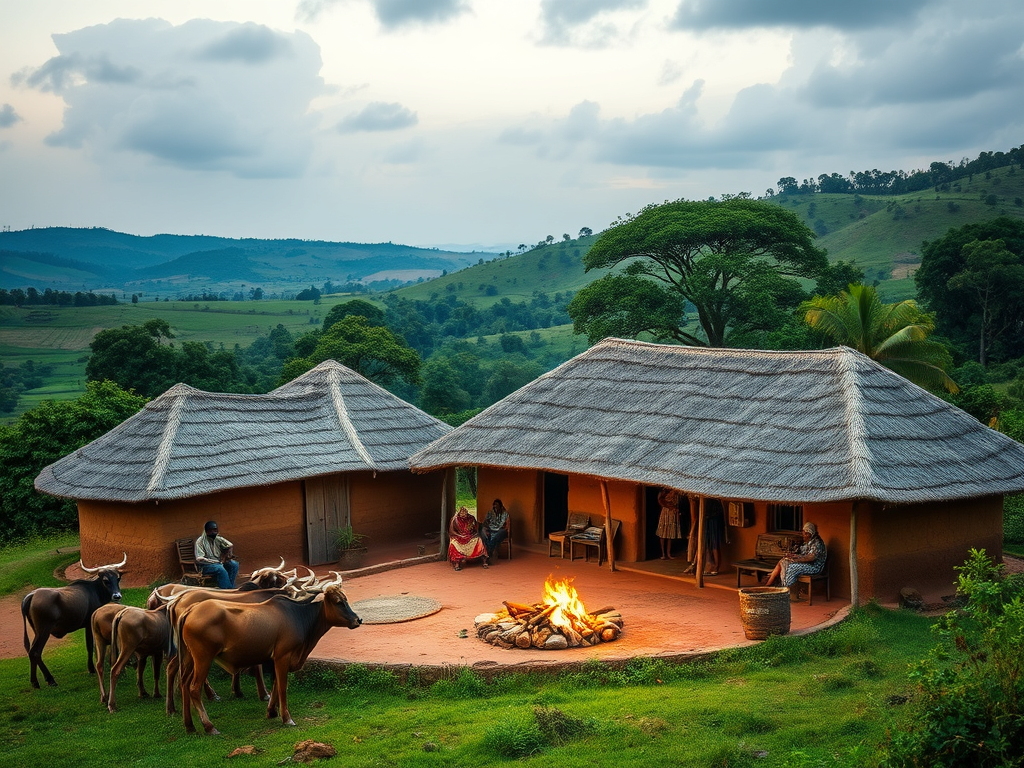

I still remember the first time I stepped off the matatu in Kakamega and heard the word “Luhya” spoken with such pride. It wasn’t just a name—it felt like a warm handshake. Over the years, I’ve come to learn that the Luhya (or Abaluyia, as many prefer) are not one tribe but a big, boisterous family of twenty clans that call western Kenya home. And if you’ve ever been to a Luhya wedding, funeral, or harvest party, you’ll know exactly what I mean by “family.”
Who Are the Luhya, Really?
Ask any elder and they’ll tell you: “Luhya” means “people from the north” or, even better, “those who share the same heart.” That second meaning hits harder. It’s about sitting around the same fire, eating from the same pot, laughing at the same jokes—even when the dialects change every few kilometers. There are twenty main clans (twenty-one if you count the Suba, who joined the fold later). The Bukusu and Maragoli are the big brothers—numerous, loud, and impossible to ignore. Then you have the Idakho, Isukha, Kabras, Khayo, Kisa, Marachi, Marama, Nyala, Nyole, Samia, Tachoni, Tiriki, Tsotso, Wanga, Batura, and Abasunya. Say those names out loud and you’re already speaking poetry. Each clan has its own twist on the Luhya language. Drive from Webuye to Butere and you’ll hear the same story told three different ways. Yet somehow, everyone understands everyone else. That’s the magic. Linguists say Luhya is a cousin to Luganda in Uganda and Lugisu across the border on Mount Elgon. If you speak any of those, you can muddle through a conversation in a Luhya market and still leave with a full basket of vegetables and a new friend.
Luhyaland: Where the Soil is Red and the People are Plenty
Western Kenya is green for a reason. The rains come reliably, the soil is rich, and people have been farming here for centuries. Kakamega, Bungoma, Vihiga, Busia—these counties are what we lovingly call Luhyaland. It’s one of the most densely populated corners of Kenya, which explains why every hill looks like someone sprinkled houses from a salt shaker. But not everyone stayed put. You’ll find Luhya farmers in Kitale, teachers in Kapsabet, doctors in Nairobi, and Uber drivers in Mombasa. Wherever they go, they carry their culture like a favorite jacket—always ready to pull it out when homesickness hits.
A Typical Luhya Homestead (The Kind That Still Exists)
Picture this: a circle of mud-walled houses with neat thatch roofs. In the middle, a cattle kraal. Off to the side, a granary on stilts so rats can’t throw a party. Each wife has her own house, and the kitchen fire never goes out. At night, grandparents tell stories about Lisoka the trickster or the great Wanga king, Nabongo Mumia. Kids fall asleep to the sound of crickets and the low hum of elders arguing about whose bull is stronger.
Food That Feeds the Soul
If you leave a Luhya home hungry, it’s your own fault. Ugali is king—stiff, hot, and perfect for scooping up chicken stew thick with tomatoes and onions. On special days, there’s ingokho (chicken cooked in a clay pot until it sings), injeshi (pumpkin leaves), murere (jute mallow), and tsinduma (cowpeas). Wash it down with busaa if you dare, but don’t say I didn’t warn you about the morning headache.
Music, Dance, and Growing Up
Every clan has its signature rhythm. The Bukusu play the litungu (a seven-string bowl lyre) and dance like tomorrow is optional. The Maragoli sway gently to eshiremi songs. The Tachoni pound massive Luhya drums until the ground shakes. And every even year, the Bukusu circumcision ceremonies turn entire villages into one giant celebration—complete with bull roasts, brass bands, and proud new warriors smeared in mud and glory.
The Political Giants and the Unity Puzzle
Western Kenya has given Kenya some of its sharpest minds—Masinde Muliro, Moody Awori, Musalia Mudavadi, to name a few. Yet for all the talent, the Luhya vote has often been split twenty ways. Elders shake their heads and quote the old saying: “One finger cannot kill a flea.” The dream of a united Luhya voice is still alive, especially when young people gather at the annual Luhya Cultural Festival in Kakamega and realize how much they have in common.
Keeping the Fire Burning
Today, kids in Luhyaland grow up scrolling TikTok between weeding the shamba. But something beautiful is happening. Schools teach Luhya languages again. Radio stations play local hits. Grandmas record voice notes of proverbs on WhatsApp. And every December, the diaspora flies in from London, Atlanta, and Dubai just to eat their mothers’ chicken and dance under the same moon their ancestors did. I asked an old man in Shinyalu what he wants the world to know about the Luhya. He thought for a moment, then smiled. “Tell them we are many, but we are one. Tell them our door is always open, and there’s always room for one more plate at the table.” If you ever find yourself in western Kenya, slow down. Roll down the window. Let the red dust settle on your shoes. Somewhere, a grandmother is stirring a pot, a young man is tuning his litungu, and a child is learning that “Luhya” doesn’t just mean where you’re from—it means who you belong to. Welcome to the hearth. Pull up a stool. Supper is almost ready.
That’s us Luhya, plain and simple: twenty clans, one big noisy heart.Red dust on your shoes, ugali steaming, grandma already shouting “Mulemutsa?” from the kitchen before you even say hello.We’ll roast each other in five different dialects, argue politics till the cows come home, then drop everything the second the litungu starts playing.Strangers turn into cousins over one plate of chicken.So come, grab a stool. There’s always extra food and an extra laugh waiting.




 Sure Media Magazine
Leave a comment