
By Elizabeth Mutisya.
A Morning Ritual
When the first rays of sunlight spill across the terrazzo floor, Amara Njoroge is already moving through her apartment with quiet purpose. Linen drapes sway gently in the breeze from her open window, a small ceramic mug in hand. She’s barefoot. Outside, Nairobi hums as matatus hiss impatiently, horns wail, and commuters call out to board. Inside, everything feels suspended, deliberate, calm.
“This is my sanctuary,” she tells me, arranging a vase of dried eucalyptus at the center of her dining table. “I spend most of my day online, so I wanted my home to feel like an anchoring breath.”
At 31, Amara is a digital content creator and self-taught interior stylist who has turned comfort into both profession and aesthetic. Her YouTube channel a soft blend of neutral palettes, handmade décor, and slow-living philosophy, has drawn thousands of followers. They aren’t there to shop; they’re there to witness calm, to breathe in a sense of stillness she’s cultivated so deliberately.
Finding Beauty in Stillness
The first thing I noticed upon entering her apartment was what wasn’t there: clutter, harsh lighting, unnecessary noise. It hasn’t always been this way.
“When I moved in three years ago,” she recalls, “it was just a box; cold, bright, concrete.” Bit by bit, she softened the space. Out went the plastic fixtures; in came rattan lampshades and clay-toned walls. Now, a vintage chair that once belonged to her grandmother sits beneath jewelry from Lamu markets.
Her design philosophy is built on patience. “I buy slowly. Everything here has a story: the jute mat was woven in Malindi by local women; the baskets are from a collective in Machakos. I don’t rush to fill space. I let it grow into me.”
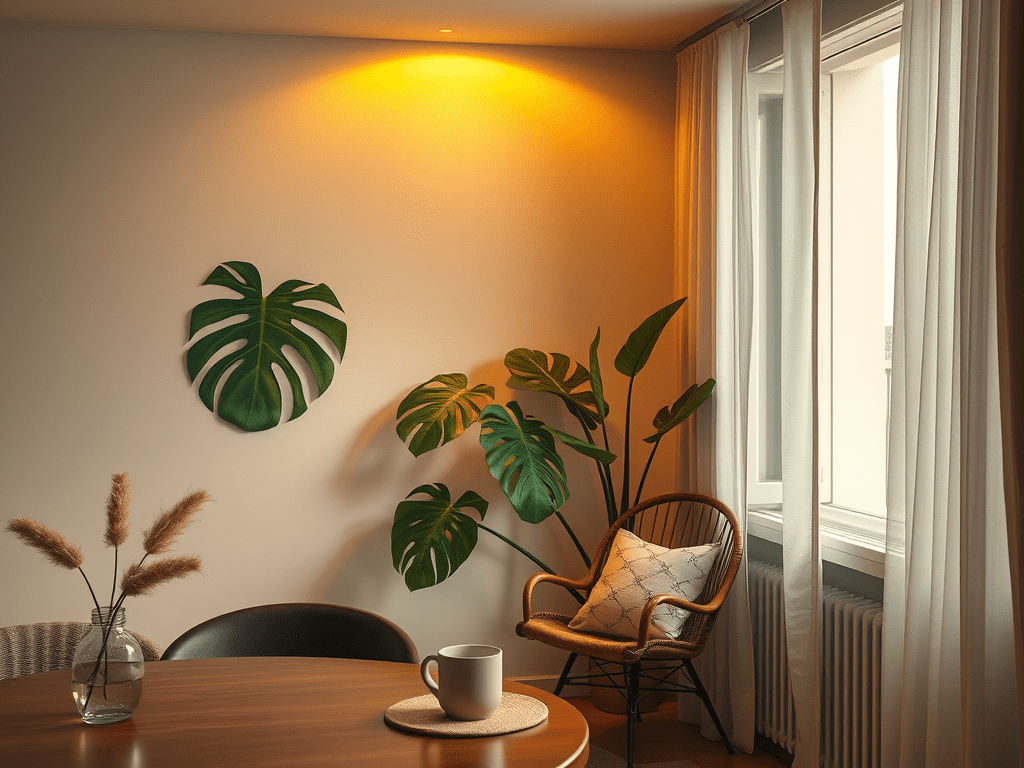
The effect is layered and personal: a modern minimalism tinged with African warmth. Her favorite corner, a reading nook framed by broad monstera leaves, doubles as her video backdrop, a space for mindfulness and reflection.
The Digital Meets the Natural
Though much of Amara’s work happens online, her inspiration is deeply rooted in nature. “When I feel overwhelmed, I drive out to Kiambu Road and wander the plant nurseries,” she says with a smile. “Sometimes I visit old houses in Lamu, they remind me that design should age gracefully, like a story etched into walls.”
Nairobi’s design culture, she observes, is quietly evolving. “We’re done copying Pinterest. Our generation is designing spaces that feel grounded; warm, local, proud.” Sustainable materials, natural textures, and intentional simplicity define the city’s emerging aesthetic, a philosophy that resonates with her own.
Full of Comfort
After dark, her apartment glows in amber light. Sandalwood drifts faintly in the air, accompanied by the soft hum of lo-fi music. She sets two cups of chamomile tea before us.
“People think comfort is luxury,” she says. “For me, it’s about alignment. Your space should speak the same language as your soul.”
This alignment has transformed her into an accidental entrepreneur. Brands now seek collaboration, and she’s begun styling homes for clients looking for the same grounded elegance. “I never expected this,” she laughs. “I just wanted peace. Turns out, peace is something people are willing to invest in.”
Living Large by Living Lightly
Amara flips through her photo album, a small world captured in still frames: East African deserts, misty mountains, and sunlit canals from Holland. Each image tells a story of resilience, life continuing even when nature overwhelms it. The visual harmony mirrors the ethos of her home- that calm and beauty can coexist alongside chaos.
As our visit draws to a close, the city hums faintly below her balcony, a reminder that stillness isn’t silence, it’s choice. “People crave connection,” she says. “Not just with others, but with the spaces they live in. When your home feels right, life follows.”
She walks me to the door, pausing to water a small fern. “Peace,” she murmurs, almost to herself, “isn’t found, it’s designed.”
By Elizabeth Mutisya.





 Sure Media Magazine
Leave a comment