

At 6 a.m outside Globe Cinema, a child folds a nyungu sack and starts work. No one chose this life for him. Death, beatings, or hunger at home pushed him out; the city simply swallowed him.
StreetStreet life in Nairobi—or any big city—is raw, relentless, and almost impossible to romanticise once you’ve seen it up close. Here’s what it really looks like, based on what kids like Kevin, social workers, former street children, and researchers consistently say:
It starts with loss, not choice
Almost no child wakes up and decides, “I want to live on the street.” It’s usually death of a parent, domestic violence, alcoholism at home, or being orphaned and handed to relatives who can’t (or won’t) feed another mouth. Kevin’s line “stepdad alisema siwezi kula rent yake” is painfully common. Poverty pushes; cruelty shoves.
Survival is a full-time job
A 12- or 13-year-old works harder than most adults.5 a.m.–9 a.m.: scavenge bottles, scrap metal, anything recyclable.9 a.m.–2 p.m.: dodge askaris, hide from bigger boys, guard your stash.Afternoon: beg, wash windscreens, carry loads at Gikomba or Marikiti for 50 bob.Evening: find food that won’t make you sick, find a spot that won’t get you beaten or raped.One boy told me, “Street haikosi kazi, lakini haikosi pia stress.”
Hierarchy is brutal
There’s a clear pecking order:Older teens (16–20) control prime spots and take “tax” from younger ones.Girls face extra dangers—sexual exploitation is routine.New arrivals get initiated with beatings or forced to sniff glue so they stop crying at night.
Glue is both medicine and prison
The smell of cobbler’s glue in a small bottle is everywhere. It kills hunger, cold, fear, and memories. But it also rots teeth, damages brains, and makes kids easier to control. Quitting is harder than heroin, because on the street there’s nothing to replace it with.
Small kindness are huge
The difference between a terrible day and a bearable one can be:A mama-mboga who keeps the ugali warm for you.A watchman who lets you sleep under his kiosk.Someone who calls you by your real name instead of “chokoraa.”These moments are what keep hope alive.
Rehabilitation is rare and fragile
Organisations like Tumaini Centre, SHOFCO, Ananda Marga, Made in the Streets, and Pendekezo Letu do heroic work, but they’re swamped. For every child they rescue, dozens more arrive from the villages. Even when kids get off the street, many bounce back because family tracing fails or relatives reject them again.
They are still children
They play football with plastic-bag balls, fight over who gets to be Erling Haaland, cry when their favourite chicken hawk dies, and draw cars on any scrap of paper they find. The street tries to erase childhood; they fight every day to keep it.
Society mostly looks away
We step over them, roll up car windows, mutter “watu wa serikali wafanye kitu.” But the truth is, every bottle you crush instead of selling, every time you chase them from your gate, every time you call them “wachukuzi” without knowing their stories—you make the street harder.Last word from a former street boy now working as a mechanic in Industrial Area:“Street haikunipa chochote ila scars na masikhara. Lakini ilinifundisha moja: usikate tamaa. Kama nimetoka, yeyote anaweza kutoka.”
Census report
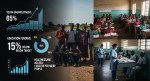
The 2018 figure of 15,337 in Nairobi is for “street persons” (which includes adults & families), not strictly “street children” alone. “National Census of Street Families” (2018) counted 46,639 persons living on the streets or connected to street life in Kenya, of which it was a population rise in street
Conclusion
A honest look at street life shows that it is not a path any child chooses willingly. It is a response to hardship, not a preference. The resilience these kids show is real, yet it should never be praised as a substitute for the support they deserve. When communities and institutions step in with steady guidance, education, and compassion, you see how quickly their lives can shift. The challenge is big, although the way forward is simple. Give children safety, structure, and opportunity.
Call to Action
If you want to do something real, don’t give money on the street (it usually goes to glue or older boys). Instead:
Drop old uniforms, shoes, or sanitary pads at Tumaini (Ngara) or SHOFCO (Kibera).
Buy food for the Saturday feeding at Jeevanjee Gardens.
Or simply stop, ask a child’s name, and listen for two minutes.
That small act tells them: “You still exist. You still matter.”That’s the only way the street ever loses its grip.




 Sure Media Magazine
Leave a comment