
by Margaret Wambui
DAR ES SALAAM, Tanzania —
The sun rose quietly over the port city, but the silence felt heavy — a silence not of peace, but of fear. In the days following Tanzania’s disputed election, whispers replaced news, and in the absence of official truth, the internet became the last refuge for witnesses to speak.
A nation in denial
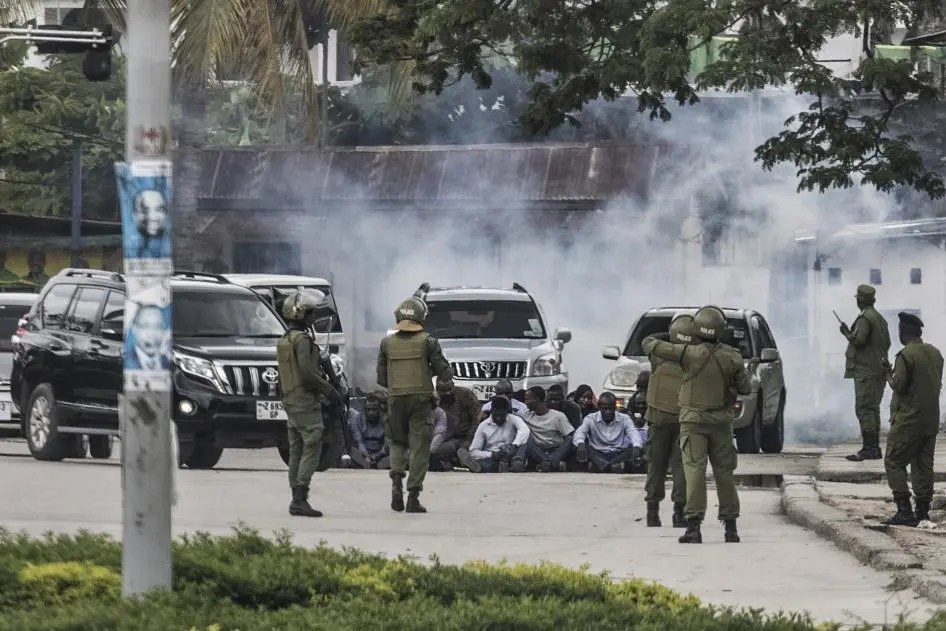
On October 29, 2025, protests erupted across major Tanzanian cities. What began as peaceful demonstrations against election irregularities soon turned into one of the bloodiest chapters in the country’s recent history.
Witnesses describe police and security forces opening fire on unarmed civilians. In Dodoma, residents recall bodies being loaded onto trucks at night. In Dar es Salaam’s outskirts, neighbours say they watched soldiers cordon off entire streets.
“We counted twelve bodies before dawn,” one man told a local activist over an encrypted channel. “By morning, they were gone. No one talks about it now.”
Officially, the government has dismissed reports of mass killings as “foreign propaganda.” But opposition leaders from Chadema claim more than 1,000 people may have been killed — their bodies secretly disposed of to erase evidence.
The digital detectives
With journalists threatened and many local reporters silenced, open-source investigators have become the new front line of truth.
From Nairobi to London, teams of analysts are gathering phone footage, cross-checking timestamps, and using satellite imagery to locate possible mass-burial sites.
One geolocation analyst working with volunteers describes the process:
“You start with a single video — a crowd running, gunfire echoing. Then you freeze the frame, zoom in on a billboard, match it on Google Earth, and suddenly that one clip becomes a verified location of state violence.”
In a small maproom, colored pins mark dots across Tanzania — each pin a potential site of violence. The team uses software to overlay footage from TikTok, X, and WhatsApp, reconstructing the timeline of events, frame by frame.
The map of silence
Satellite images from early November show disturbed earth patterns on the outskirts of Pwani region — changes that correspond to witness reports of bodies being dumped there overnight.
Comparing imagery before and after the protests reveals dark, rectangular patches along a remote dirt road. Analysts suspect these could be mass burial trenches hastily dug by military vehicles.
Still, every data point tells a human story. One 17-second video, filmed from behind a wall, shows three men raising their hands before a gunshot cracks through the air.
The clip ends abruptly — but through background sounds, analysts identified the location near Morogoro’s market square.
“We can verify where it happened,” says the analyst, “but we still don’t know their names.”
The cost of truth
In a country where questioning authority can mean disappearance, Tanzanians are learning to rely on encrypted platforms, voice notes, and coded phrases to share the truth.
Some journalists have already fled across borders. Others remain — quietly documenting, uploading, deleting, and re-uploading evidence before it’s scrubbed from the web.
“We’re just trying to make sure they are remembered,” says Sheryl, a Tanzanian student activist. “Because when the world moves on, who will speak for them?”
Why it matters
Open-source investigations are doing what official institutions won’t: preserving evidence before it vanishes.
The world may not yet know the full scale of Tanzania’s massacre — but thanks to satellite data, verified imagery, and digital witnesses, silence no longer means ignorance.
The story of Tanzania’s tragedy is not only about politics — it’s about truth.
And truth, even buried, always finds a way to surface.





 Sure Media Magazine
Leave a comment