
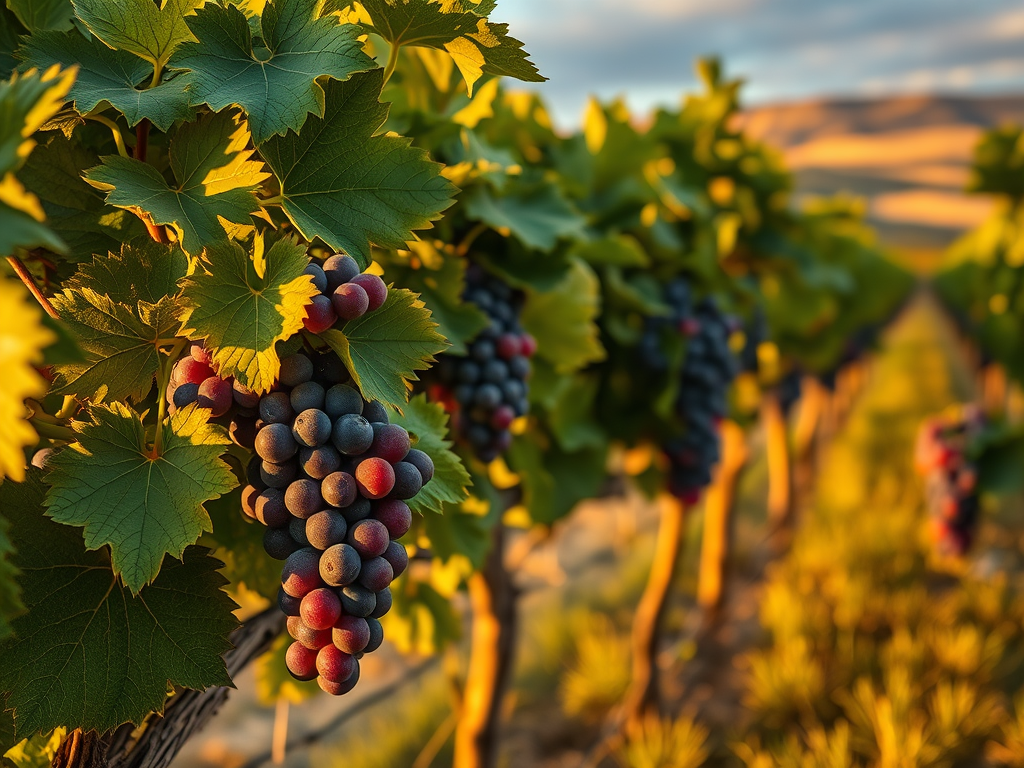
The global fine wine market valued at approximately $350 billion—has long been anchored by Vitis vinifera cultivars such as Cabernet Sauvignon, Chardonnay, and Pinot Noir. In 2025, however, climate-driven volatility is fundamentally reshaping production economics. Hybrid and inter-specific crossing (ISC) grape varieties, engineered for enhanced resistance to drought, heat, and fungal pressure, are transitioning from experimental niches to core components of risk-mitigated supply chains.
The Escalating Cost of Climate Exposure
Recent data underscore the financial toll of environmental instability:
- 2024 European harvest losses: Bordeaux recorded a 30% volume reduction; Burgundy saw Pinot Noir yields decline by 40% (International Organisation of Vine and Wine, October 2025).
- Irrigation cost inflation: Napa Valley water rates reached $2,200 per acre-foot, a 28% year-over-year increase (California Department of Water Resources, September 2025).
- Input price escalation: Copper-based fungicides rose 22% globally since 2023; a single mildew treatment in Tuscany now averages €420 per hectare (Coldiretti, 2025).
These pressures have driven wholesale price volatility, with entry-level Bordeaux AOC lots rising 18% in Q3 2025 and distributor margins compressing by 12–15 percentage points.
Hybrid Varieties: Quantifiable Operational Advantage
| Parameter | Vitis vinifera (avg.) | Hybrids (2024–25 trials) |
| Fungicide applications | 8–12 per season | 1–3 per season |
| Seasonal water requirement | 700–1,000 mm | 300–500 mm |
| Yield variance (drought) | –35% | –5% |
| Production cost per hectare | €9,500 | €4,800 |
Sources: INRAE (France), Cornell University, Geisenheim University (2025).
Notable cultivars include:
- Vidoc: 82% reduction in copper use; wines scoring 91 points in blind tastings (Decanter, July 2025).
- Souvtagne Blanc: Zero fungicide applications in Rheinhessen 2024; retail price 36% below comparable Loire Sancerre.
- Regent: UK vineyards achieved £1.2 million in revenue across 22 hectares with no irrigation (WineGB, 2025 )
Regulatory Acceptance: Institutional Validation
- France: The Institut National de l’Origine et de la Qualité (INAO) authorized six hybrid varieties for Bordeaux AOC trials in March 2025; first commercial releases occurred in October 2025.
- Italy: The Consorzio Brunello di Montalcino permitted up to 10% ISC in Rosso di Montalcino blends via emergency decree (August 2025).
- United States: The Alcohol and Tobacco Tax and Trade Bureau (TTB) approved “climate-resilient” back-label terminology in June 2025.
Strategic Implications for the Trade
- Supply-chain stabilization: Hybrids reduce exposure to harvest shortfalls and input price shocks.
- Margin recovery: Procurement at 42% below vinifera parity, paired with retail positioning at 75% of benchmark pricing, expands gross margins by up to 33 points.
- Market positioning: Trade education must emphasize quality parity—evidenced by a Solaris outperforming Chasselas in a 400-sommelier blind panel at VinItaly 2025—and leverage transparency tools such as QR-coded vineyard data.
Pricing Architecture
| Approach | Pricing Architecture |
| Volume-driven penetration | Tesco UK: Souvtagne Blanc at £9.99 (high velocity). |
| Premium scarcity | Vidoc “Premier Millésime” auctioned at €120/bottle (Sotheby’s London, October 2025). |
Forward Projection
McKinsey Global Institute forecasts that 22% of global vineyard acreage will transition to resilient cultivars by 2030, yielding annual supply-chain savings of $1.8 billion for every 1% shift. For importers, distributors, and hospitality buyers, securing hybrid allocations in 2025–2026 represents a critical hedge against structural cost inflation and supply discontinuity.In an industry where sustainability is now an economic mandate rather than a marketing option, hybrid grapes are not a compromise—they are a competitive necessity.




 Sure Media Magazine
Leave a comment