
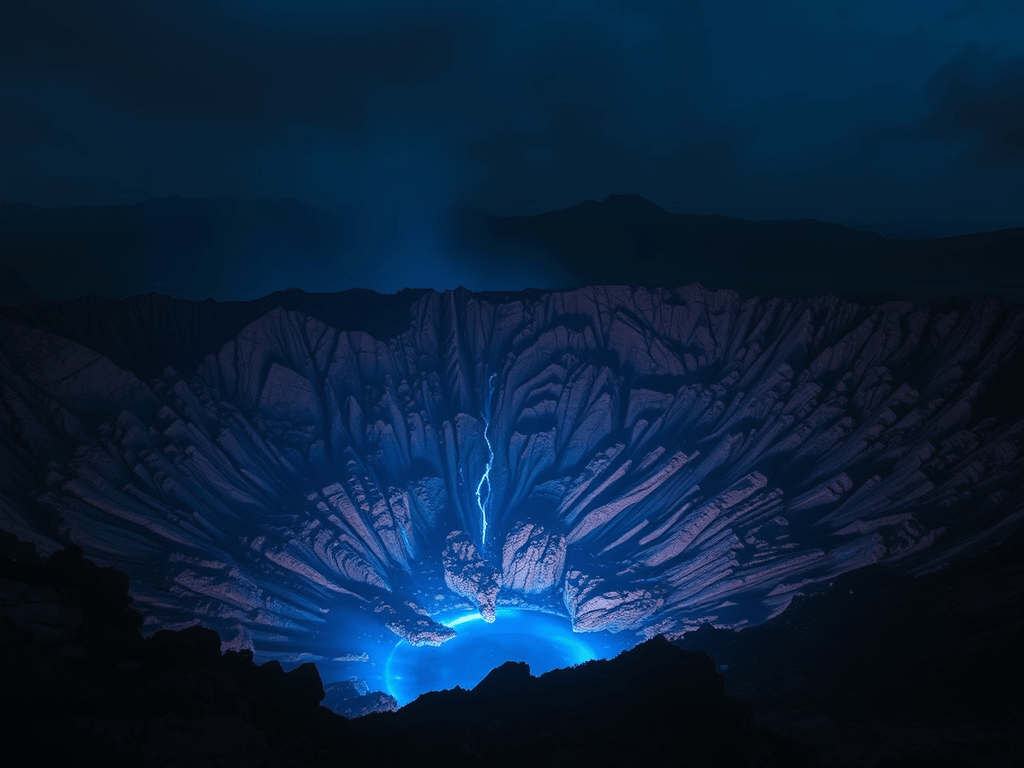
Cold air wraps your cheeks as you step onto the trail. The sulfur sting catches in your nose, then eases with each breath. A soft hiss rises from vents below. Ahead, rivers of electric blue seem to pour over black rock like paint in the dark. This is the Ijen blue fire at Kawah Ijen, an active Indonesian volcano in East Java.
What makes a volcano glow blue, and what is it like to witness it? Here’s a clear, friendly guide to the science, the people who work there and the simple steps to plan a safe visit. You will learn why blue flames appear only at night, what the acid lake means for the crater, and how to walk with care among sulphur miners and guides who know the mountain best.
What Makes Ijen’s Blue Fire Burn at Night?
Kawah Ijen lies in East Java, near the border of Banyuwangi and Bondowoso. The larger Ijen caldera spans about 20 kilometres across, with a one-kilometre-wide crater lake shining at the center. The rim rises to nearly 2,800 meters, so pre-dawn air feels cold and clean on clear days.
Ijen is active and vents sulfur gas each day. Small bursts and gas releases are common—the last eruption was in 1999. For a concise overview of the volcano’s geology, elevation, and mining history, see the entry on Ijen.
Why the Flames Glow Blue, Not Red
The blue comes from chemistry, not lava. Hot sulphur gases escape through cracks in the crater floor. When those gases meet oxygen in open air, they ignite. Burning sulfur gives off electric blue light at about 600 degrees Celsius, roughly 1100 degrees Fahrenheit.
The flames are best seen at night. Daylight washes out faint blue light, so pre-dawn hours make the glow stand out. In some places, liquid sulphur seeps from the ground and runs like syrup. The liquid can carry the flames, so the fire seems to flow in streams along the rock. The scene looks unreal, but it is just sulphur burning in the air.
The Acid Lake’s Wild Colour
By day, the crater lake is a bright turquoise. The water is very acidic, with a pH near 0.3. It is often called the largest acidic crater lake on Earth.
The colour comes from dissolved minerals and the way light scatters in the water. It is beautiful and harsh at the same time. Fumes near the lake can bite the eyes and lungs, so stand upwind and wear a mask when the air shifts.
Is it Blue Lava? Clearing Up A Common Myth
No, it is not blue lava. The blue is from burning sulphur gas and liquid sulphur at the surface. The underlying rock is not glowing blue. It is a fire on the ground, not molten rock. The flames and fumes are stunning, but they are also hazardous. Give vents space, watch your footing, and keep your mask handy.
The Human Side of The Crater
Miners here harvest bright yellow sulphur that hardens around pipes and vents. They break it into chunks, load it into baskets, and carry it up from the crate floor. Loads often weigh 70 to 90 kilograms. From the rim, many walk another 3 kilometres down to the weighing stations in the valleys.

Earnings vary by load and market prices, but many miners report around $13 per day in local terms. The work is steady, skilled, and risky. Respect the men who do it, give them the right of way, and keep the path clear. For a thoughtful look at this labor, see the BBC feature on the men who mine the “Devil’s gold.”
Most hikers start around 2 a.m., then aim to reach the crater before sunrise. If you stay in Banyuwangi, expect about 1.5 hours by road to the trailhead. The climb is steady, with some steep sections. The air is cold and thin. Cinders crunch under your boots. The vents hiss like kettles coming to boil. The smell is sharp, part matchstick and part hot metal. A few lights bob along the path. The blue fire shimmers ahead.
Safety That Actually Matters Here
Bring a proper gas mask or respirator, and goggles if you have sensitive eyes. Wear sturdy boots, warm layers, and a headlamp with spare batteries. Local guides help with route finding and safe viewing spots.
Ijen closed for increased activity in 2024 and reopened on September 8, 2024. As of November 2025, it is open to visitors with new rules. The crater closes on the first Friday of each month for safety and conservation. A basic health certificate is mandatory and is usually arranged by local tour operators. The alert level is low, yet gas can surge without warning. Follow ranger guidance, and turn back if asked.
How To Be a Respectful Visitor
- Stay on marked paths, and never block miners, pipes, or carts.
- Pack out all trash, and keep voices low near work areas.
- Ask before photographing people, and avoid using flash in faces.
- Buy tea or snacks from local stalls to support the community.
Plan your Visit to Ijen: Timing, Access and Photo Tips
Plan for a pre-dawn arrival to see the blue flames, then stay for sunrise. Most visitors base in Banyuwangi on the coast. Expect around 1.5 hours by car to reach the trailhead, then a steady climb to the rim.
A simple plan works well: midnight wake-up, 2 a.m. start, blue fire in the dark, sunrise on the rim, and descend as the light gets strong. The dry season runs from April to October or early November. The weather is clearer, and the paths are less slick.
What to Pack for Comfort and Safety
- Respirator or well-fitted mask, headlamp, warm jacket, gloves, sturdy boots, water, and snacks.
- Optional: lightweight scarf, eye protection, extra batteries, small first aid kit.
- Keep your pack light so you can move safely on steep paths.
Photo Tips for Capturing Blue Fire
- Shoot before dawn when flames are brightest. Keep your light off the scene.
- Brace on a rock or rail to steady your shot. Short hand-held video works well to show the flicker.
- Turn off flash, respect miners, and keep a safe distance from vents.
Ijen closed temporarily in 2024 and reopened on September 8, 2024. In 2025, it is open with monthly first-Friday closures for safety and conservation. The site operates at a low alert level with daily tours running. Ijen received UNESCO Global Geopark recognition in 2023 for its geological and cultural value. Conditions can change. Check with local authorities or your guide a day before your hike, and carry required permits and the health certificate.
At Ijen, science meets daily life on the crater floor. The answer is simple and strange at once: the blue glow is sulphur burning in the air, visible at night when the world goes dark. The turquoise lake, the hiss of vents, and the steady walk of miners all shape the rhythm here. Carry two things home: curiosity and respect. Share the story, travel with care, and let the volcano that paints itself keep shining for years to come.




 Sure Media Magazine
Leave a comment