
You’re scrolling again and everything looks the same, the sunlight on travertine, the oat-milk lattes and the kind of order that smells faintly of privilege. Every square inch of your feed whispers calmly.
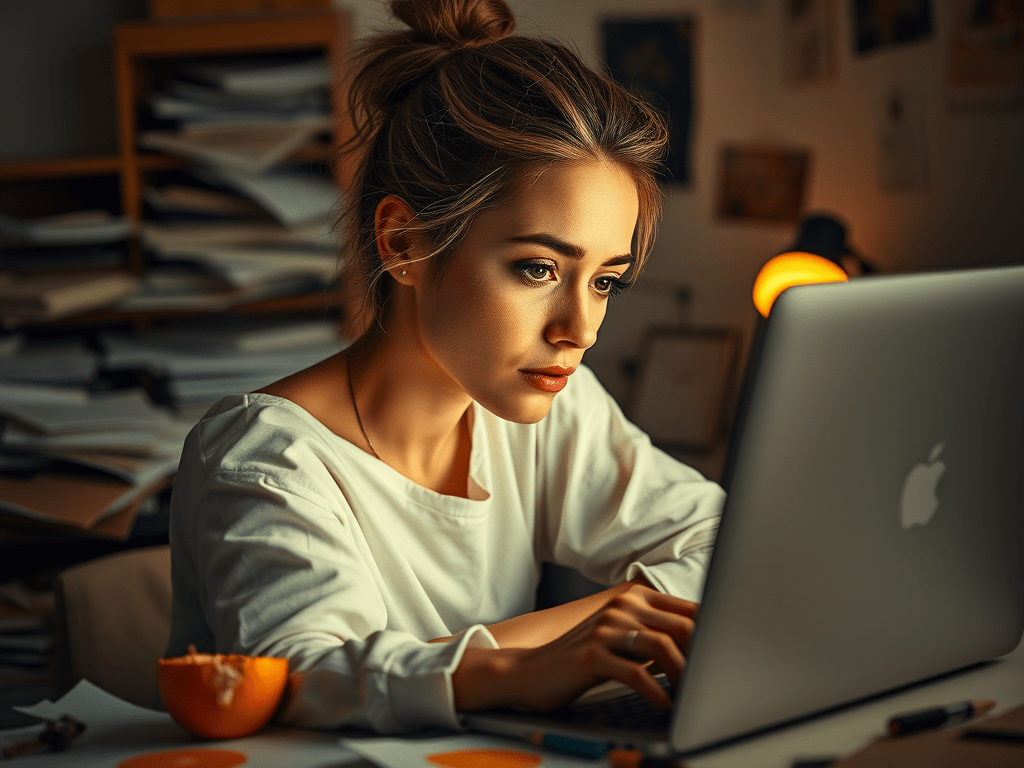
Then a glitch arrives of a blurry photo of someone crying in the back of a cab and their mascara running like ink with no caption but only a timestamp then a few posts later, a writer’s desk spills with papers like breath, with a half-eaten orange beside a glowing laptop and The caption reads “I’m trying my best.”
Emma Chamberlain has captured a phenomenon that kinda looks like this on Instagram, posting candidly: “yes i like taking selfie after i cry. who cares.” the Humor wrapped around real feeling and the kind that briefly makes the internet feel human.
The Age of Aesthetic Control
For over a decade, the internet functioned as a showroom. Every corner of life, breakfast, bedrooms, and even heartbreak, was edited for visual harmony. The “quiet luxury” era turned restraint into aspiration: cashmere tones, matte light, a hint of emotional distance. Style became synonymous with control.
But sameness suffocates. Scroll long enough and every feed blurs into one: the same walls, the same smiles, the same illusion of peace. A cultural hangover has set in, an authenticity fatigue where perfection feels performative rather than desirable.
Something looser slips through: the messy studio photo, the unmade bed, captions that read like unedited thoughts. This is rebellion disguised as tenderness, the aesthetic of losing control carefully composed for public view. When everything looks perfect, imperfection feels radical.
Realness as Status
In a world obsessed with curation, appearing unfiltered has become a form of quiet privilege. It takes confidence, even power, to post without polishing. Let the lighting be bad, the eyeliner run, the thought half-formed: these are signals of authenticity.
Realness is luxury. Influencers who can afford to be messy are often safest from judgment. Their chaos reads as charm; their vulnerability, as depth. Others rehearse authenticity, hoping to appear spontaneous just right.
Perfection used to whisper control; now it suggests fear. Convincingly imperfect is the new measure of taste: proof that your life is too full, too real, too lived-in to edit. Online, rawness isn’t the opposite of performance. It is performance, and it has never looked more expensive.
The Aesthetic of Authenticity
Realness has a look: the slightly grainy photo, the cropped flash shot, a caption like a late-night text. A chipped mug on a marble counter. Mascara smudged just enough to feel cinematic.
This is the new visual language of honesty: imperfect, but never careless. Even vulnerability has softened, borrowed from analog moodboards and confession boards. Creators curate chaos, style their burnout, aestheticize unraveling. The grain, the blur, the lowercase sighs all signal sincerity.
Rayne Fisher-Quann writes on social media,“we consume so much, now that perhaps we don’t know what is means to exist as something unsellable. i had to give up journaling because i couldn’t stop writing for the people who would read it after i was dead.” capturing the anxiety of visibility and the counter-desire to remain unsellable. Authenticity has become shorthand for honesty.
The Emotional Economy
If early influencers sold aspiration, today they sell access. It’s no longer about what they own, but how closely you’re allowed to feel it. Scroll through Substack or Patreon and the pattern is clear: unfiltered essays, voice notes about bad days, updates from tiny studios. Fans pay for the sense of being seen; creators monetize the feeling of being known. Oversharing is now entrepreneurial: sincerity and income wrapped in one.
Tavi Gevinson, on Substack, explores the intersection of intimacy, fame, and emotional currency, reflecting on how honesty itself can become a performance.
The Paradox of Transparency
Even staged posts carry genuine longing. We’ve learned to turn emotion into aesthetic, confession into content, but beneath the sheen is a basic human need: to be seen and understood.
Posting in hopes of connection, monitoring likes to measure it, trying to appear unpolished so we might be believed, this is the quiet drama of digital life. Transparency is not truth; it’s a gesture toward it, a reach across the screen, a small risk that someone will answer back.
The Last Scroll
The light on your screen softens. Between ads and selfies, another image slips through: a quiet snapshot, chipped nail polish, a cold coffee. No caption. Just the moment, unshaped.
It doesn’t demand attention, but you pause anyway. Maybe because it feels true, not the truth that must be declared, but the truth that simply is. For all our filters, captions, and curated chaos, we keep searching for this: the fleeting stillness of being seen without performing. Perhaps the real luxury online isn’t being noticed. Perhaps it’s being understood.
Rayne Fisher-Quann’s posts capture this balance of humor and vulnerability: the irreverent, self-aware, oddly tender intimacy of oversharing online.





 Sure Media Magazine
Leave a comment