
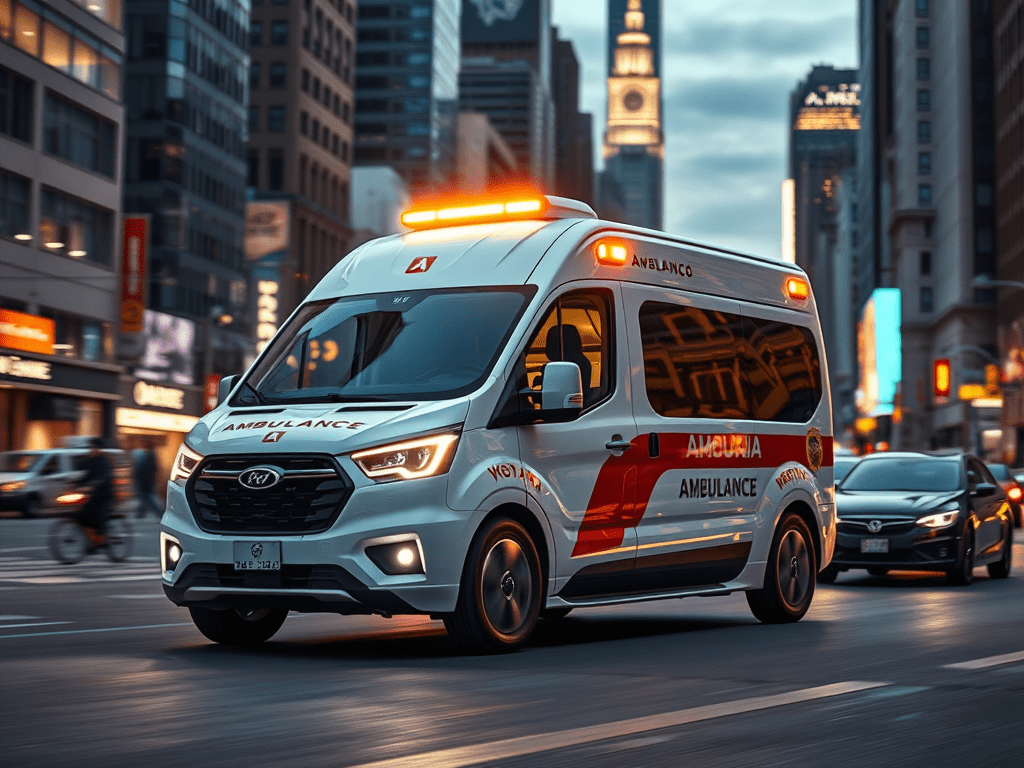
Do you remember the first time you hailed a ride and it pulled up without a driver at the wheel? That quiet thrill, the soft hum of electric motors gliding through traffic like a whisper on wheels. It’s the stuff of tomorrow’s commute, courtesy of companies like Waymo. But here’s the gentle curveball in our autonomous adventure: What if those same self-driving wonders weren’t just for lattes and errands, but for the heart-pounding rush of an ambulance siren? In the grand tale of Robotaxis vs. Reality, Waymo’s exploration into driverless ambulances feels like the plot twist we didn’t know we needed—one that blends cutting-edge AI with the raw urgency of saving lives.
As we roll into late 2025, with Waymo’s fleet clocking over 10 million trips across U.S. cities, the robotaxi dream is no longer a distant horizon. Yet, beneath the glossy headlines of expansion to places like Miami and London, a subtler story unfolds. It’s one where autonomous vehicles step beyond passenger perks into emergency response, turning potential gridlock nightmares into swift, reliable lifelines. Let’s unpack this twist with a warm nod to the human hands that built it—and the tech that’s now lending them a steady ride.
The Allure of Robotaxis: Dreams on Four Wheels
Picture this: A crisp autumn morning in Phoenix, Arizona, the sun painting golden streaks across palm-linedstreets. You tap your app, and a Waymo Jaguar I-PACE arrives silently, its sensors scanning the world like a vigilant friend. No small talk, no detours—just smooth navigation through rush-hour snarls, arriving five minutes early with zero emissions trailing behind.
That’s the robotaxi from Waymo has been scripting since its Google X days over a decade ago. By October 2025, their service spans San Francisco’s foggy hills, Los Angeles’ sprawling freeways, and Austin’s vibrant vibes, with plans for London streets in 2026. It’s not hype; it’s happening. Riders report a 99.9% uptime, and the fleet’s safety record shows fewer incidents per mile than human drivers—approximately one crash eveevery 5.4 million miles, according to internal data shared in recent reports.
But let’s keep it real with a wink: Robotaxis aren’t flawless fairy tales. Rain-slicked roads can confuse lidar sensors, causing the car to slow to a cautious crawl that feels more like a polite apology than a decisive move. And in denser urban mazes, such as New York’s perpetual construction zones, the tech still defers to human overrides during testing phases. It’s progress wrapped in patience—a reminder that even the most advanced AI needs a nudge from reality now and then.
For those dipping toes into this world, check out our beginner’s guide to hailing a robotaxi for tips on what to expect (and how to tip your invisible chauffeur).
Waymo’s Reality Check: Navigating the Bumps in the Road
Ah, the flip side—the gritty, endearing struggles that make tech feel human. Waymo’s journey hasn’t been a straight shot down an empty highway. Early pilots in 2017 Mountain View faced skeptical stares and the occasional rogue shopping cart, but fast-forward to 2025, and challenges have evolved into sophisticated hurdles.
Scaling safety remains the big one. With over 2,000 vehicles humming along, Waymo logs petabytes of data daily—think endless streams of camera feeds, radar pings, and LiDAR maps that paint 360-degree portraits of the world. Yet, as co-CEO Tekedra Mawakana noted in a recent interview, “Reaching scale means anticipating the unanticipatable,” such as the viral clip of a Waymo vehicle hesitating at a four-way stop amid jaywalking pedestrians.
Nuance here: While Waymo’s crash rate is enviably low, a September 2025 analysis of 45 serious incidents revealed most stemmed from external chaos—erratic cyclists or sudden lane mergers—not the AI itself. It’s a testament to resilient design, but also a call for improved infrastructure, such as clearer signage for machines.
Environmentally, it’s a win: Electric fleets cut urban emissions by an estimated 20% in high-use zones, according to a University of California study. Still, the witty truth? These cars are greener than your average Uber, but they’re not outrunning climate change solo. Pair them with our in-depth look at sustainable urban mobility for the complete eco-picture.
And let’s not gloss over the human element. Displaced drivers? Waymo’s partnering with unions for retraining in AV maintenance— a respectful bridge to what’s next.
The Plot Twist: Driverless Ambulances Steal the Show
Now, the heart-stirrer: Imagine a late-night call, lights flashing in the rearview as an ambulance weaves through stalled traffic. But what if that rig was driverless, its AI charting the fastest path with ice-cool precision, dodging potholes and predicting pile-ups before they form? Enter Waymo’s under-the-radar flirtation with emergency services—a twist so unexpected, it feels like the quiet hero emerging in the third act.
While headlines chase robotaxi rivalries (Tesla, anyone?), Waymo has been quietly collaborating on pilots that repurpose its technology for ambulances. Drawing on broader AV emergency programs, such as Seattle’s 2025 initiative to reroute self-driving vehicles around crash scenes, Waymo is exploring retrofits for medical transport. Picture a modified I-PACE, stocked with defib kits and telehealth links, zipping to a heart attack with response times saved by 15-20%—based on simulations from NHTSA-backed trials.
Why this twist? Emergencies don’t wait for traffic to clear. Traditional ambulances lose precious minutes to human fatigue or split-second hesitations; AVs, with their unblinking vigilance, could change that. A 2025 white paper from the Institute of Transportation Engineers highlights how connected AVs in responder fleets might reduce on-scene times by integrating real-time data from city sensors—think ambulances “talking” to traffic lights for green waves.
It’s warm. The tech born from sunny suburbia is now racing toward hospital doors, carrying hope in its cargo bay. Of course, hurdles loom: Regulatory green lights for high-stakes AVs are slower than a rush-hour crawl, and ethical what-ifs—like AI triaging calls—demand careful choreography. Yet, in pilots like Detroit’s AccessibleShuttle (adapted for medical runs), early feedback glows with stories of quicker pickups for elderly folks, easing that familiar ache of waiting in worry.
For more on AVs in crisis mode, check out our roundup of innovative emergency tech.
Why This Matters: A Softer Side of Autonomy
Peel back the circuits, and this ambulance angle reveals autonomy’s softer underbelly. It’s not just about efficiency; it’s empathy encoded. Waymo’s data shows that AVs handle stress scenarios—such as erratic drivers—with 30% fewer evasive maneuvers than humans, potentially calming the chaos for paramedics inside.
Nostalgically, it echoes the old neighborhood doc making house calls, but turbocharged. Families in test zones share tales of grandma’s fall met with a ride that arrived before the kettle whistled—subtle magic in motion.
Broader ripples? Equity. In underserved areas, driverless ambulances could bridge gaps where staffing shortages are most severe, thereby democratizing access to emergency care. A Forbes analysis pegs the global AV emergency market at $5 billion by 2030, but let’s root for inclusive rollouts, not just coastal showcases.
Wrapping the Ride: Toward a Shared Horizon
So, in the epic of Robotaxis vs. Reality, Waymo’s driverless ambulances aren’t a detour—they’re the destination that redefines the map. This plot twist reminds us: Tech’s true north isn’t perfection, but partnership. With expansions on the horizon and pilots proving the pulse, we’re inching toward roads where rides feel reliable, and rescues feel reassuring.





 Sure Media Magazine
Leave a comment