
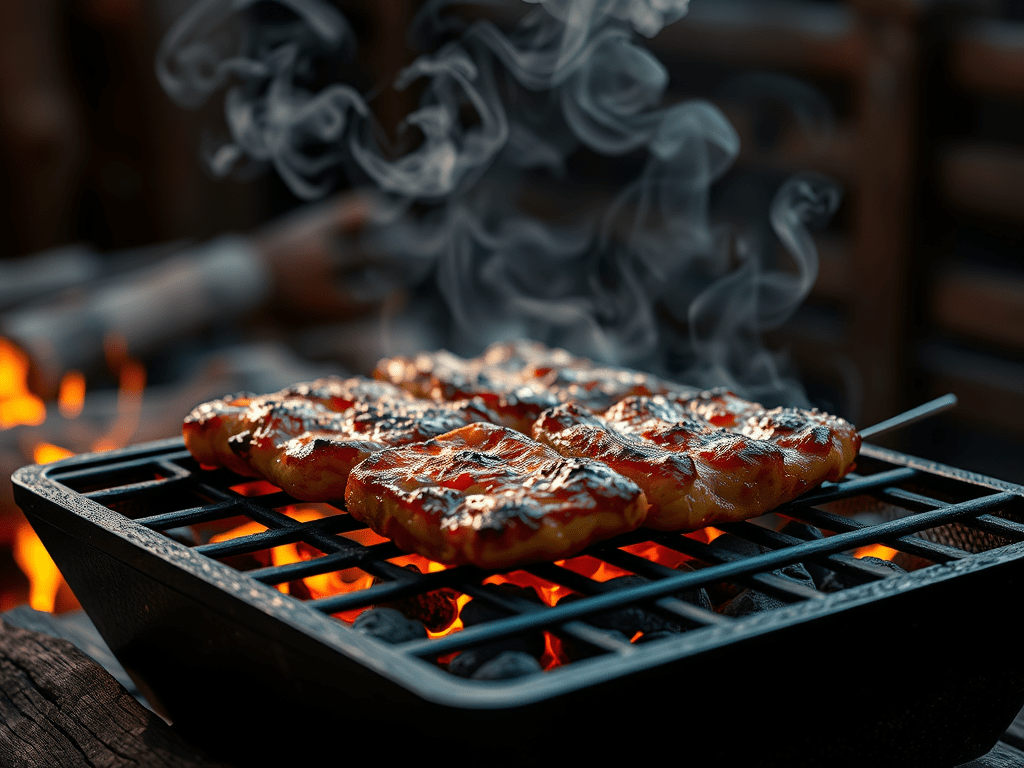
Fire does more than cook—wood, smoke, and charcoal add complex aromas, texture, and memory to food. The Lost Taste of Fire: Why wood, smoke, and charcoal still matter is both science and soul: chemistry explains flavor; tradition explains why it matters.
Take a walk into any backyard where coals glow and someone smiles at the first sizzle, and you’ll understand it immediately: fire tastes like memory. The phrase The Lost Taste of Fire: Why wood, smoke and charcoal still matter isn’t just a headline. It’s a question — one that asks why, in a kitchen of gadgets and algorithms, we still cross the street for smoky ribs and meet friends around an open flame.
The Magic of Smoke: A Sensory Journey
Picture a summer evening: the sun dips low, and the grill comes alive with glowing embers. That irresistible aroma? It’s not just nostalgia—it’s chemistry at work. When wood burns, it releases volatile compounds such as guaiacol and syringol, which are formed from the breakdown of lignin, a component of wood. These molecules infuse food with a smoky depth that’s impossible to fake with liquid smoke or gas flames.
Moisture plays a starring role, too. Wet surfaces on meat or veggies trap those flavor particles better, creating a “smoke ring”—a pink layer just beneath the surface where nitric oxide from the smoke reacts with proteins. As one BBQ expert notes, “Thin, blue smoke is your friend; it delivers clean flavor without bitterness” (Smoked BBQ Source). Different woods add their own unique twist: hickory for a bold punch, and apple for subtle sweetness. It’s this variety that turns a simple burger into a symphony of tastes—earthy, tangy, with hints of caramel from the heat.
What fire actually does to food: The Science behind the sizzle
When meat hits a hot grate or a stew simmers over wood, two things happen that make us go “mmm.”
- Maillard reaction: This is the browning that gives crusts their nutty and rich flavor. Proteins and sugars recombine under heat and create hundreds of new flavor molecules. It’s why searing a steak smells like celebration. (See Science: Maillard reaction overview — Serious Eats.) Serious Eats
- Smoke chemistry: Burning wood releases volatile phenols (guaiacol, syringol and their cousins), acids and carbonyls. These tiny molecules float, mingle with fat and water in food, and cling to taste receptors — that warm, slightly-bitter, sweet-smoky note we call “smoke.” (Research on smoke compounds and sensory profiles.) PMC+1
Together, these create layers: crust for texture, smoke for aroma, and caramelized notes for depth. But the science is only half the story.
Choosing wood is like choosing a spice — the right one can elevate your dish beyond taste into experienceEach wood species brings its own accent to the table:
- Oak: Bold, earthy, and versatile — ideal for red meats.
- Hickory: Smoky and slightly sweet, great for bacon or ribs.
- Applewood: Soft, fruity notes that pair beautifully with poultry.
- Mesquite: Intense and fiery, perfect for quick cooks like steaks.
- Olive or Acacia (common in Africa): Aromatic and subtle, giving fish or vegetables a rustic twist.
The Human Side: Aroma, Warmth and Roots
Food cooked over wood or charcoal carries more than molecules; it carries context. A smoky bowl of beans is not merely “tasty.” It is the sound of plates being set at dusk; it is the warmth you remember on a rainy night. “A little smoke brings a story.” That line — short, accurate, impossible to data-mine — explains why fire matters.
Why a Little Char Add more Than Taste
That thin dark line of char at the edge of a pepper or the crackle of fat on a spit — it does two emotional jobs. First, it releases intense aromatics from both Maillard and smoke chemistry. Second, it signals: “This is cooked the way people used to cook.” Our brains interpret char and smoke as meaning “gather,” “feast,” and even “survival” — primal cues that add satisfaction beyond flavor.
Recent lab work and reviews (including controlled sensory studies) confirm that compounds like guaiacol and syringol are strong markers of “smokiness” and that humans rate some smoke profiles as pleasant and even inventive. But researchers also report what cooks already know: many AI-generated or lab-designed flavor profiles can be inventive yet lacking soul — the human touch, the memory, the story. (See chemical characterization of smoke and sensory evaluations.) PMC+1
Therefore, science can map smoke and recreate its chemical composition. But it cannot summon the kitchen where your grandmother bakes bread at dawn, the voices, the weather, the weekly ritual.
Here are practical ways to keep the lost taste alive:
- Pick your wood: Fruit woods (apple, cherry) give sweeter, fruity smoke. Hardwoods (such as oak and hickory) produce a deeper, more savory smoke.
- Use charcoal for consistency: If you want a smoky flavor with steady heat, use lump charcoal.
- Don’t fear a little char: The thin, bitter edge balances fattiness and sugar.
- Preserve recipes: Record Grandma’s “measurements” — a pinch, a shrug, a look — before a flavor memory is lost.
Why Fire Still Matters in 2025
In a world chasing efficiency, wood, smoke, and charcoal remind us of the emotional side of food. Beyond science, it’s about gathering—family barbecues, campfire tales, that shared “mmm” over a perfectly grilled meal. Data backs it up: Surveys show that 70% of grill owners prefer charcoal for its taste, even though gas wins for speed (according to various BBQ forums). Health-wise, fire cooking uses no added oils, potentially lowering calories while enhancing natural flavors.
Yet, nuance matters. Not every meal needs fire; AI excels for weeknights. But for those special moments? The lost taste of fire brings warmth no touchscreen can match. It’s sustainable too—using responsibly sourced wood supports eco-friendly practices.
Fire is a teacher. It gives texture and aroma in a way a stove rarely does. The Lost Taste of Fire: Why wood, smoke and charcoal still matter because they bind chemistry to culture: molecules to memory. Science explains how smoke tastes; memory explains why it matters.
If you want to taste it for yourself, try a simple experiment: grill one chicken breast over gas and another over charcoal, and compare not just the taste but also the warmth, the scent, and the conversation that follows. That comparison will tell you more than any lab graph.
Did this wake a memory? What’s your go-to fire-cooked dish? Try the grill test, and pass down one recipe—the little, human details matter. Let’s keep the conversation cooking!





 Sure Media Magazine
Leave a comment