
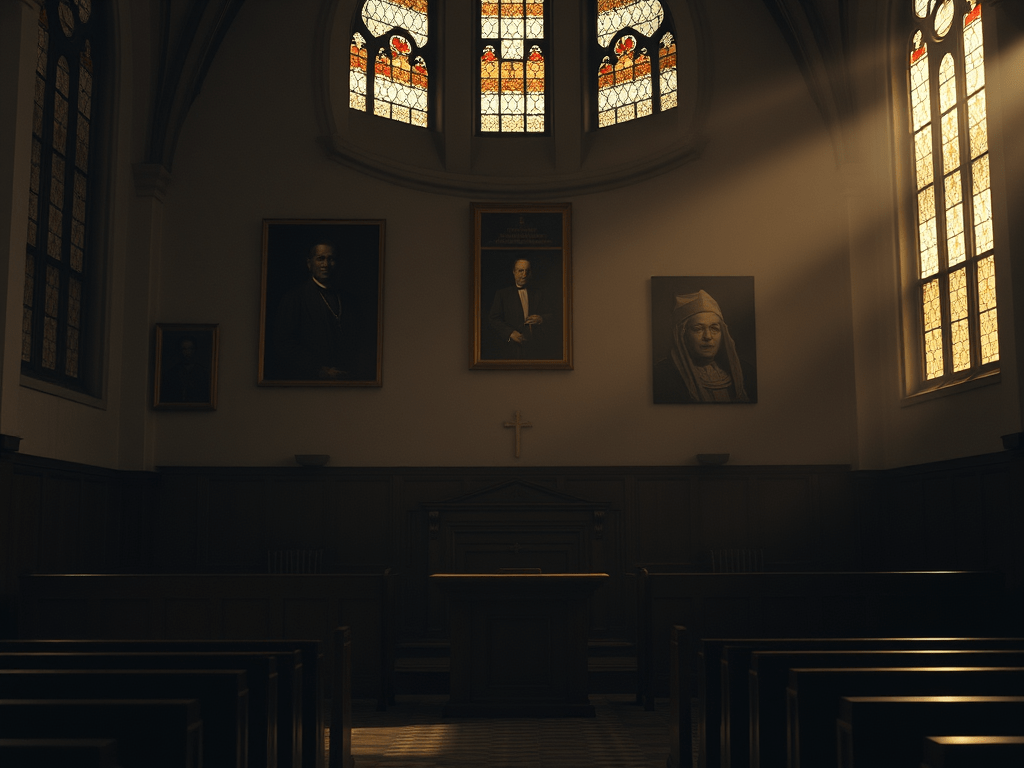
Ever noticed how the loudest voices in church go suddenly quiet when corruption comes up? Yeah, that eerie silence isn’t an accident — it’s complicity dressed up as “neutrality.” Across Kenya and much of Africa, religious leaders once stood as fearless moral sentinels. Today, too many are cozying up to power, quietly accepting “donations” from politicians whose hands are anything but clean. And honestly, it’s killing whatever moral authority the church and mosque once had.
Let’s be real: corruption in Africa isn’t just about missing billions; it’s about broken trust. It’s the pastor blessing a politician’s campaign knowing damn well the money for that shiny new church wing came from stolen public funds. It’s the imam who sees injustice daily but keeps quiet to protect his seat on a state council. Silence, in this case, isn’t golden — it’s toxic.
From Prophets to Pawns: The Fall of Kenya’s Moral Watchdogs
There was a time — and not that long ago — when the Kenyan church was a real thorn in the government’s side. Back in the 1980s and 1990s, when President Moi ruled with an iron fist, church leaders like Bishops Henry Okullu, Alexander Muge, and David Gitari risked their lives speaking truth to power. They didn’t just preach; they fought for democracy. Their sermons were fire — literally, sometimes.
But somewhere between Moi’s fall and the rise of “political Christianity,” something broke. The pulpits that once roared with defiance now hum politely when the offering bag comes around. Instead of rebuking corrupt leaders, many pastors now host them — with a smile and front-row seats.
Take former Deputy President (now President) William Ruto. For years, he made headlines for corruption allegations, yet he became one of the most generous church donors in Kenya. His “investing in heaven” line might’ve sounded holy, but many saw it for what it was — moral money laundering.
Even the Anglican Church of Kenya warned about this back in 1983, cautioning leaders against “prioritizing money from public figures.” They knew what we all know: once the politician funds your church roof, your prophetic voice disappears faster than the National Youth Service funds did.
As the saying goes in Kikuyu — gûtirí mûicì na mûcudhîrîria — there’s no difference between a thief and the one who watches quietly.
The High Price of Holy Silence
Let’s look at the numbers for a minute. Kenya loses about $6 billion every year to corruption — that’s nearly a third of the national budget. It also costs roughly 250,000 jobs annually, according to studies cited by The Elephant and ISS Africa. That’s not just numbers on a spreadsheet — that’s school fees unpaid, hospitals understaffed, and families trapped in poverty.
So where are the men and women of God in all this? Shouldn’t they be shouting louder than anyone? Instead, many of them are standing by, hands politely clasped, as the nation bleeds. The silence becomes a sermon in itself — one that preaches comfort over conscience.
It’s a betrayal, plain and simple. A theological cop-out. When the pulpit goes quiet, corruption thrives. And when corruption thrives, faith loses its moral weight.
The Nigerian Example: When Prosperity Preaching Becomes a Cover-Up
Now, Kenya isn’t alone in this mess. Nigeria, Africa’s most populous country, offers a masterclass in how religion and corruption can dance together. Ever heard of David Oyedepo or Chris Oyakhilome? They’re mega-rich pastors with private jets, multimillion-dollar mansions, and global ministries.
Sure, they preach against corruption — from the comfort of their gold-plated pulpits. But here’s the irony: while they condemn politicians for greed, they rake in fortunes through tithes, “seed offerings,” and strategic political alliances.
A Chatham House study even found that 20% of Nigerians think corruption is acceptable if it benefits their religious community. Think about that — faith, which should fight moral decay, has instead normalized it.
The prosperity gospel has twisted religion into a business model. “Sow a seed,” they say — but what they really mean is “sow a seed so I can buy another private jet.” And the politicians? They love it. Donate enough to the church, and you get a blessing — and silence — in return.
Across Africa: Pulpits for Hire
The pattern repeats everywhere you look.
- In Ghana, some pastors openly endorse candidates during elections — not because they believe in their policies, but because the envelope is heavy.
- In Zimbabwe, the church once stood firm against Mugabe’s dictatorship but now often sidesteps criticism of corruption altogether.
- In Uganda, faith leaders are urged to reject “blood money,” yet the temptation to stay quiet for survival’s sake is strong.
In short, the sacred space has become transactional. Faith is being monetized, and silence is the price tag.
You’ve probably heard the phrase “rent-a-bishop.” It’s not a joke — it’s a running joke because it’s true. In Kenya, certain clergy have turned public events into moral photo-ops, blessing corrupt leaders while turning a blind eye to injustice.
And that, my friend, is how you lose a generation’s trust.
The Consequences: Moral Authority on Life Support
When religion fails to hold power accountable, it loses its reason for existing. The church becomes just another NGO with better singing.
Look at the backlash: young Africans are leaving traditional churches in droves. They’re tired of seeing pastors dine with the same politicians who steal from their parents. They’re not buying the “pray for the nation” script anymore.
Even Kenya’s Catholic bishops recently rejected a KSh 6 million donation from President Ruto’s office, declaring they wouldn’t “sanitize corruption.” That’s the kind of moral courage people crave. But let’s be honest — that’s the exception, not the rule.
When faith leaders go silent, ordinary people lose hope. The poor see no defender. The corrupt see no threat. And the continent keeps spinning in the same tired cycle of greed, prayer, and poverty.
Why Religious Leaders Stay Silent (and Why It’s Dangerous)
So, why the silence? Let’s break it down:
- Financial Dependence – Churches rely on tithes, fundraisers, and political donations. Calling out corruption might mean losing those funds.
- Political Ties – Many religious leaders are appointed to state boards or national prayer committees. Criticizing the government can cost them influence.
- Fear and Fatigue – After years of unheeded pleas, some leaders simply give up, convincing themselves “this is just how things are.”
But here’s the thing — neutrality in corruption is complicity. It’s like watching a house burn while holding a fire extinguisher and saying, “Well, I don’t want to get involved.”
As St. John Chrysostom famously said, “Of what use is it to weigh down Christ’s table with golden cups when He Himself is dying of hunger?”
Lessons from Latin America: Faith as a Weapon Against Corruption
Funny enough, Africa could borrow a few pages from Latin America’s playbook. There, religious leaders didn’t just pray — they acted.
- In Honduras, Cardinal Oscar Rodriguez led an anti-corruption commission that exposed state theft.
- In the Philippines, Catholic bishops rallied citizens to topple corrupt regimes through “people power.”
These leaders understood that faith isn’t about cozying up to the powerful; it’s about confronting them when they cross the moral line. Africa’s pulpits could use a bit of that fire again.
So… What Now?
We can’t keep pretending silence is holiness. Kenya and Africa need their religious leaders to reclaim their prophetic voice. Not tomorrow, not next election — now.
Here’s what that looks like:
- Reject dirty money. If the source of a donation can’t be justified, don’t touch it.
- Preach ethics, not just salvation. Faith should heal society, not just souls.
- Empower the youth. Give them platforms to speak up and act. They’re less afraid of rocking the boat.
- Collaborate with watchdog groups. Churches can work with anti-corruption bodies to educate citizens and expose theft.
It’s time to make silence uncomfortable again.
Final Thoughts: Speak or Be Forgotten
The truth is simple: when religion stops challenging corruption, it becomes part of it. Kenya’s and Africa’s moral landscapes are fading because too many of their shepherds have traded prophecy for proximity to power.
But it’s not too late. The recent pushback by Kenya’s Catholic Church, and a few brave voices across Africa, hint at a possible comeback — a return to fearless moral leadership.
If the continent’s faith leaders can once again prioritize integrity over influence, they might just reignite the kind of revolution Bishop Muge once dreamed of.
Because in the end, silence isn’t peace — it’s surrender. And the longer our preachers keep quiet, the louder corruption laughs.
So here’s a thought: next time a politician “donates” millions to build a church, maybe we should ask — is this an offering… or a bribe wrapped in scripture? 
SEO Keywords: corruption in Kenya, religious leaders Africa, church silence on corruption, Kenya church politics, African faith and corruption, moral authority in Africa, corruption and religion Kenya




 Sure Media Magazine
Leave a comment