

A Digital Eye Beneath the Waves
Somewhere off the coast of Indonesia, a machine is dreaming in color. Each night, its algorithms sift through thousands of underwater images, searching for subtle signs of life among fading reefs. This is not science fiction, it is the future of marine restoration. Artificial intelligence is becoming the ocean’s newest ally, capable of identifying coral species, mapping bleaching events, and helping scientists rebuild one of Earth’s most vital ecosystems.
The Coral Crisis
Coral reefs cover less than one percent of the ocean floor yet sustain a quarter of all marine life. They act as nurseries for fish, buffers against storms, and sources of livelihood for millions. But climate change is eroding that balance. Rising sea temperatures trigger coral bleaching, a stress response that causes corals to expel the symbiotic algae they rely on for food and color. In 2023 alone, mass bleaching events affected reefs across the Caribbean, Australia, and the Pacific, turning vibrant underwater cities into ghostly skeletons. NOAA confirmed this as part of the fourth global coral bleaching event, impacting at least 53 countries and territories since early 2023.

Enter the Machines
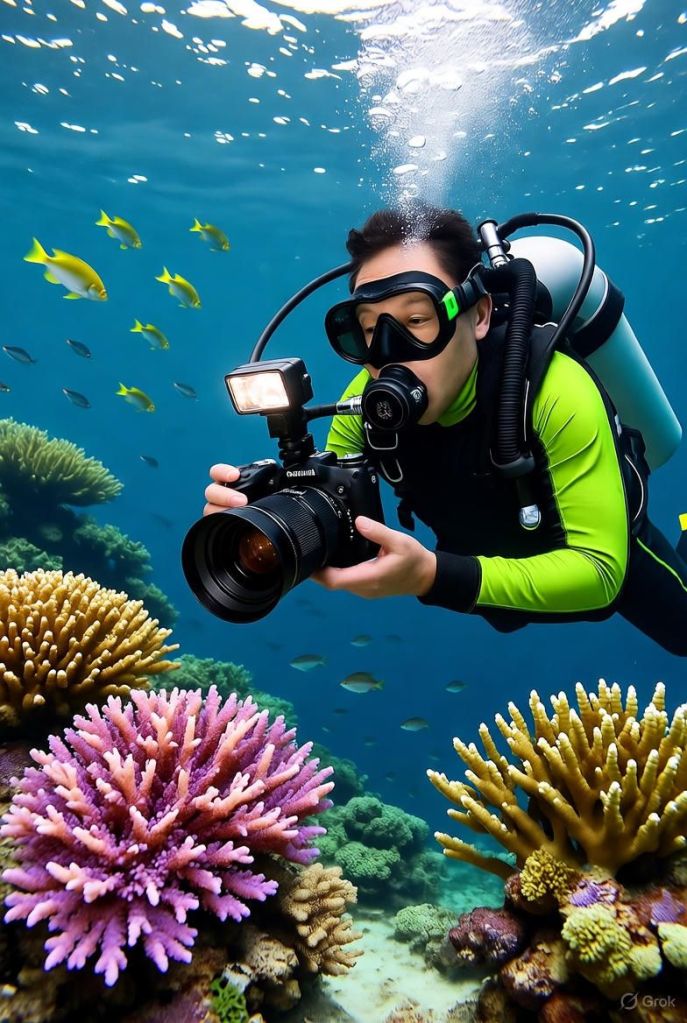
Traditional reef monitoring is labor-intensive and costly, with divers photographing, tagging, and logging each coral colony by hand, a process that can take months. Artificial intelligence is transforming this. Tools like CoralNet, developed by NOAA and the University of California, San Diego, use deep learning to analyze reef images in minutes rather than months. Trained on millions of annotated photos, these algorithms recognize coral species with over 90% accuracy and detect changes invisible to the human eye, such as early signs of disease or recovery.
Other projects push boundaries further. At the University of Queensland and the Australian Institute of Marine Science (AIMS), researchers have created “reef digital twins,”AI-driven 3D models that simulate coral growth and predict recovery under various climate scenarios. Using technologies like Reef-NeRF, these virtual replicas provide photo-realistic insights for management decisions. Meanwhile, in Singapore, autonomous underwater drones equipped with AI are mapping murky reefs and even planting lab-grown coral fragments to accelerate restoration.


Teaching AI to See Like a Diver
Training a machine to “see” underwater presents unique challenges: shifting light, color distortion from water depth, and hazy plankton make image recognition difficult. Scientists address this by curating vast datasets of labeled images, tagging each coral by species, health status, and growth stage. Over iterations, these systems learn to identify bleaching, disease, or regrowth with precision comparable to expert marine biologists.
Beyond efficiency, AI ensures consistency. As marine ecologist Emma Camp notes, technology can reveal patterns across vast scales that humans might miss due to fatigue or bias. The outcome is a real-time global overview of coral health, accessible from laptops worldwide, empowering timely interventions.
Hope, Coded in Algorithms
This digital revolution extends beyond data collection—it instills hope. By pinpointing resilient coral species and forecasting bleaching hot zones, AI guides conservationists on where to prioritize efforts. Integrated with innovations like 3D-printed substrates and heat-resistant coral genetics, it fosters human-machine collaborations to heal oceans.
However, caution is warranted. Over-reliance on algorithms could overshadow local indigenous knowledge and traditional stewardship. Experts like Camp emphasize that AI should complement, not supplant, human insight: “Technology can show us the path, but only people can walk it.”
A New Kind of Reef Guardian
Back in Indonesia, underwater cameras persist in their vigilant work, documenting bursts of color in recovering corals. Slowly, patterns of revival emerge from the data, a digital testament to resilience.
In this era of restoration, the ocean’s guardians may not always don wetsuits. Some hum on servers, envisioning thriving reefs and reminding us that fragile life can rebuild when supported by innovation and collective will.






 Sure Media Magazine
Leave a comment